
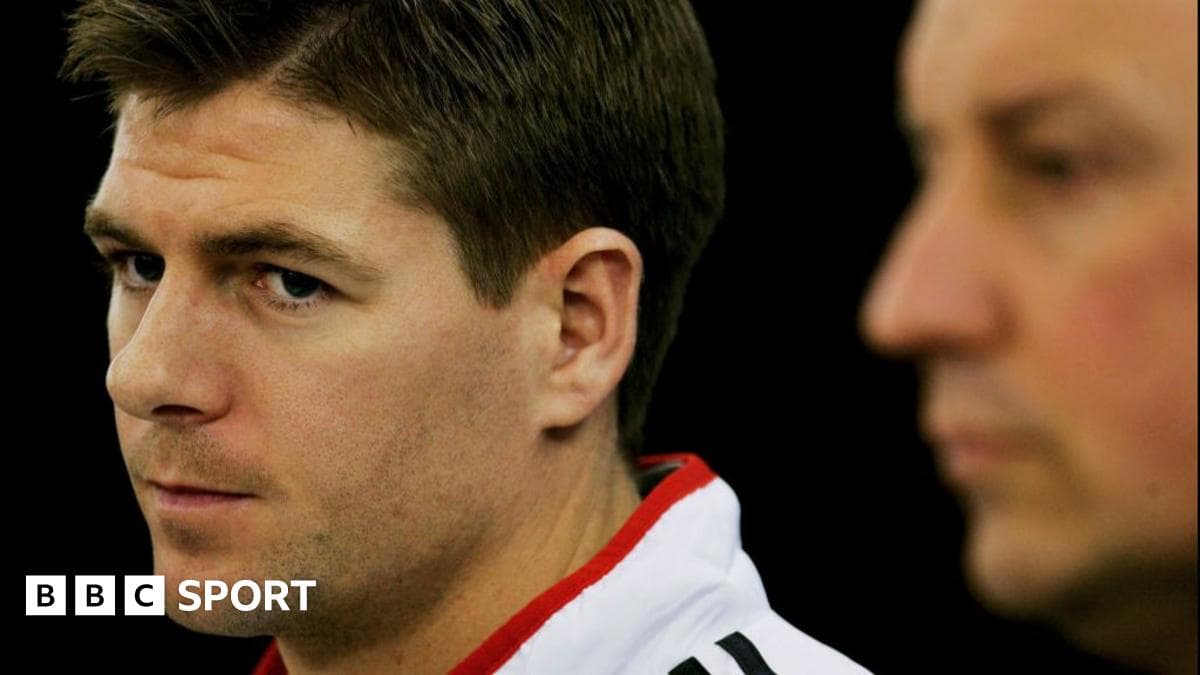
Steven Gerrard's Emotional Turmoil After Istanbul Glory
Steven Gerrard calls it the best night of his life. Istanbul, 2005. The miracle comeback, the trophy, the image of him lifting the European Cup in a red shirt that seemed stitched to his skin.
Yet within weeks, he was ready to walk away from Liverpool.
In a new Netflix documentary revisiting that extraordinary Champions League triumph, Gerrard lays bare just how conflicted he was in the aftermath of the greatest high of his career. The captain who had dragged Liverpool back from 3-0 down against AC Milan admits his head was “like a box of frogs”. The glory masked a mind in turmoil.
From Istanbul to the brink
That night in May 2005 appeared to change everything. Gerrard, the local lad who had grown into Liverpool’s talisman, led a side that looked dead and buried at half-time to one of the most celebrated comebacks in European football history. Penalties, pandemonium, a fifth European Cup.
Supporters believed it would also end the endless speculation. Real Madrid wanted him. Chelsea, under Jose Mourinho and backed by heavy spending and a title-winning machine, wanted him even more. Istanbul felt like the moment he would finally nail his colours to the Anfield mast for good.
Six weeks later, he told the world he was leaving.
Then, just as dramatically, he changed his mind.
“Mourinho was on the phone – the best manager in the world at the time, offering silly contracts, which would naturally turn your head,” Gerrard recalls. “Chelsea were spending fortunes, he was guaranteed success there.”
The pull was obvious. The problem was emotional, not financial.
“I can't park my relationship with Liverpool,” he says. “When they came, I didn't know which way to go. Mentally, I was in a bad place. My head was like a box of frogs.”
A cold manager, a conflicted captain
The turmoil, Gerrard explains, did not come only from outside temptations. It also came from inside Melwood.
Rafael Benitez, the manager who had just masterminded that European triumph, made Gerrard feel strangely unwanted.
“I felt like he didn't rate me, he didn't trust me, he didn't want me,” Gerrard, now 45, says. “I've always been clear that I want to be a Liverpool player and a Liverpool player only, but with that doubt and with that coldness and being part of a team where you don't believe that you can compete at the top, that's when your head gets turned.”
Jamie Carragher, his long-time team-mate and fellow Scouser, watched it unfold up close.
He believes Gerrard needed reassurance. He never got it.
“Rafa Benitez was never going to do that,” Carragher says. “He's very unemotional.”
The documentary paints a consistent picture: a manager obsessed with detail, criticism and control, often at odds with the emotional core of his dressing room. Former players talk about team meetings that drilled down into minutiae, about a tone that could grate as much as it could guide.
No-one felt that clash more acutely than Gerrard.
“My game... was about emotion, passion, desire, commitment, for the badge, for the [Liver] bird, for the family,” he says. “It was in me and I felt like he wanted to really remodel me.
“Nothing would ever satisfy him.”
Benitez’s logic, Gerrard’s hindsight
Benitez, now 66, stands by his methods.
“When I joined Liverpool, there was a culture based on emotion,” he says. “Football requires more than that. If you're really emotional, you don't find the way to success.”
For a time, that approach pushed his captain to the edge. The man who embodied the club’s heart felt stripped down and reprogrammed, his instincts questioned, his status unsettled.
Only with distance has Gerrard come to see the other side.
“I look back at Rafa and think he's the best coach I have worked with,” he admits.
The tension that almost drove him out now sits alongside respect. At the time, though, it was combustible. And he was not the only Liverpool star wrestling with it.
Michael Owen and a meeting that backfired
A year before Gerrard’s transfer saga, another academy product had already decided he’d had enough.
Michael Owen, Ballon d’Or winner in 2001 and once the club’s golden boy, had also grown disillusioned with life at Anfield. Gerard Houllier’s reign had ended in 2004 with Liverpool 30 points behind champions Arsenal. The club turned to Benitez, fresh from success at Valencia, to reset the project.
His first major job: persuade Owen and Gerrard to stay.
Benitez flew to Portugal to meet them and Carragher while they were with England at Euro 2004. It could have been a charm offensive. It wasn’t.
“He was on me tactically,” Gerrard remembers. “‘I don't want this, I don't want that. You can't play in this team unless we trust you.’ It was intense. And I was thinking to myself, ‘I guarantee you, you'll need me before I need you.’”
If Gerrard felt challenged, Owen felt something closer to disbelief.
Carragher recalls Benitez telling Owen he needed to learn to “turn on the ball quicker”.
“That's absolutely what I was probably the best in the world at, at the time,” says Owen, now 46. “He certainly didn't go any way to convincing me to stay, put it that way.”
By August 2004, Owen was gone, sold to Real Madrid for £8m. One of Liverpool’s brightest homegrown talents had slipped away, unconvinced by the new era.
Benitez insists he read the room differently.
“You can see when you talk with someone if he's happy with the conversation,” he says. “I think they were quite happy.”
Glory, doubt and the thin line in between
The documentary pulls back the curtain on a period often remembered only for the silverware and the celebrations. Gerrard’s admission that his greatest night coincided with his darkest doubts strips away that simplicity.
Liverpool’s captain stood on the summit of Europe with a medal around his neck and a phone buzzing with messages from Madrid and London. At the same time, he walked into a dressing room where his manager’s cool detachment made him feel expendable.
He stayed. Owen didn’t. Benitez kept winning trophies while insisting emotion alone would never be enough.
The story of that era has always been about miracles and medals. This version adds something more uncomfortable: how close Liverpool came to losing the man who defined them, not to money or glamour alone, but to a clash of personalities and a manager who refused to put an arm around his captain’s shoulder.




