
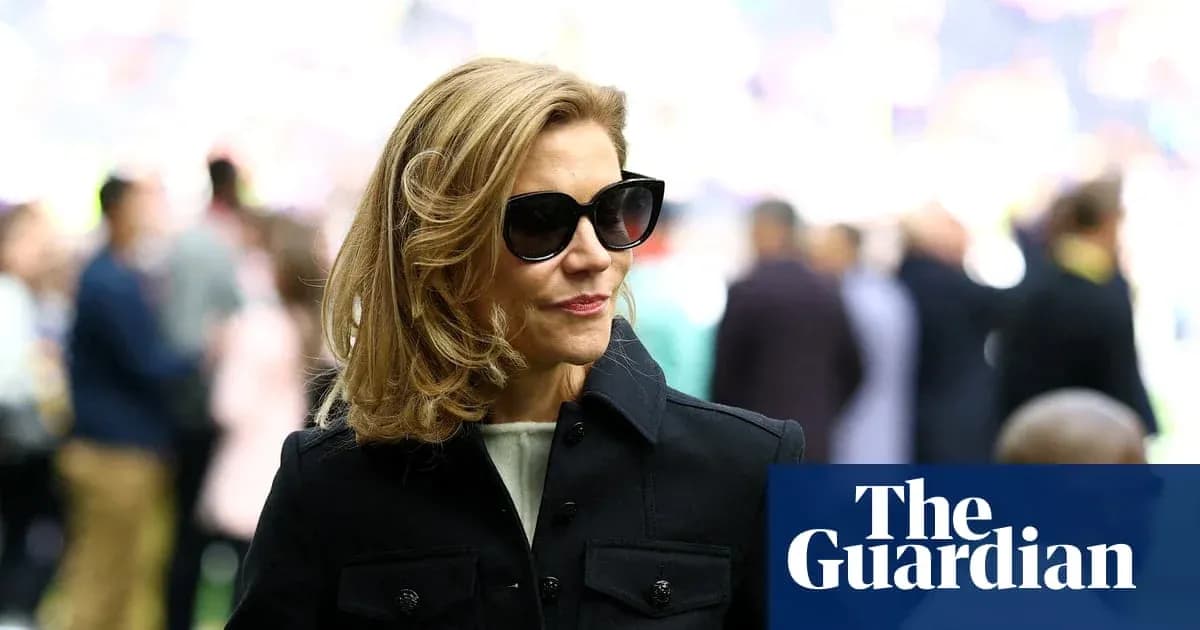
Amanda Staveley Makes High-Profile Move in English Football
Amanda Staveley steps back into English football with another high‑profile move – this time at a club fighting to reclaim its place among the elite.
A consortium led by Staveley has agreed a deal to buy a 25.1% stake in West Ham, after Vanessa Gold chose to sell her family’s holding in the club. The agreement, which covers the Gold family trust’s entire share, comes with West Ham trying to plot a route back to the Premier League after last season’s relegation, just two years on from lifting the Europa Conference League.
This is not a done deal yet. Under an ongoing pre-emption process, existing shareholders retain the right to step in and buy the Gold shares themselves. Only if they decline will Staveley, Mehrdad Ghodoussi and PCP Capital Partners move into the boardroom.
Gold era closes, with a nod to the past
For Vanessa Gold, the sale marks the end of a short but emotionally charged spell in the spotlight. She stepped into a joint chair and director role after the death of her father, former co‑owner David Gold, in 2023, and framed her decision squarely in the context of his legacy.
“As the daughter of David Gold, it was a great honour to step into a joint chair and director role at the club following his passing in 2023,” she said in a statement, stressing that her father’s “priority was always to champion and protect this great club”. She spoke of “huge personal pride” over the last three years and of gratitude towards “the staff, players and fans” who allowed her to carry that legacy.
Her plan, initially, had been very different. On 12 June she reached an agreement with fellow shareholder Daniel Kretínsky that would have made his EP Group the single largest shareholder at West Ham. That deal collapsed, and with it a clear route to a new power structure in east London.
“Unfortunately, since that time, the original deal and other alternatives that we have discussed could not be brought to fruition,” Gold admitted.
The stalemate opened the door for Staveley.
Staveley returns, with a familiar playbook
Once the Kretínsky agreement fell away, Gold moved to secure a new buyer and turned to one of the most recognisable deal‑makers in the modern Premier League era.
“In light of this, I have now reached an agreement to sell my family’s shareholding to a consortium led by Amanda Staveley, Mehrdad Ghodoussi and PCP Capital Partners,” she said. The agreement, she underlined, “remains subject to a pre-emption process, under which existing shareholders have the option to buy the shares instead”.
Gold chose to go public before the process concludes, keen to explain both her intentions and the identity of the would‑be investors. “While the process has not yet concluded, I wanted to be open with our fans about where things stand and my intentions,” she said. Her stated ambition throughout has been “to ensure the club has the right leadership and ownership to enable West Ham to achieve its potential and return to its rightful place in the Premier League”.
The names behind the bid will command attention. Staveley, Ghodoussi and PCP Capital Partners were central to the Saudi‑backed takeover of Newcastle in October 2021, a deal Staveley personally brokered as Mike Ashley’s long, unpopular reign ended. They then helped oversee Newcastle’s surge from relegation candidates to Champions League qualifiers and, after their exit in the summer of 2024, Carabao Cup winners.
That track record is exactly what Gold is banking on.
“Amanda Staveley, Mehrdad Ghodoussi and PCP Capital Partners will bring deep experience and understanding of what it takes to lead a successful football club, and I have every confidence in what she and her partners can bring to West Ham,” she said. Until the paperwork is complete, she insists she will “continue to act in the club’s best interests, as my father did and would expect of me.”
A club at a crossroads
The timing of the move is impossible to ignore. West Ham, only two seasons removed from a European trophy, now find themselves in the Championship, wrestling with the financial and sporting realities of life outside the Premier League. Ownership clarity, investment strategy and boardroom alignment matter more than ever.
If current shareholders choose not to exercise their rights and the Staveley‑led consortium comes in, West Ham gain a group with recent, hard-earned experience of reshaping a club’s direction at speed and under scrutiny. If they do step in, the Gold era will still have triggered a decisive reshuffle of power in east London.
Either way, a 25.1% stake is on the move. The question now is simple: who will be holding it when West Ham make their next push for a return to the top flight?




