Spygate Controversy: Southampton's Play-Off Dilemma
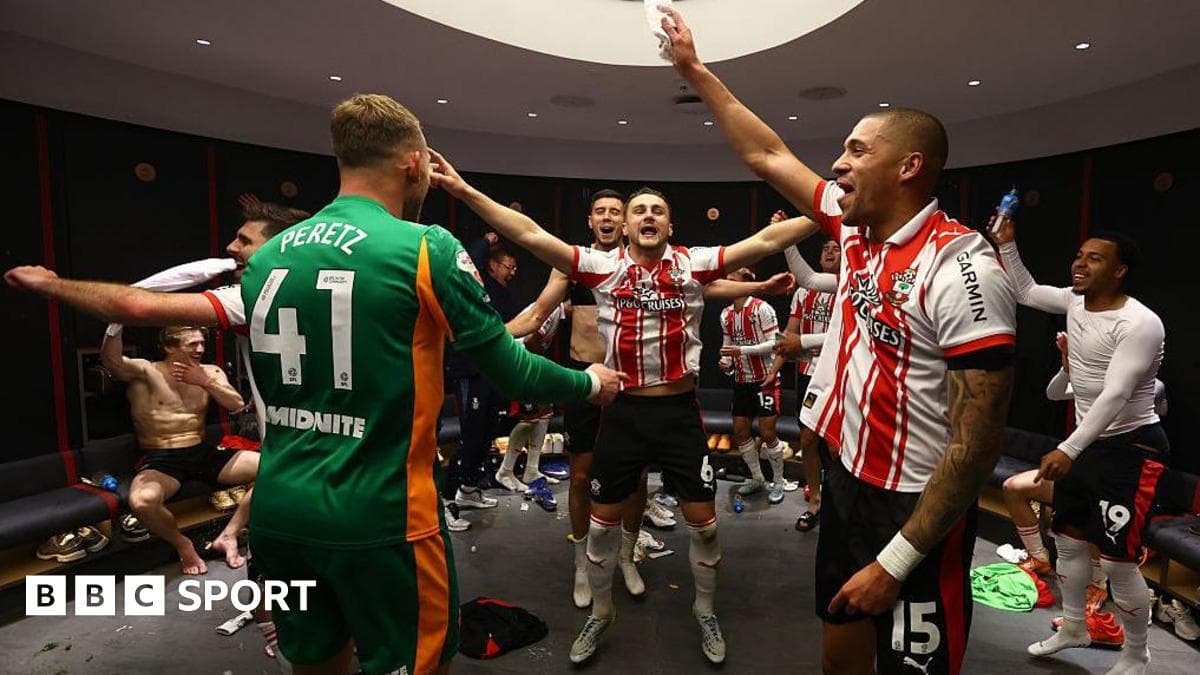
Kim Hellberg stood in the tunnel at St Mary’s with a broken voice and a clear mind. Middlesbrough were out of the play-offs, beaten 2-1 after extra time by Southampton, their season snapped in the cruellest way. Yet when he said, “It breaks my heart,” he wasn’t talking about the scoreline.
He was talking about Spygate.
Not the Marcelo Bielsa version from 2019, now almost a piece of football folklore, but a new, sharper controversy that has left the Championship’s showpiece fixture in doubt and the integrity of its season under direct attack.
A semi-final tainted
Southampton have been charged by the English Football League with breaking rules by observing one of Boro’s final training sessions before last Saturday’s first leg at the Riverside. A man drove five hours to Rockliffe Park, was caught, and the whole tone of the tie changed.
“If we hadn't caught that man that they sent up five hours to drive, you would sit there and say well done [to Southampton] in the tactical aspect of the game and I would go home and feel like I've failed,” Hellberg said.
That is the wound. Not the missed chances or the extra-time drama. The idea that the work done on the training ground, the secrets, the structure, the detail, might have been stripped away by a camera lens.
“When that is taken away from you – ‘we're not going to watch every game, we're going to send someone instead and film the sessions and hope they don't get caught’ – it breaks my heart in terms of all the things I believe in.”
In any normal year, the conversation would now be simple. Southampton, through to the play-off final on 23 May, preparing for Hull City and a shot at the Premier League. Middlesbrough, beaten but proud, booking holidays and plotting next season.
This is not a normal year.
A final shrouded in doubt
There is no absolute certainty that Southampton v Hull City will even take place.
Southampton have asked for a delay to complete an internal review. The EFL, staring at a fixed Wembley date and a calendar that cannot bend, has asked for an expedited hearing. Time, for once, is not money. It is chaos.
For Middlesbrough, there is only one acceptable outcome: walking out at Wembley a week on Saturday. For Southampton, the message is to carry on as if nothing has changed.
So, on Wednesday morning, the club quietly launched a play-off final merchandise range on their website. No fanfare on social media, no big push. On Thursday morning, tickets go on sale for a match their fans might never attend.
Tonda Eckert, the Saints head coach, has to live inside that contradiction. He has a game to prepare for, a team to keep sharp, a dressing room to steady. Yet every tactical session, every team talk, now plays out against the threat of a ruling that could rip away the biggest game of their season.
At Rockliffe, the mood is very different. Boro are in limbo.
BBC Sport understands the immediate plan is to give the players a few days off rather than roll straight back into training. But no one is going far. No Dubai, no Ibiza, none of the usual end-of-season escapes. The squad must stay on call, bags half-packed, minds half-closed to the idea that their season is over.
Gibson goes on the offensive
From the start, Middlesbrough have been clear: a fine will not wash. They want a sporting sanction. They want this to hurt.
Owner Steve Gibson has reportedly turned to Nick De Marco, the heavyweight sports lawyer who has built a reputation on delivering results in disputes with football’s governing bodies. De Marco recently helped ensure Sheffield Wednesday would start next season on zero points when a 15-point deduction had seemed inevitable.
This time, he will argue for punishment, not leniency.
If the independent disciplinary commission does not go as far as Boro demand, this might only be the first battle. Gibson has been here before. In 2021, Middlesbrough launched legal proceedings against Derby County, arguing that the Rams’ financial breaches had cost them a play-off place in 2018-19. The case ended with a “resolution” believed to be worth £2m to Boro.
If Southampton keep their place in the play-offs and go up, it would be no surprise if Gibson again pursued compensation. The sums at stake in promotion make almost anything else feel small.
Inside the commission’s room
For now, the EFL has handed everything to an independent disciplinary commission, managed by Sport Resolutions. The panel will consist of three members: a chair, usually a judge, lawyer or KC/QC, and two side members who are sports lawyers, barristers or mediators. They are chosen on suitability and availability, because this has to move quickly.
They will decide the timetable. They will hear the evidence. They will set the precedent.
None of this is public. No one outside that room will know the exact schedule. But one thing is obvious: the clock is brutal.
Wembley is booked the following weekend. After that, players disappear on international duty. Rearranging the final is, in practical terms, almost impossible. This must be sorted well before 23 May.
The first hearing has to land soon, because anyone with an interest – and that includes Middlesbrough – must have the right to appeal. Any appeal decision is final. EFL rules do not allow the case to go to the Court of Arbitration for Sport.
And all the while, ticket offices wait. Clubs need to organise sales. Supporters need to know whether to book trains, hotels, days off work. Boro, if parachuted into the final late, would face the logistical nightmare of selling a Wembley allocation at short notice.
An entire season, for two clubs, now hangs on a legal process behind closed doors.
What punishment fits?
The key question is stark: if Southampton are found guilty, what is a suitable sanction?
There is no direct precedent. No tidy tariff to consult. This is not a profit and sustainability hearing with a sliding scale of points deductions. This is new territory.
When Leeds United were punished in 2019 for spying on Derby, they received a £200,000 fine. But that case is different in two crucial ways.
First, at the time there was no specific rule against watching an opponent train before a game. Leeds were charged under regulation E.4 – the catch-all demand that clubs act in the “utmost good faith” towards each other.
The fallout from that incident led directly to the creation of regulation 127, which states that “no club shall directly or indirectly observe (or attempt to observe) another club's training session in the period of 72 hours prior to any match”.
Southampton are charged with breaching both E.4 and 127. They have not tried to deny the allegations.
Second, timing. Marcelo Bielsa’s Leeds were caught in mid-January, with months of the season still to play. Southampton stand accused of spying before a play-off semi-final – one of the most consequential fixtures of the year, with a place at Wembley and potentially the Premier League on the line.
At Boro, the feeling is clear. If Saints win promotion, the financial windfall of the top flight will dwarf any fine. A cheque will not be a deterrent. It will be a footnote.
They want Southampton thrown out of the play-offs.
The most obvious mechanism would be to award Boro a 3-0 default win for the first leg, turning the tie into a 4-2 aggregate victory. Rare, but not unheard of. In 2002, West Bromwich Albion were handed a 3-0 win after a match against Sheffield United was abandoned when the Blades dropped below the minimum seven players, following three red cards and two injuries.
Another path is a points deduction. That would be a halfway house – a sporting sanction without the nuclear blast of expelling Southampton from the play-offs altogether. If Saints are promoted, the EFL cannot impose that deduction directly in the Premier League, but it can recommend that the top-flight board carries the penalty over.
The commission must find a punishment that feels fair in this case and strong enough to stop anyone else trying the same trick before a game of such magnitude.
Questions for Southampton
Southampton have stayed tight-lipped. The club’s media officer has shut down attempts to question Eckert on the subject. Publicly, there is silence.
Privately, the coaching staff will face scrutiny.
Who knew what, and when? Was there a live stream of the session? Was footage stored, shared, analysed? Or will Southampton argue that this was a rogue act, a lone operator who decided, off his own bat, to travel to Rockliffe Park 24 hours before the squad flew north?
Hellberg does not buy that. After Tuesday’s game, he was clear: “There's someone who makes decisions to go and try to cheat.”
The commission will also be aware of the sport’s most high-profile spying case in recent memory. At the 2024 Olympics women’s football tournament in Paris, Fifa deducted six points from Canada after they were found to have used a drone to spy on New Zealand. Three members of Canada’s staff, including the head coach, received one-year bans from all football.
Could Southampton’s staff face touchline bans or broader suspensions if wrongdoing is proven? The possibility is on the table.
Fans, fairness and the Wild West risk
One argument cuts through the legalese: Southampton’s fans do not deserve to suffer. They have followed their team across 48 games. They have watched them earn a play-off spot on the pitch. To strip them of a final, or promotion, feels brutal.
Yet without a meaningful sporting sanction, what message does the game send? That clubs can push the boundaries, take the risk, and settle the bill later if they get caught? That the reward of the Premier League outweighs any financial punishment?
If Saints walk out at Wembley, win promotion and bank the TV millions, is a fine really a punishment at all?
The EFL is desperate for clarity. Middlesbrough want justice. Southampton want time. The commission wants to create a decision that will stand up not just this week, but for years.
How this ends will shape more than a single final. It will define where the line is drawn in the modern game – and what happens to those who cross it.