Sparta Praha's Tactical Triumph Over Lyon in UEFA Champions League
Sparta Praha’s 2-1 comeback over Lyon at Pragues Letna Hill in the UEFA Champions League 3rd Qualifying Round was built on clear structural ideas from both coaches and a decisive shift in the game’s central zones after half-time. The numbers underline how fine the margins were: Sparta edged possession 52% to 48%, while Lyon actually out-shot the hosts 11 to 9 and produced more blocked efforts (4 to 1). Yet Sparta’s superior passing accuracy and their adaptation within the 4-2-3-1 framework gradually tilted the contest away from Lyon’s 3-4-3.
Brian Priske’s Sparta lined up in a classic 4-2-3-1 with J. Surovcik in goal behind a back four of M. Rynes, A. Sorensen, A. Sevinsky and M. Suchomel. The double pivot of R. Macek and A. Irving gave a stable base, freeing J. Mercado, A. Karabec and J. Alcocer to support lone striker J. Brunes. The structure aimed to pin Lyon’s wing-backs and exploit the half-spaces behind their first line of pressure. Early on, that intent was visible: Sparta generated 8 of their 9 shots from inside the box, reflecting a focus on working the ball into high-value areas rather than relying on long-range attempts.
Paulo Fonseca’s Lyon, set up in a 3-4-3, accepted a slight deficit in possession to prioritize verticality. D. Greif in goal was protected by a back three of R. Kluivert, T. Tessmann and C. Mata, with A. Maitland-Niles and M. Ouedraogo as wide midfielders and T. Morton and M. de Carvalho inside. The front trio of Abner Vinicius, L. Openda and C. Tolisso was designed to stretch Sparta’s back four both centrally and wide. Lyon’s 11 total shots, including 8 inside the box, show that the structure did create penetration, especially in transition and after turnovers.
First Half
The first half largely followed Lyon’s script. Sparta’s early disallowed goal at 20' (VAR cancelling a potential strike by Jonatan Braut Brunes) was a warning, but Lyon’s 1-0 lead at the break via the own goal from M. Suchomel reflected how Fonseca’s side exploited pressure moments and forced mistakes in Sparta’s defensive line. With Lyon committing 7 fouls to Sparta’s 11, the visitors were more selective in their aggression, often delaying rather than diving into duels, which helped them control space without picking up any cards.
Second Half
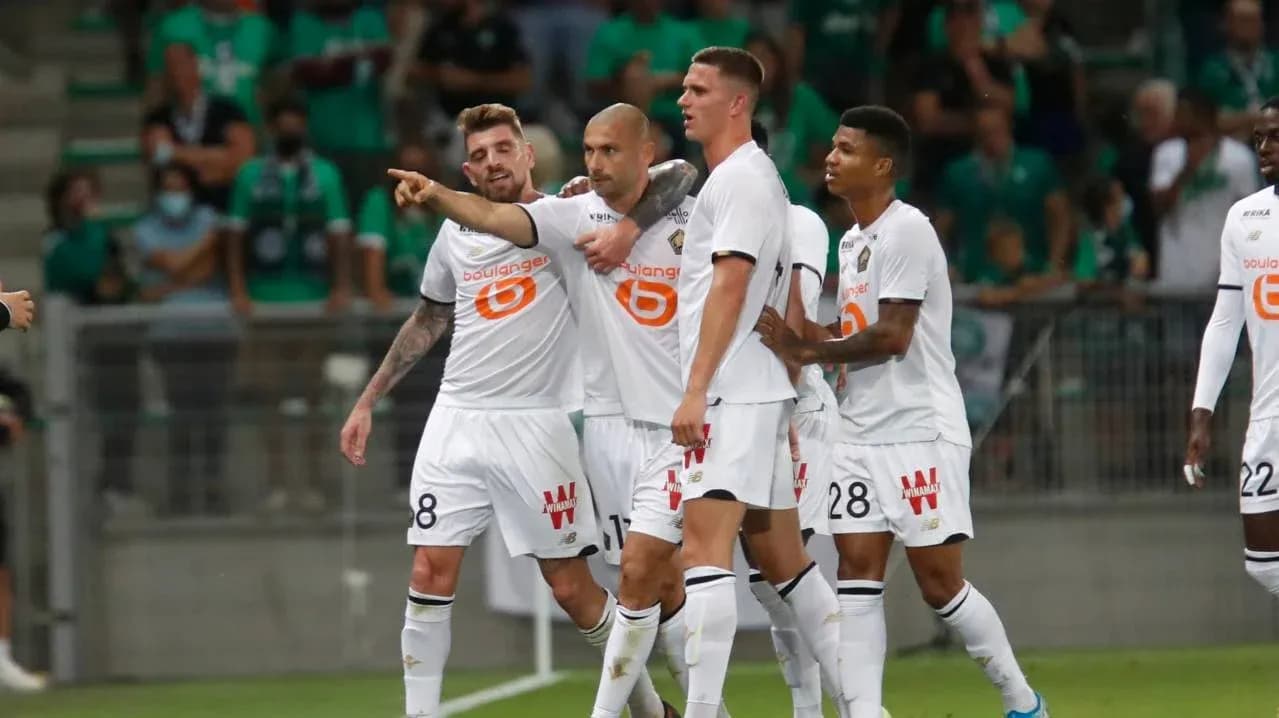
After half-time, the tactical balance shifted. Sparta’s passing platform became the decisive factor: they completed 383 of 442 passes, an 87% success rate, compared to Lyon’s 331 of 404 (82%). That extra security in circulation allowed Sparta to pin Lyon deeper and recycle attacks through their full-backs and double pivot. The equaliser at 63' by M. Rynes, assisted by A. Irving, was emblematic: the left-back stepping high into the final third, enabled by the pivots’ cover and Lyon’s wing-back being dragged narrow. It showed Sparta’s willingness to overload wide channels and then attack the box with late runners.
The second Sparta goal at 69', finished by J. Mercado from a M. Rynes assist, underlined how the hosts started to dominate the second ball and intermediate zones. Mercado, operating as an advanced midfielder, consistently found pockets between Lyon’s midfield line and back three. Once Sparta had Lyon turned towards their own goal, the French side’s three-man defence struggled to track both full-back surges and midfield runs. The 6-9 corner count (in Lyon’s favour) suggests Lyon still had set-piece volume, but in open play Sparta’s positional play was superior in the second period.
Between those two Sparta goals, Lyon’s missed penalty by Corentin Tolisso at 67' represented a huge tactical hinge. Up to that point, Lyon’s 3-4-3 still posed a real threat in transition, with Openda stretching the line and the wing-backs offering width. Scoring would have re-established their lead and allowed Fonseca to drop the wing-backs deeper into a 5-4-1 block. Instead, the miss forced Lyon to continue chasing a balance between attacking and protecting their back three, and they were punished almost immediately when Sparta again exploited the left channel.
In goal, J. Surovcik (Sparta Praha) made 4 saves, a solid return that included key interventions once Lyon were forced to push numbers forward late on. D. Greif (Lyon) registered only 1 save, a reflection not of Sparta’s lack of pressure but of their shot quality and finishing once they broke through Lyon’s lines. With Sparta putting 3 shots on target from 9 attempts and Lyon 4 on target from 11, the hosts were more efficient in turning territory into decisive actions.
Priske’s in-game management further consolidated Sparta’s control. At 75', S. Eneme (IN) came on for A. Irving (OUT), refreshing the double pivot and preserving the team’s capacity to close central spaces and launch counters. Simultaneously, Fonseca introduced M. Fofana (IN) for M. de Carvalho (OUT) and E. Nuamah (IN) for M. Ouedraogo (OUT), trying to inject pace and direct running into the front line. However, these changes did not fundamentally alter Lyon’s structural problems against Sparta’s now-confident 4-2-3-1.
Later, L. Haraslin (IN) for J. Alcocer (OUT) at 84' and a double change at 85'—E. Singhateh (IN) for J. Brunes (OUT) and H. Sochurek (IN) for A. Karabec (OUT)—allowed Sparta to add fresh legs in the attacking and midfield bands while preserving the same shape. The final substitution, G. Kuol (IN) for J. Mercado (OUT) at 90+2', was a classic closing move: injecting energy to press Lyon’s build-up and protect the lead.
Discipline also shaped the closing stages. Sparta picked up two yellow cards—Adam Karabec for “Argument” at 66' and Matěj Ryneš for “Foul” at 90+4'—reflecting both the emotional turning point around the equaliser and the need to break up Lyon’s late pushes. Lyon, by contrast, finished without a booking, consistent with their lower foul count but also indicative of a side that increasingly defended by retreating rather than engaging.
Statistically, Lyon’s higher shot volume and 9 corner kicks show that they remained dangerous and had territorial moments, especially from set plays. But Sparta’s superior passing (442 passes, 383 accurate, 87%) versus Lyon’s (404 passes, 331 accurate, 82%) and their ability to generate almost all of their attempts from inside the box pointed to a more coherent attacking structure once they settled. The missed penalty was the pivotal moment, yet tactically the match turned because Sparta’s 4-2-3-1, with full-backs and advanced midfielders aggressively joining attacks, eventually overwhelmed the defensive capacity of Lyon’s 3-4-3.