
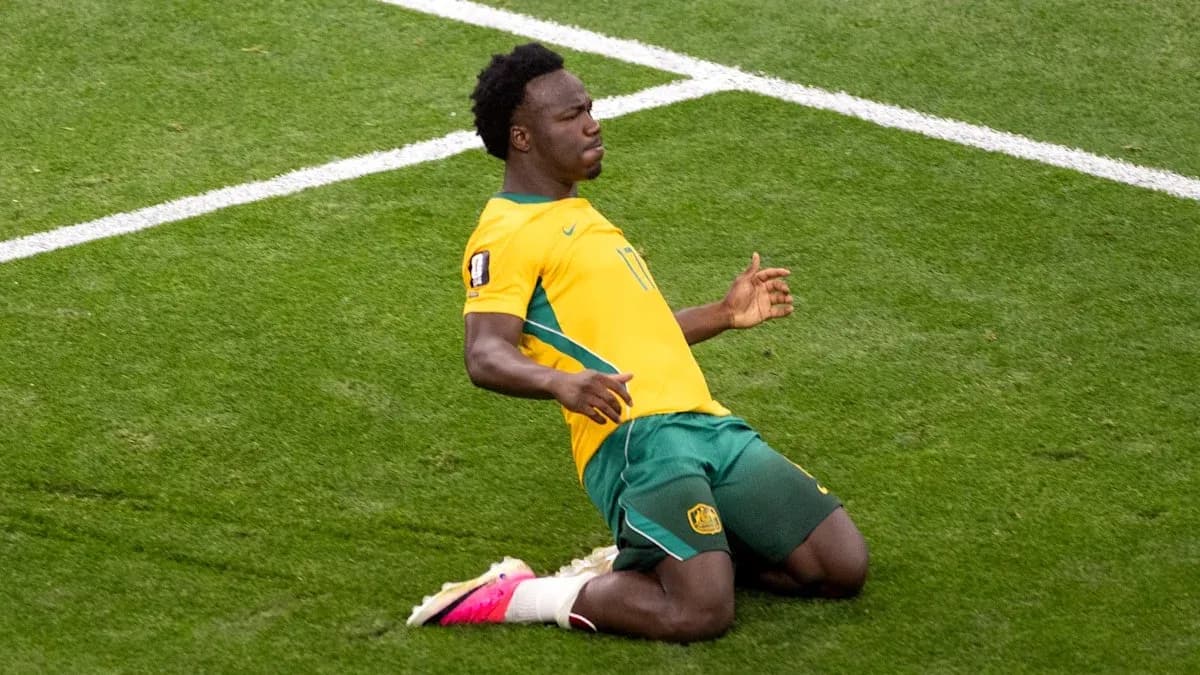
Socceroos Advance: Jordan Bos Emerges as Key Player
The Socceroos are through. The football questions are only just starting.
Australia’s 0-0 draw with Paraguay booked a place in the World Cup round of 32, a solid, disciplined result against a rugged South American opponent. But as the celebrations settled, the sharpest praise – and the loudest alarm bells – were both reserved for the same unlikely figure.
Jordan Bos. A full-back, thrust into a wide role on the right, suddenly Australia’s most dangerous outlet.
Bos shines, forwards fade
Jacob Italiano’s late injury forced Tony Popovic into a reshuffle that many had been waiting to see. Bos came in on the right, while Melbourne City’s Aziz Behich filled the gap on the left. It looked like a risk. It turned into a revelation.
Bos drove at defenders, offered width, and gave Australia a genuine out-ball in a game where space was a luxury. He looked fearless. He looked ready.
And that, according to two former Socceroos, is exactly the problem.
“Up front is a bit of a worry when we’re looking at Jordy Bos as one of the most threatening (for Australia),” Robbie Slater said on Stan Sport’s Added Time.
When your right-sided stand-in defender is the main attacking spark at a World Cup, it says as much about the forwards as it does about the kid stealing the headlines.
Scott McDonald agreed. For him, the concern is not Bos – it’s everyone ahead of him.
The No.9 riddle
This was supposed to be the stage for Mo Toure or Nestory Irankunda. Instead, one sat on the bench and the other was asked to lead the line in a role that still doesn’t fit like a tailored suit.
Irankunda, 20, is a winger by trade, a player who lives for space, angles, and the chance to isolate a full-back. Popovic used him as a No.9. Paraguay, with a physical back three, smothered him.
“There is a problem in terms of the No.9. Not bringing (Mo) Toure on instead of Tete Yengi tells me today that there’s no trust there,” McDonald said.
That’s a brutal verdict from a former striker, and it cuts to the heart of the issue. If the coach doesn’t trust his natural front man enough to use him when the game is there to be influenced, what does that do to the player – and to the structure of the team?
“Does he go and start him (Toure) out of the blue in the next game? You just can’t tell with Tony. But as a striker, being Toure, I don’t like that. That doesn’t fill me with confidence that my coach trusts me.”
The pressure finally told on Irankunda, too. He ran, he battled, he chased lost causes, but he fed on scraps.
“No matter who we put up there, it’s a thankless task up there. Look at Nestory (on Friday), he had very little and was living off scraps,” McDonald said.
When your No.9 is starved, your team shape bends. And for Australia, it bent towards Bos.
“When he plays up top, we don’t have a box outlet. Jordy Bos playing on the right-hand side was brilliant and it gave us that outlet.”
Irankunda out of position, out of rhythm
McDonald didn’t hide his admiration for Irankunda’s talent. His doubt lies in the role, not the player.
Irankunda as a long-term No.9? McDonald simply doesn’t see it.
“Look, he’s gotta hold it up a little bit better,” he said. “I think at times he struggled because it’s not his natural game.”
The picture was clear: Irankunda wanted to drift wide, find grass, face up his man. Paraguay’s back three squeezed that oxygen out of the contest. No space down the sides, no easy channels to attack, and a young forward trapped in traffic.
“If there are some players getting closer to you, then what are you meant to do? He wants to get in those wider areas and drift but with the way Paraguay were set up as well with the back three, it is very hard for him to get down the sides of the opposition. There was no space.”
“They were aware of his threat also, with three taking care of him. But he probably sometimes needs to be more in central positions and wait for things to happen.”
That last line is the education of a striker in a sentence. The best No.9s live in the box, not on the touchline.
“As we see the best strikers in the world – like Erling Haaland – they’re not interested any more. They just get into the right areas and allow others and trust others to do the dirty work then get on the end of things.”
“That’s not naturally probably where (Irankunda) thinks. He wants to be the guy creating that and doing things, getting on the edge of the box and having shots. So if you’re gonna play that role, you just need to play it a little bit more smarter and be a bit more patient.”
A simple truth about Socceroos No.9s
McDonald, who lived the life of a centre-forward, didn’t pretend he liked the current set-up.
“I didn’t like it either. I mean, for the majority of my career it was always you played off the big man or whatever.”
Then came the line that will sting any aspiring Socceroos striker who can’t dominate in the air.
“But I’ve always said it, if you can head it, you’ve got a better chance of being a No.9 for the Socceroos. It’s as simple as that.”
Right now, Australia have a young full-back looking like their sharpest attacking weapon and a cluster of forwards still searching for a role that fits.
The round of 32 is secured. The real test is whether Popovic can find a No.9 he truly trusts before the next knockout match exposes that fault line on the biggest stage of all.




