Rodri's Impact on Real Madrid: A Transfer Dilemma
The “biggest club in the world” has a habit. When a player is crowned the best on the planet’s biggest stage, Real Madrid don’t just watch. They circle.
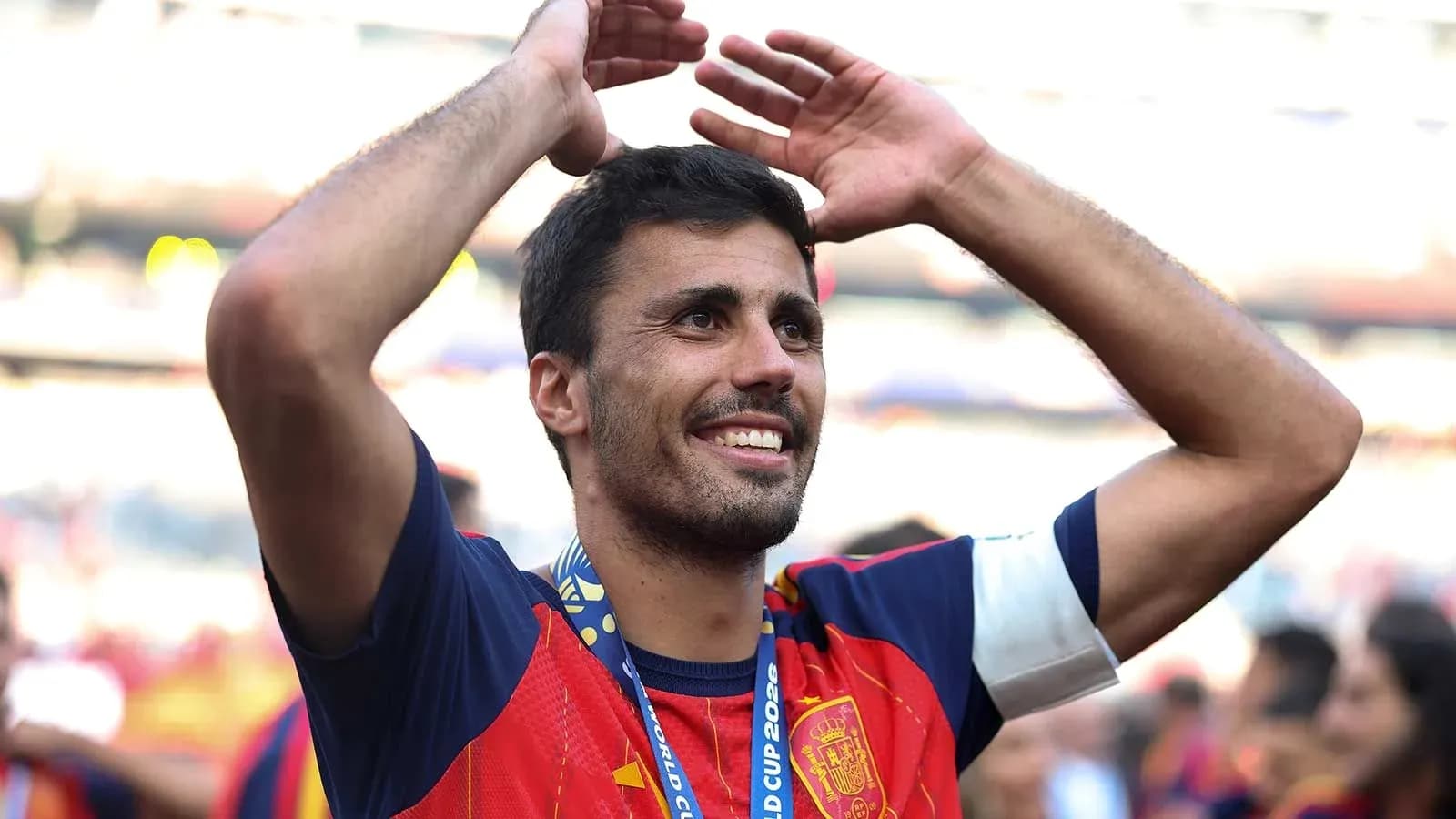
So when Rodri walked away from Spain’s World Cup triumph in the USA, Canada and Mexico with the player of the tournament award, the reaction in Madrid was automatic. The club that has sold itself for decades as the natural home of football’s elite had to at least look. A 30-year-old midfield metronome with a recent anterior cruciate ligament rupture is not a straightforward €100 million decision. But this is Real. Logic rarely wins the argument when politics and prestige enter the room.
Perez’s promise and a summer without fireworks
This whole Rodri story sits on one man’s shoulders: Florentino Perez.
At the start of June, the president was still fighting off challenger Enrique Riquelme in an election that threatened his long rule at the Bernabeu. He won comfortably. He didn’t just win; he doubled down. In classic Perez theatre, he told socios to expect a mega transfer, a €150 million swing at a top star “of the calibre of Cristiano Ronaldo or Kaka.”
The reality has been far less galactico.
That headline offer, it turned out, was aimed not at a Ballon d’Or magnet but at Julian Alvarez from Atletico Madrid. The neighbours barely blinked before rejecting the bid, a response as swift as it was blunt. The sense lingered that the offer was more political tool than serious market move.
Real moved on, but not upwards.
Jose Mourinho returned to the Santiago Bernabeu, a familiar face with a familiar promise of steel and siege mentality. He is a coach who once won titles in Madrid yet spent much of his previous spell losing the decisive battles to Pep Guardiola’s Barcelona. His reappointment, after two trophyless years, felt like a throwback solution to a very modern problem.
On the pitch, the recruitment drive looked busy but not breathtaking. Marc Cucurella arrived from Chelsea, Denzel Dumfries from Inter Milan, a combined €75 million poured into full-backs. Ibrahima Konate came in from Liverpool on a free, as did Bernardo Silva from Manchester City, the Portuguese playmaker now 31 and, like Rodri, on the wrong side of the club’s ideal age profile.
Useful players. Good players. But not the blockbuster Perez had publicly promised.
That is where Rodri changes the temperature. One signing like that and the narrative flips: from a pragmatic, piecemeal rebuild to a statement of power.
The player who would change everything
Rodri’s quality is not in dispute. Even with the ACL rupture in 2024, he returned to orchestrate Spain’s World Cup win with a calm authority that underlined why managers build systems around him, not just midfields.
At Manchester City, according to Sky Sport, he has been offered a new deal beyond his current 2027 contract. No agreement yet. Real, the same report says, have already put a contract on the table until 2030 and are preparing an offer in the €50-60 million range.
Then comes the pushback.
Spanish outlet AS cites sources at Real who insist the supposed pursuit is being overblown, a story inflated by Spain’s World Cup success and the easy headline of “Rodri replaces Kroos and Modric.” Inside the club, some voices argue that signing him would not just tweak Mourinho’s footballing idea, it would rip it up.
Because with Rodri, you don’t just buy a player. You buy a style.
He dictates tempo. He decides when the game accelerates and when it breathes. Every attack can start at his feet. That is a very different Real Madrid to the one that grew comfortable, under Carlo Ancelotti and beyond, without the ball: sitting deep, absorbing pressure, then tearing forward through the raw pace of Vinicius Junior and Kylian Mbappe.
Put Rodri at the base of that team and you move away from chaos and transition towards control and possession. You hand the keys of the game to a single conductor.
Is that the Real Mourinho wants?
Fit, fee and a manager’s dilemma
There are two hard questions on the table in Madrid.
One: does Rodri fit Mourinho’s football?
Two: is €100 million for a 30-year-old, even one of this calibre, a step too far?
On the first, the tension is obvious. Mourinho’s best teams have often thrived in moments, not monopolies. They have been ruthless on the break, compact without the ball, emotionally charged. Rodri is the opposite of chaos. He is order. He slows things down as often as he speeds them up. He wants the ball, always.
On the second, the World Cup suggested he still has several top years left. His performances in North America looked like a player far from decline, one who could justify a nine-figure investment if he stays fit.
And he has already opened the door.
“The fact I played for Atletico doesn’t stop me from playing for Real. There are other players who have taken that path,” he said in the spring. That single line was enough to light up Madrid’s rumour mill and frame him as the natural heir to Toni Kroos and Luka Modric as the team’s midfield architect.
Surgery, suitors and a softening stance
Then came the back.
Last week, Manchester City announced that Rodri needed immediate back surgery and would be out for an indefinite period. Coach Enzo Maresca laid out the plan: “He will have the operation on Monday. Then he needs a holiday, has to rest and recover. And then he will come back to us.”
On Tuesday, City confirmed the procedure had gone well and wished him a speedy recovery.
Even that hasn’t cooled the market.
RMC reports that Paris Saint-Germain have joined the race, undeterred by his surgery and despite a midfield already stacked with Vitinha, Fabian Ruiz and Joao Neves. Two straight Champions League titles show that PSG’s engine room is hardly a weakness, yet they still see value in adding one of the game’s premier controllers.
Convincing the player, though, may not be their biggest strength. After seven years in England, Rodri is said to favour a return to Spain. That tilts the scales towards Madrid if Perez decides to push his chips in.
Inside City, the mood appears to be shifting. Early briefings suggested they would refuse to engage, that they had no intention of co-operating with a sale. Now, according to Marca, there is “growing acceptance” that if Rodri wants to go, they will not stand in his way. The club, it says, “holds the player in the highest regard” and will accept his departure should that be his decision.
Perez, pressure and a promise he can’t quietly bury
Strip away the noise and the situation is brutally simple.
Rodri is one of the very few players on the planet who could walk into Real Madrid’s midfield and instantly change its identity. He is available enough to be discussed, expensive enough to count as a true galactico, and open enough to a return to Spain to make the deal realistic.
He is also 30, recovering from serious injuries, and stylistically at odds with the coach Perez has just brought back to restore order.
This is not just a transfer call. It is a direction-of-travel decision for the club.
Perez told the Real Madrid world he would deliver a mega signing this summer. The market has not offered him many candidates who fit the billing. Rodri does. PSG are circling. City are no longer closing the door.
The president has built an empire on getting what he wants when the moment demands it. The question now is whether he wants a midfielder who could redefine his team, or whether the promise he made in June becomes the first big pledge of his new mandate that goes unkept.