
Rodri: From Injury to World Cup Glory
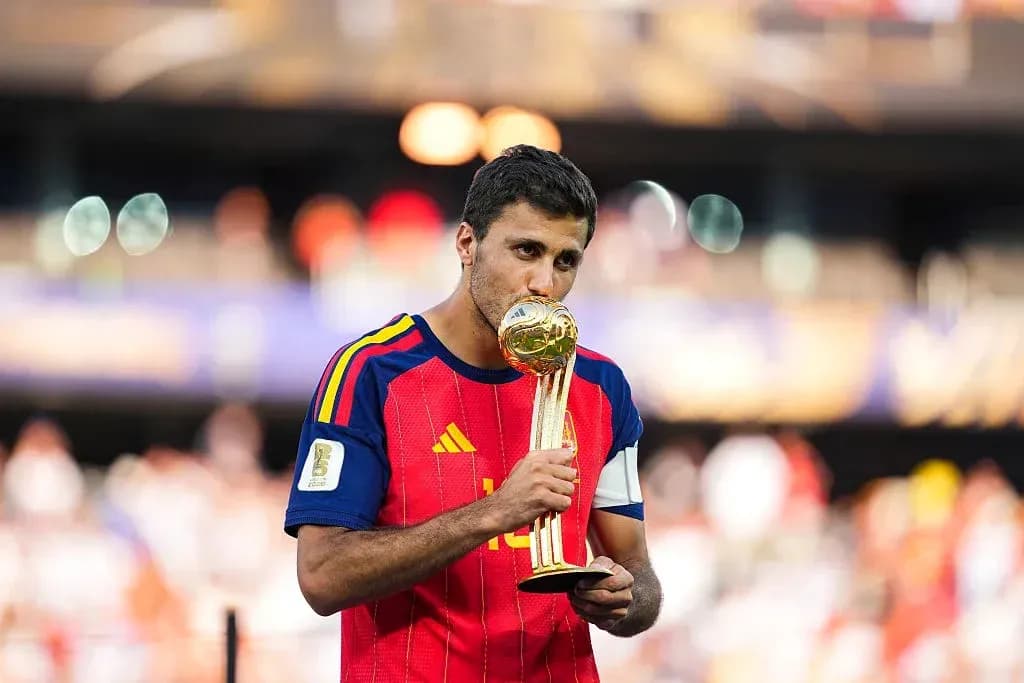
Rodri stands on the podium in his Spain shirt, gold medal around his neck, Golden Ball in his hands, World Cup trophy glinting just a few steps away. The cameras catch the tears, the roar, the embrace with teammates. What they cannot show is the route he took to get there.
A year earlier, his right knee had given way. September 2024, a serious injury, followed by setbacks that turned weeks into months and doubt into a daily opponent. The midfielder who now rules world football’s biggest stage had spent long stretches in treatment rooms, gyms and lonely training pitches, fighting just to feel like himself again.
Now he is the best player at the World Cup, the man who drove Spain past Argentina 1-0 in extra time to claim the trophy. From the heart of midfield he dictated the tempo, calmed the chaos, and carried a nation through the tightest of finals.
When it was over, when Spain had survived and then conquered, Rodri admitted the scale of the moment had barely landed.
"We're a bit shocked right now, even myself," he told Fox Sports, still wrapped in the adrenaline of the win. "I cannot express with words. I think now we're like in a cloud but, for me, it's been a very tough time."
Those “tough times” are not a throwaway line. His comeback has been long, painful and repeatedly interrupted. Each time he neared full fitness, another problem. Each time he thought he was close, another delay. For a player whose game is built on control, the lack of it over his own body cut deep.
He chose to turn it into fuel.
"I just want the new generations to see my example as an opportunity," he said. "When you go down, you can rise again. This is my philosophy for my entire life."
This is not the language of a man swept away by the glow of a single night. It is the creed of someone who has spent months confronting the possibility that his peak might be gone before the biggest stage arrived. Rodri framed his story not as a miracle, but as a roadmap.
"Of course, sometimes things go well, things go wrong, but always the positiveness," he added.
That mindset bled into Spain’s performance in the final. They were not overawed by Argentina’s pedigree or the pressure of the occasion. Rodri set the tone in the dressing room before a ball was kicked.
"I said to the lads before the game, 'we have to go for the game.' We need to face them, we have to look to their eyes. We want this game."
No hiding. No waiting for mistakes. Spain went to meet Argentina head on, trusting their football and their nerve. The match demanded bravery, and Rodri demanded it from himself first.
"And then life gives you the World Cup or not," he said. "But we were brave and I was brave in that moment I was down, so I want to thank all the people that helped me.
"But I want to thank myself, to be honest, in those moments."
It is a striking admission. Footballers routinely thank families, staff, teammates, fans. Rodri did that, but he also acknowledged the lonely hours when only his own will kept him moving. The days when there was no crowd, no medal, no trophy – just a damaged knee and a choice: give in, or push on.
On this night, in the glare of the World Cup, that choice reached its ultimate reward. For Spain, he is the midfield general who carried them to the summit. For the next generation watching, he wants to be something more: proof that the climb back from the bottom can end on the very top step.




