
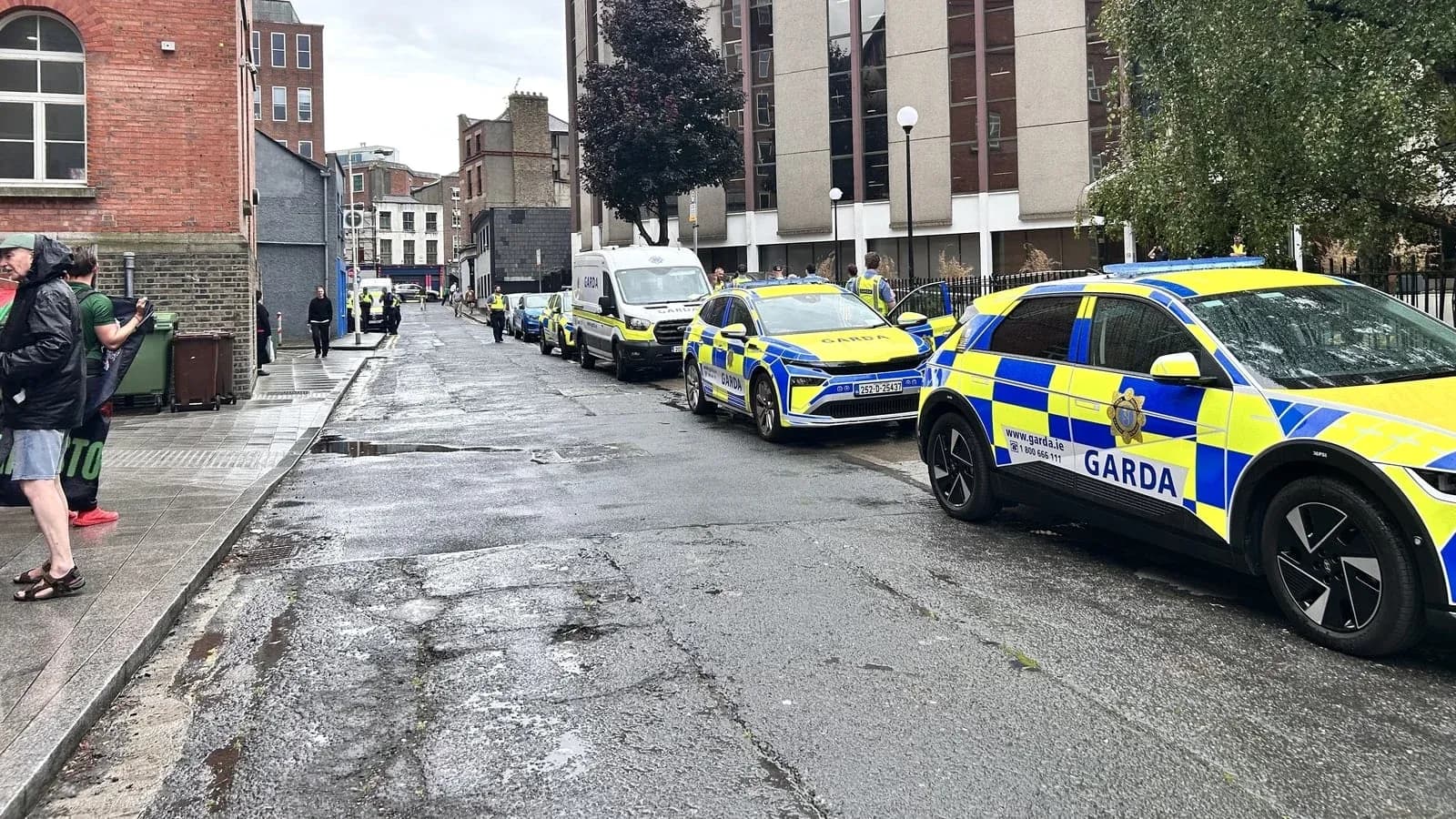
Protesters Occupy Dublin Sports Department Over Ireland–Israel Matches
The lobby of the Department of Culture, Communications and Sport on Leeson Lane is rarely a battleground. On this day, it became exactly that.
A group of #StopTheGame activists occupied the entrance to the government building in Dublin, staging a sit-in aimed squarely at one fixture: the Republic of Ireland’s Nations League meetings with Israel in late September and early October. Their message was blunt — these games should not go ahead.
Security eventually removed the protesters, but the confrontation underlined a row that is hardening rather than fading.
“Sportswashing” at the heart of the dispute
In a statement, the #StopTheGame group framed the action as part of a rolling campaign that, they say, will only escalate unless both Nations League fixtures are scrapped.
They accused the Irish Government and the FAI of pushing ahead with the games despite Ireland’s status as a signatory to the International Criminal Court.
“Ireland is a part of the International Criminal Court and as such should not be engaging in sportswashing. We are failing in our moral, humanitarian and legal obligations as a country in playing these games,” the statement read.
The campaigners also laid responsibility at the door of Taoiseach Micheál Martin, claiming he was among the first to insist that the FAI fulfil the fixtures against Israel.
Councillor: Don’t put this on the players
Independent Dublin City Councillor Cieran Perry, acting as spokesman for the group, argued that the burden should not fall on Stephen Kenny’s squad or any individual player.
His stance was clear: the decision to pull out of the Nations League ties, he said, must be taken by the FAI and the Government, not left to those selected to wear the shirt.
The pressure, in other words, should be political and institutional, not personal and sporting.
FAI moves home tie to neutral venue
The FAI has already shifted its position once — but not in the way the protesters want.
Last month, the association confirmed that the Republic of Ireland’s home Nations League game against Israel would not take place in Ireland. Instead, it will be played behind closed doors in Bačka Topola, Serbia, on Sunday 4 October.
In its own statement, the FAI Board said it had opted for a neutral venue “due to operational challenges that could impact on the delivery of the game on home soil”.
The away fixture remains in place. Ireland are scheduled to face Israel first on 27 September at the Nagyerdei Stadion in Debrecen, Hungary.
So the games go on, just not in Dublin.
Government distances itself from fixture decisions
Inside the Leeson Lane building, the official line is one of distance.
A spokeswoman for the Department of Sport underlined that bodies such as the FAI are “independent, autonomous bodies responsible for the governance of their own sports, including the organisation of sporting fixtures, whether in domestic or international competitions.
“The Government and Sport Ireland have no role in the organisation of such fixtures,” she said.
That stance leaves the FAI squarely in the spotlight. Protesters want withdrawal. Government insists it has no say. The fixtures remain on the calendar, shifted abroad but still looming — and with them, a question that will not go away: how long can football stand apart from the politics raging around it?




