
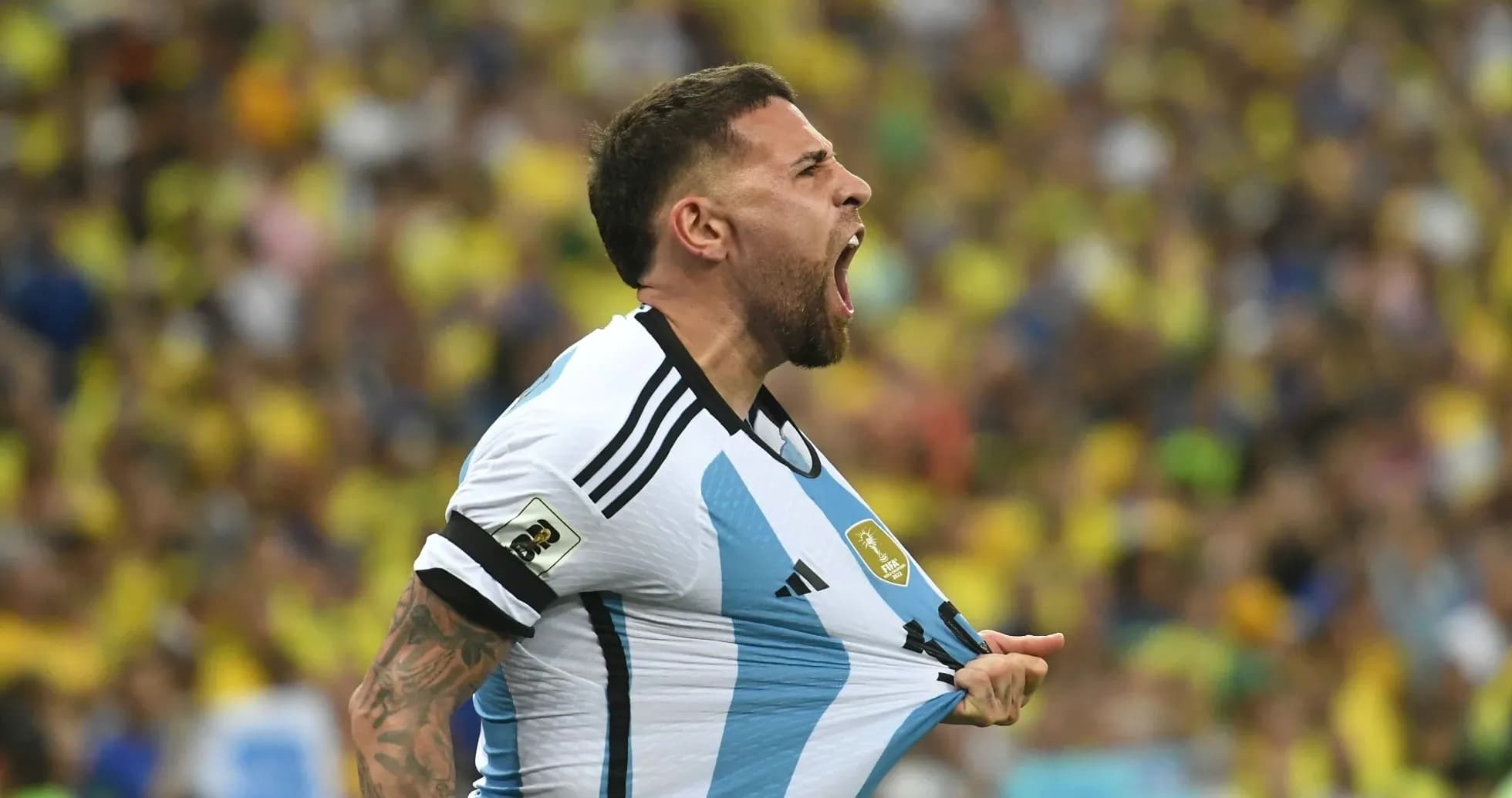
Nicolás Otamendi's Farewell: A Warrior's Legacy in Argentina
Nicolás Otamendi always did his talking on the pitch. On Wednesday, he chose a different arena. From his Instagram account came the words that close one of the most rugged, enduring chapters in Argentina’s recent history: the veteran defender will retire from the national team after the 2026 World Cup.
“Today, I’m writing the most difficult words I’ve ever had to,” he began. For a player who built a career on tackles, blocks and last-ditch headers, this was the one decision he couldn’t throw himself at. He called the Argentina shirt “a childhood dream’’ and “the greatest privilege” of his football life, and there was nothing sentimental about it. It sounded like a man clocking off after a lifetime’s shift.
He stressed that he had defended the jersey “with all my heart, with pride, and with a sense of responsibility, knowing what it means to millions of Argentines.” That line fits the player. Otamendi never glided. He crashed, contested, snarled. He played as if he carried those millions on his back and dared anyone to knock them off.
Regret over 2026, peace with himself
The wound of the 2026 World Cup final still sits close to the surface. Otamendi didn’t hide from it. He admitted his regret over Argentina’s defeat, the one blot at the end of a golden cycle. Yet he insisted he leaves “with the peace of mind that comes from giving it all.”
That has always been his currency. Not elegance. Not hype. Effort. Relentless, often brutal effort.
He used the post to thank the fans and his family for sticking with him through the highs and the long, painful lows that defined the Albiceleste before the Lionel Scaloni era found its balance. Then he turned his gaze forward, to those who will replace him, urging the next generation of Argentina players to “never stop believing.”
The final line of his message landed like a curtain call: “Thank you, Argentina. Thank you for letting me fulfill my dream of becoming a world champion and wearing the most beautiful jersey in the world.”
Teammates salute a leader
The reaction was immediate and emotional. Former teammates, current stars and supporters flooded his Instagram with tributes, the kind of unanimous respect that only comes when a dressing room knows exactly what it is losing.
Alexis Mac Allister thanked him for being “an exemplar of fight, resilience and love for the shirt,” a neat summary of Otamendi’s entire international career. Germán Pezzella called him “a guide for us all,” a phrase that speaks to the influence he wielded long after his legs began to slow.
Names from different generations chimed in. Paulo Dybala, Marcos Senesi, Mariano Andujar and Gianluca Prestianni all left their messages of gratitude, a roll call that shows how many cycles of the national team he bridged.
One tribute cut deeper than the rest. Rodrigo de Paul, one of the emotional engines of this Argentina side, dedicated an Instagram story to the vice-captain. He recalled the day he first arrived in the national team and Otamendi opened the door to his room, a small gesture that grew into a ritual and a bond.
“My thanks to you, my brother, are eternal,” De Paul wrote. “You were an example to follow and one of the leaders of the beautiful story this team built. Thanks for everything, I’ll miss you.” For all the trophies and statistics, that is the kind of line that defines a leader’s legacy inside a squad.
From Vélez to the world
At 38, this farewell had been on the horizon. Age eventually catches even the most stubborn defenders. Otamendi was always likely to be one of the first great figures of this cycle to step away from Albiceleste duty.
His journey began back in 2008, when he broke through at Vélez Sarsfield as a rugged, old-school centre-back in the Argentine First Division. That form carried him to Europe and into the heart of the national team, where he became a constant presence through years of turmoil, near-misses and finally, redemption.
Scaloni trusted him completely at Qatar 2022. Otamendi started as one of the pillars of the side that fought its way to the title, his experience and sheer will crucial in a tournament that demanded emotional steel as much as technical quality. Four years later, time had shifted his role. Lisandro Martínez stepped into the starting lineup alongside Cristian “Cuti” Romero, and Otamendi moved into a supporting role, a veteran presence in the shadows, guiding, talking, steadying.
That transition said plenty about him. No public complaints. No drama. Just another job to do for the shirt.
A defender made of granite
Otamendi never pretended to be something he wasn’t. He was a rugged, uncompromising, abrasive defender, a centre-back who seemed to enjoy the physical duel more than anything else. He brought a hard edge to every team he played for, and Argentina leaned on that edge in some of its most turbulent years.
At 1.83m, he was not especially tall by international standards, yet he dominated in the air with a mix of timing, aggression and sheer refusal to be beaten. In Argentine football, his frame was imposing; on the global stage, he often stood across from giants and refused to blink.
One image captures him perfectly: towering over the 1.98m Harry Souttar in the round of 16 against Australia at Qatar 2022, winning yet another aerial duel. The photo went viral, but for those who had watched him for years, it was just Otamendi being Otamendi — outgunned on paper, superior when it mattered.
Joining the greats
He now steps away from the national team leaving more than a medal collection. He leaves a blueprint. Determination. Fierceness. A competitive fire that burned the same in friendlies, qualifiers and World Cup knockouts.
His name will sit comfortably alongside Daniel Passarella, Oscar Ruggeri and Roberto Ayala when Argentina debates its greatest defenders. Different eras, different styles, same uncompromising devotion to the crest.
The next wave of Argentine centre-backs will grow up knowing the standard he set. The question is not whether they can match his trophies. It’s whether they can match the way he lived every minute in that shirt.




