Newcastle United's Transition: Life After Eddie Howe
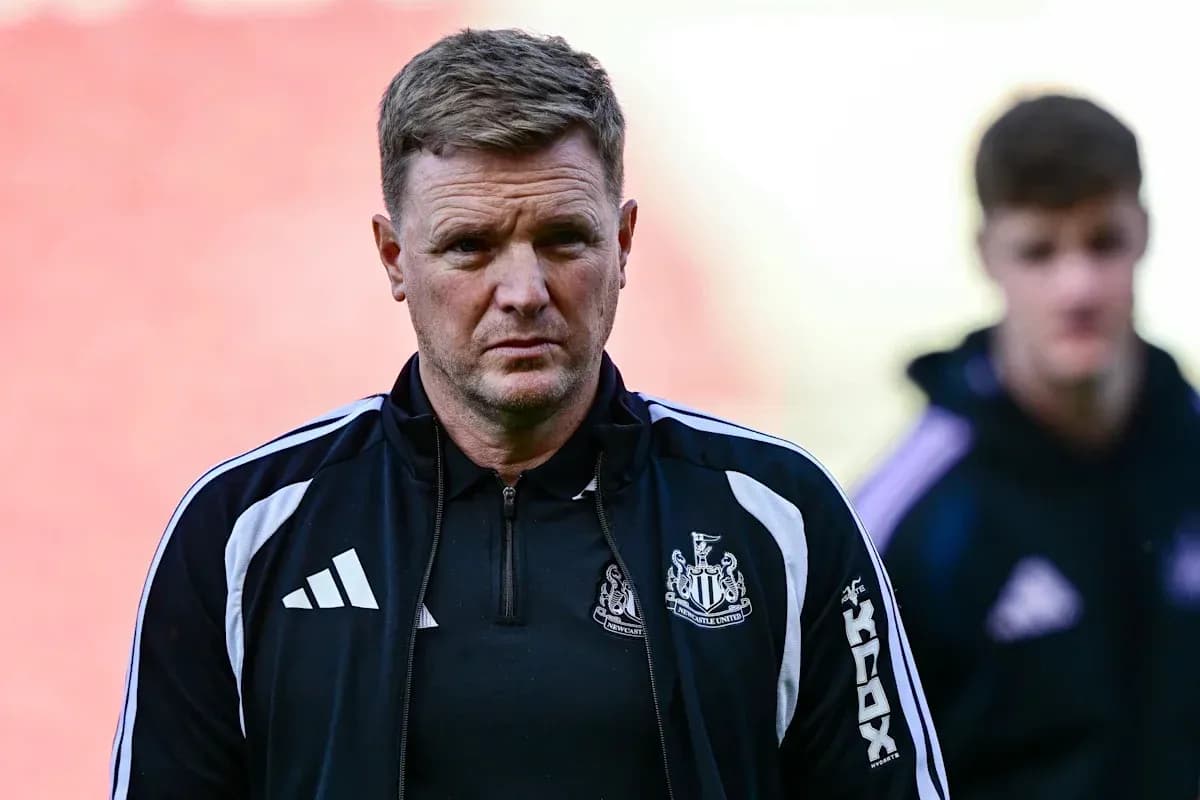
Newcastle United spent most of the summer braced for upheaval in the dressing room. Few inside or outside the club, though, expected the biggest change of all: Eddie Howe walking away.
His exit, early in pre-season and in the thick of the transfer window, threatened to blow a hole straight through carefully laid plans. Training schedules, tactical work, recruitment meetings – all of it suddenly had to coexist with a search for a new head coach. On the surface, it looked like chaos waiting to happen.
Inside the building, Ross Wilson insists it never reached that point.
Two windows at once
The sporting director has revealed that Newcastle had already been working quietly on life after Howe long before the former head coach chose to leave, which allowed them to move decisively for Matthias Jaissle.
Speaking to Newcastle’s scouting staff, Wilson likened the past few weeks to “almost like running two transfer windows,” as reported by The Athletic’s Chris Waugh. One was public: the squad rebuild that would eventually see around £300 million invested in eight new signings. The other was hidden: a secret, two-week managerial search conducted in parallel.
“No, it never felt chaotic inside at all,” Wilson said. “Big respect to Eddie for the job he did for us over a long period of time. Bringing that trophy here means we would all describe him as a club legend.”
Howe’s decision to go when he did still hit hard. He had committed to another season at the end of the last campaign, and Newcastle did not expect to be ripping up the dugout plans at that point in the summer. The disruption was real: a new coach to find, a pre-season to salvage, a major recruitment drive still in motion.
But Wilson had already been working with a different clock.
Planning in the background
The idea that Newcastle might one day have to replace Howe was on the table from the moment Wilson arrived.
“Eddie would tell you, since I came to the club, I’ve been planning in the background for a managerial change,” Wilson said. “Part of our responsibility as leaders of the club is to be prepared.”
That preparation meant profiles, data, conversations and contingency lists. When Howe finally chose to walk away, Newcastle were not starting from zero. They had a clear view of who could come in, how they would work, and how their ideas might mesh with a squad already being reshaped.
That is where Jaissle came in. The pre-planning allowed Newcastle to identify him quickly and complete the transition while still driving ahead with their recruitment strategy. Several of the club’s transfer targets, Wilson suggested, were players who fit the demands of both Howe and Jaissle, softening the jolt of change in the dugout.
“Clearly the timing was not (what) we had planned for,” Wilson admitted. “But we had a plan in place, which is why we could execute it as quickly as we did.”
Howe leaves as the man who ended a long wait for silverware and helped drag Newcastle back towards the top end of English football. Jaissle walks into a club that has already bet big on its future and claims it has a roadmap for the next phase.
The question now is simple: with the groundwork laid and the money spent, how quickly can Newcastle’s new era catch up with the ambition that built it?