The Moment Mourinho Changed Manchester United's Future
There is a moment, buried in Manchester United’s modern history, that still makes people inside the club wince.
It ends with Jose Mourinho in tears.
The night the plan changed
Back in 2013, as Sir Alex Ferguson quietly prepared to step away from the dugout, United thought they had done the hard part. They had found the one man bold enough, brash enough, and big enough to walk straight into the greatest job in English football and not flinch.
Mourinho.
This was not a vague idea or a passing conversation. The pursuit ran for weeks. Senior United figures flew to Madrid and London. Meetings were held. Ferguson, who admired Mourinho’s edge and charisma, sat down with him and delivered the bombshell: he would retire at the end of the 2012-13 season.
From there, events moved quickly. Terms were discussed. An agreement was reached. United believed the deal was done.
Then, in the space of days, it wasn’t.
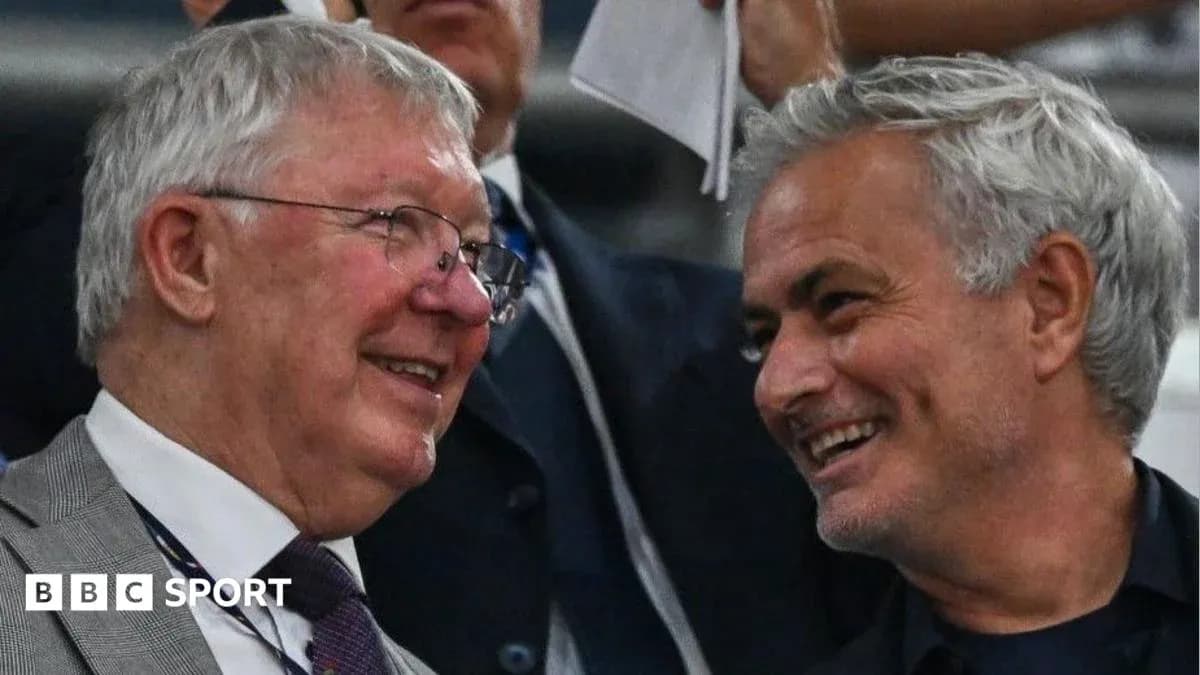
Ferguson recalls the phone call in a new Netflix documentary charting Mourinho’s career. One night, the Portuguese rang him, in tears.
“Alex, I can’t take it. I’ve given my word to Chelsea and I’m not going to break my word.”
Just like that, the future of Manchester United shifted.
Chelsea, family and a promise kept
Mourinho pointed to family reasons. He had a home in London. When he was sacked by Chelsea in 2007, he had promised his family they would return. His relationship with Roman Abramovich remained strong. Stamford Bridge, emotionally and practically, made sense.
Some at United still question how much of the decision was family, how much was loyalty, how much was Abramovich. What is not disputed is that, for a brief window, United were convinced Mourinho would be the man to follow Ferguson.
Inside Old Trafford, that prospect felt reassuring. Ferguson and chief executive David Gill were both heading out in the same summer. The club knew it wasn’t only about replacing a manager; it was about rewiring the entire football operation while staying competitive.
Ferguson had been a one-man institution, exerting control over almost every sporting decision. United’s hierarchy understood the next era would require a different structure, more modern, more distributed. They also believed Mourinho had the presence and authority to carry the weight of that transition on his shoulders.
Then the call came. The “yes” became a “no”. And United were suddenly staring into the unknown.
From Mourinho to Moyes
With Mourinho gone and Pep Guardiola already committed to Bayern Munich, United pivoted.
They chose David Moyes.
The Everton manager shared some of Ferguson’s traits: work ethic, discipline, a sharp eye for detail. But he did not share Ferguson’s record at the elite level. For all his achievements on Merseyside, he was a step down in stature from the men United had originally targeted.
The club announced him as “The Chosen One”. The banner went up. The story never matched the slogan.
The transition that had been so carefully plotted around a heavyweight like Mourinho instead became a scramble. In the transfer market, United hesitated. Deals dragged. The Thiago Alcantara move, which had been agreed with Barcelona, slipped away. The Marouane Fellaini saga turned into a symbol of the uncertainty: United eventually paid £27.5m on deadline day, having failed to trigger a cheaper release clause earlier in the window.
Those close to Mourinho insist Fellaini would never have been signed under him. They also insist Thiago would have been.
Mourinho had even provided United with his thoughts on a range of players, including Daniele de Rossi. There was a plan, or at least the outline of one. It vanished the moment he chose Chelsea.
The drop-off on the pitch was brutal. Ferguson’s final squad, widely accepted to have overperformed in winning the 2012-13 title, slumped to seventh under Moyes. Even the players have struggled to fully explain why. Many inside the club remain convinced Mourinho’s presence alone – his demands, his ego, his refusal to accept decline – would have squeezed more out of that group.
The Mourinho United finally got
Three years later, in 2016, Mourinho did walk through the doors at Old Trafford. But the landscape had changed.
He replaced Louis van Gaal, who was dismissed 48 hours after lifting the FA Cup with victory over Crystal Palace. The squad he inherited bore little resemblance to the one he might have taken over in 2013. Of the 18 players who started 10 or more Premier League games in Ferguson’s final title-winning season, only six – David de Gea, Phil Jones, Wayne Rooney, Chris Smalling, Michael Carrick and Antonio Valencia – did so under Mourinho in his first campaign.
Mourinho himself was different too. He had returned to Chelsea and won another Premier League title, only to depart under a dark cloud in December 2015, with the champions languishing in 16th place, a point above the relegation zone. The scars from that collapse travelled with him.
At United, his tenure splits opinion even now. On one side, the trophy list: Europa League and EFL Cup in his first season, two Champions League qualifications, and a second-place finish behind a record-breaking Manchester City side that he has called one of the best achievements of his career.
United’s 81-point haul that year remains their highest in the league since Ferguson left.
On the other side, the chaos. Mourinho clashed with players, most notably record signing Paul Pogba. He publicly accused the club’s hierarchy of failing to back him over Anthony Martial, a striker he wanted to sell. The football grew turgid, the mood toxic. When it ended, it felt less like a conclusion than a detonation.
The great “what if”
Inside United, a belief has hardened over time: they got Mourinho, but they got him at the wrong moment.
Drop the 2013 version of Mourinho straight after Ferguson and the story, many argue, looks very different. This was a coach still at his sharpest, still utterly convinced he could outdo anyone, even the man whose statue stands outside Old Trafford.
His personality would have driven the dressing room rather than collided with it. His instinct in the market would have been to move fast and decisively, not to dither. Those who worked through the muddled 2013 summer insist United would have emerged with a very different squad under his watch.
Most of all, they believe he would have challenged the complacency that seeped in after Ferguson’s departure. The squad that slumped to seventh needed a jolt, a voice loud enough to cut through the comfort. Mourinho, in 2013, was exactly that.
Instead, United got the version shaped by Chelsea’s implosion and the grind of a changing game. He still delivered trophies, still imposed his will in bursts, but the fit was never clean. The relationship between club, manager and players frayed too quickly, too deeply.
Tears, regret and a turning point
In the documentary, Ferguson tells the story of Mourinho’s call with clarity and a hint of lingering disbelief. The image is stark: one of the game’s most ruthless competitors, crying down the phone to the greatest manager of his generation, saying he cannot come.
For United, it was more than a missed appointment. It was a fork in the road.
From that moment, a decade of missteps, resets and half-built projects began to unfold. Different managers, different styles, different visions, but no single, coherent succession to the empire Ferguson built.
Inside Old Trafford, some still look back to that night, to that phone call, and wonder: if Mourinho had walked in then, at the height of his powers, would Manchester United still be searching for themselves now?