Mikel Arteta Advocates for Expanded Premier League Squads
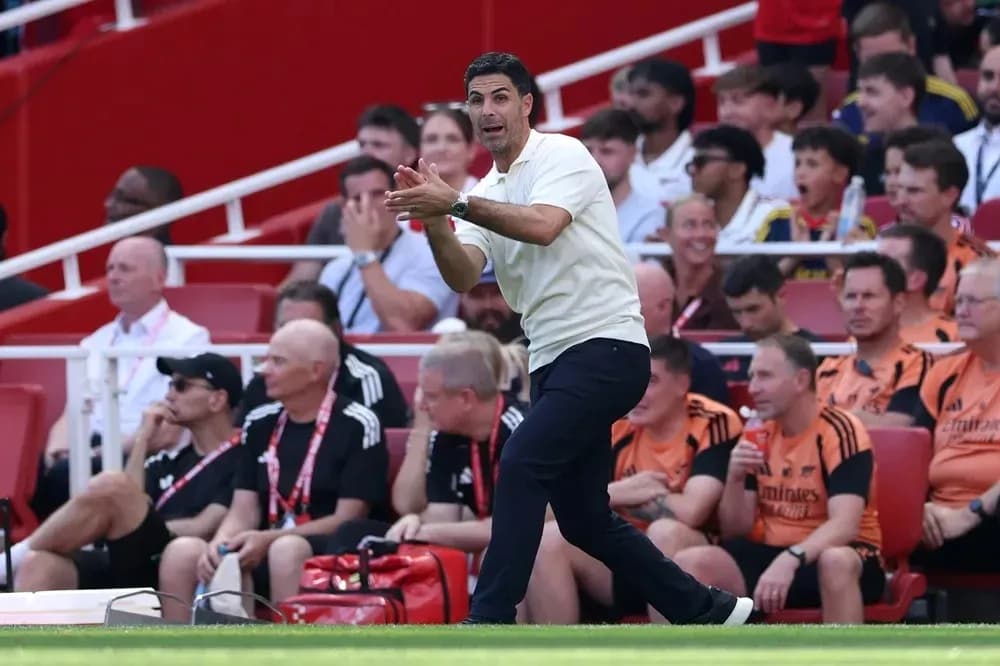
Mikel Arteta walked away from Cardiff with a 3-0 Community Shield win over Manchester City and another statement performance from his Arsenal side. But as the dust settled on an emphatic curtain-raiser, his focus drifted to those who never made it onto the teamsheet.
Arteta vs the 20-man limit
The Arsenal manager is lobbying for change. Not to the offside law or VAR protocols, but something far more basic: how many players he’s allowed to name on a Premier League matchday.
UEFA competitions permit 23-man squads. The Premier League still caps it at 20.
For Arteta, that gap now feels outdated.
"I've been trying to persuade the Premier League and the clubs to be able to extend the number of players that we can have, especially the outfield players in the squads, because we play more and more games and the load is unreal," he said after the win over City.
On Sunday, the limitations were laid bare. William Saliba and Jurrien Timber were absent through injury, with Timber still making the trip to Cardiff. Illan Meslier was also in the stadium, involved in the preparations, but not named among the substitutes – a familiar fate for a third-choice goalkeeper in domestic competition.
In Europe, that situation looks very different. Extra bench spots mean a third keeper can be included without squeezing out an outfield option.
It’s not a theoretical gripe for Arsenal. Last season, Tommy Setford regularly travelled to domestic fixtures, took part in the warm-up, then disappeared from the official squad list – only to be included in Champions League squads all the way to the semi-final. Same player, same club, two different rulebooks.
Quality left in the stands
Against Manchester City, the squeeze was brutal. On top of Meslier, Arteta had to leave out Gabriel Martinelli, Ethan Nwaneri, Gabriel Jesus, Fabio Vieira, and Reiss Nelson.
That’s serious attacking depth. And none of them could even be named on the bench.
Under UEFA rules, at least two of those players would likely have been involved. A 23-man squad changes the equation: 18 outfielders instead of 17, three goalkeepers instead of two, and far more tactical flexibility.
For Arteta, this isn’t about luxury. It’s about fairness and management in an era of relentless scheduling.
"It's just a shame (to leave players out), so it's the most difficult part of the job," he admitted. "It's just a fact that we can bring 18 outfield players and we believe that for today's game these were the options that we needed, especially with the physical condition of certain players."
He knows he can’t pick everyone. But he wants the rules to at least give him the same scope domestically that he enjoys in Europe.
The looming pushback
Not everyone will welcome that idea.
Smaller clubs are likely to resist any expansion to 23-man squads. They’ll argue it hands an even greater advantage to the elite, who can stockpile talent and flood the bench with international-level options. Some of those clubs may not even have 23 fully fit senior players to choose from most weeks.
That argument still carries weight. But the landscape is shifting.
Almost half the Premier League now plays in European competition each season. For those clubs, the jump between UEFA’s 23-man matchday squads and the domestic 20-man limit feels increasingly artificial.
Arsenal’s win over City underlined their depth and ambition. Arteta’s next battle won’t be on the touchline, but in the boardroom and committee rooms, as he tries to drag the Premier League’s squad rules into line with the demands of the modern calendar.
If the league wants its clubs to compete with Europe’s best, how long can it afford to play by smaller numbers?