
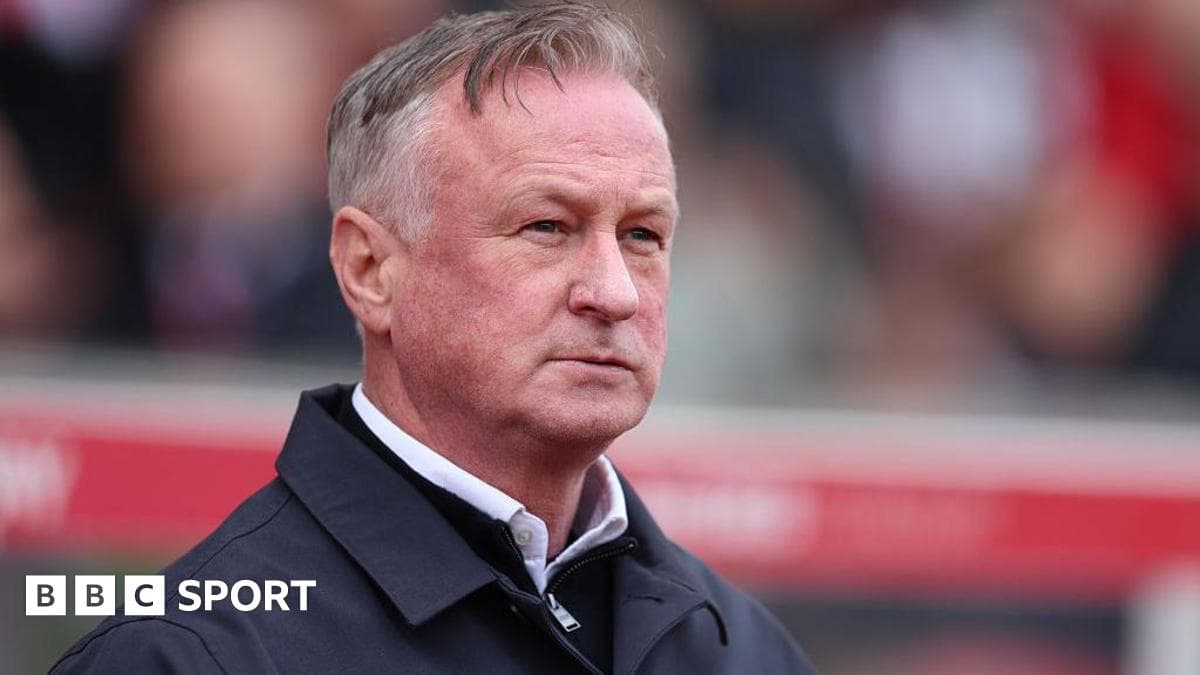
Michael O’Neill Commits to Northern Ireland Ahead of Euro 2028
Michael O’Neill has turned his back on club management – for now – and thrown his full weight behind Northern Ireland’s bid to return to the European stage.
After months of juggling two jobs and an equal number of questions about his future, O’Neill has told Blackburn Rovers he will not take their head coach role on a permanent basis, choosing instead to remain as Northern Ireland manager and lead the push towards Euro 2028.
Club crossroads, country call
When Blackburn handed O’Neill the interim reins in February, it was a bold, slightly unusual move: a national team boss doubling up in the Championship until the end of the 2025-26 season. It was always billed as temporary, a stop-gap to steady a listing ship, but the results gave the club something to think about.
Fifteen league games. Five wins, five draws, five defeats. A perfectly split record, but one that did the job that mattered most – Blackburn stayed up, finishing 20th in the second tier and sidestepping the financial and sporting chaos of relegation.
The question then became inevitable: would O’Neill stay?
He had warned repeatedly that the dual role could never be a long-term arrangement. At some point, he would have to choose. That moment has now arrived.
“Following discussions with the club, Michael has decided to continue his long-term commitment to his role as Northern Ireland head coach, with a focus on leading the national team towards qualification for the Uefa European Championships in 2028,” Blackburn confirmed in a statement.
O’Neill’s own words carried the same clarity. He spoke warmly of Blackburn – calling it a historic club with passionate supporters – and thanked the owners, board, staff, players and fans for their backing. But his conclusion was blunt: his long-term focus must remain with Northern Ireland and the journey into the next European Championship campaign.
Blackburn, left without the man who had briefly calmed their season, will now begin the search for a new permanent head coach, with updates to follow. They at least have time on their side before the 2026-27 campaign.
A second act with familiar ambition
For Northern Ireland, this is more than continuity. It is a statement of intent.
Across his two spells in charge, O’Neill has overseen 104 matches, collecting 38 wins, 23 draws and 43 defeats. The raw numbers only tell part of the story. His first tenure delivered a landmark achievement: qualification for Euro 2016, Northern Ireland’s first appearance at a European Championship finals.
The target now is clear – to repeat that trick and drag a new, younger generation back onto the big stage.
The Irish FA made no attempt to hide their delight. In their statement, they hailed the “exciting squad” O’Neill has assembled and spoke of building on current momentum into the Uefa Nations League this autumn and then Euro 2028 qualifying, with O’Neill firmly in charge.
For supporters, the relief is obvious. The uncertainty of recent months had frayed nerves. In March, O’Neill suggested he would “return to the status quo” for the June fixtures. By April, he admitted a decision still had to be made, and alarm bells started to ring. Now, the noise has stopped. The path is set.
A young team, a high ceiling
O’Neill’s second spell began, again, with a repair job. He inherited a struggling side from Ian Baraclough and, while Northern Ireland missed out on both Euro 2024 and this year’s World Cup, the team he has moulded looks sharper, braver on the ball and more competitive.
The numbers underline the shift. The average age of his starting XI in the World Cup play-off defeat to Italy in March was just 22.5 – the country’s second-youngest side on record since World War Two. That statistic becomes even more striking when you factor in three key absentees: Conor Bradley, Dan Ballard and Ali McCann. Even with them, the age profile barely moves.
This is not a squad clinging to the last days of a golden generation. It is one just beginning to discover what it might become.
With O’Neill staying, belief will only grow that he can guide this youthful group through a similar arc to 2016 – build, learn, then break through.
The road to 2028
The immediate focus is sharp enough. Northern Ireland face two friendlies in June, against Guinea in Cadiz and France in Lyon, useful markers before the serious business resumes in the autumn.
September brings the Nations League, where O’Neill’s side have been drawn in Group B2 alongside Hungary, Georgia and Ukraine. It is a demanding section, but also a platform: a chance to harden a young squad against strong opposition and refine the identity O’Neill has been crafting.
Crucially, the decision has come early. O’Neill can now prepare for those June fixtures and the Nations League with full authority and no lingering doubts over his future. Blackburn, for their part, have space to identify and appoint a new coach well before the next campaign.
The Irish FA, too, will feel vindicated. When O’Neill returned in 2022, the job was less attractive than it is now. Results have improved, the squad has been refreshed and the project looks enticing. Had he walked away, there would have been no shortage of candidates. Instead, they keep the architect already in place, avoiding disruption just as a crucial cycle begins.
So O’Neill steps away from the weekly grind of the Championship and recommits to international football, to long camps, big nights and the slow build towards another defining summer.
He has already taken Northern Ireland to one European Championship. With a younger, hungrier squad at his disposal and Euro 2028 on the horizon, the question now is simple: can he do it again?




