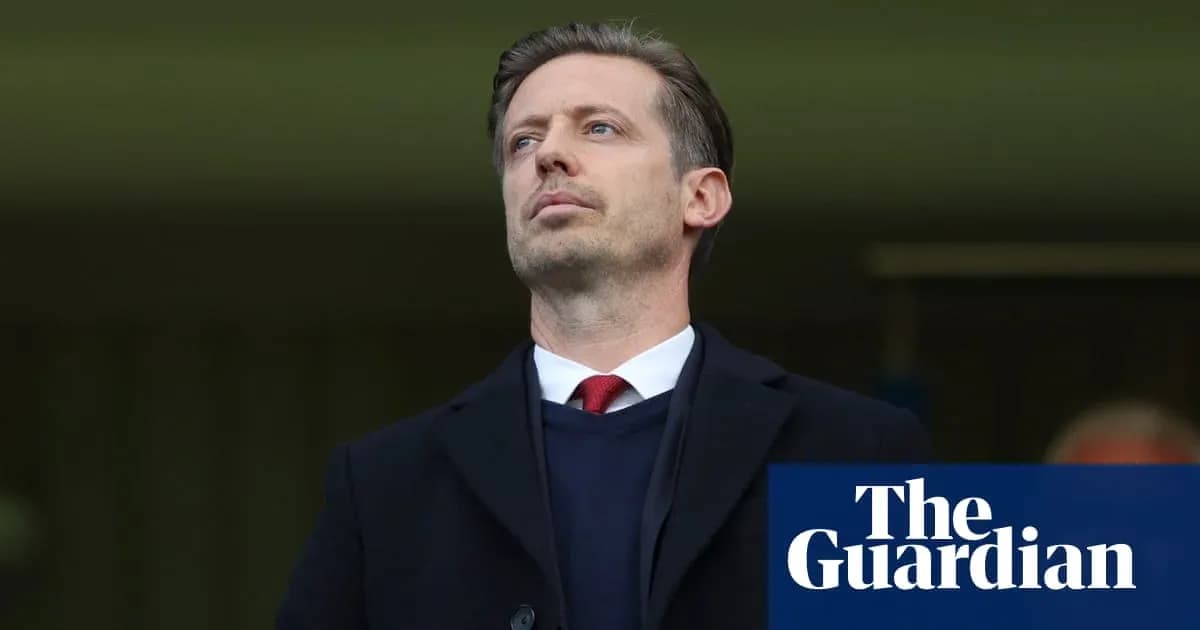
Michael Edwards Resigns as FSG's Chief Executive of Football
Michael Edwards has stepped away from Fenway Sports Group once again, this time for good. The architect of Liverpool’s modern era has resigned as FSG’s chief executive of football, walking out a year before the end of his contract after the ownership group shelved its multi-club ambitions.
FSG confirmed his exit on Friday, having tried to persuade him to stay. The decision, though, had been brewing for months. Edwards informed the group back in autumn 2025 that he would go once he felt Liverpool’s next chapter was securely mapped out.
A grand plan that never materialised
When Edwards returned in March 2024, it was not simply to steady Liverpool after Jürgen Klopp. He came back with a bigger canvas and a bigger title: FSG’s chief executive of football, not just Liverpool’s sporting director.
His brief stretched well beyond Anfield. He was charged with expanding FSG’s football footprint, driving a move into multi-club ownership and stitching together strategic partnerships that would give Liverpool and its owners a broader platform in the global game.
That project never caught fire. FSG explored potential acquisitions, including Getafe and Bordeaux, but nothing landed. No deal, no second club, no network. By last year the ownership group had effectively put the plan on ice.
Once that happened, the logic of Edwards’ role started to fray. The job had been created for him and for that wider project. With the project parked, his position became increasingly difficult to justify, at least in his own mind. He chose to walk, and because it was his decision, he is not expected to receive a payoff. FSG may not even seek a like-for-like replacement.
“A privilege to return”
Edwards, who first joined Liverpool in 2011 and later became the club’s first sporting director, leaves with the same measured tone that marked his work behind the scenes.
“It has been a privilege to return to Fenway Sports Group and Liverpool Football Club at such an important moment,” he said. “I leave believing Liverpool is in a strong position, with outstanding people, a clear direction and the foundations in place for continued success.
“When I returned, I was excited not only by the opportunity to help guide Liverpool through an important period of transition, but also by the chance to help shape FSG’s wider football ambitions. While that broader project ultimately evolved differently to how we had originally envisaged, I am proud of the work our team undertook in presenting ownership with a broad range of thoughtful and well-developed options for the future.”
His second stint has already been written into club folklore. Under the structure he helped rebuild, Liverpool navigated the post-Klopp turbulence and emerged with a historic 20th English league title, a landmark that pushed them back alongside the game’s traditional heavyweights.
Transfers steady, hierarchy anything but
On the pitch, the message from Liverpool is calm. Edwards’ departure is not expected to derail this summer’s transfer window. Recruitment plans are in place, and the man tasked with executing them is still at his desk.
Richard Hughes, the sporting director, continues to run Liverpool’s transfer business. The blueprint for this window has been drawn up, the targets identified, the strategy agreed. In that sense, the machine keeps turning.
The bigger picture is far less settled. Hughes himself, contracted until 2027, has been heavily linked with a lucrative move to Al-Hilal in the Saudi Pro League. His position will come under sharper focus once the current window closes.
Hughes has already made one of the defining calls of this new era, dismissing Arne Slot and appointing Andoni Iraola as head coach, a decision taken in tandem with Edwards. If he follows Edwards out of the door after the summer, Liverpool’s carefully constructed leadership framework will look very different, very quickly.
Gordon steps back into the spotlight
Into the gap steps a familiar figure. FSG’s president, Mike Gordon, is expected to take on a more hands-on role in football operations following Edwards’ exit, much as he did during earlier phases of the ownership.
Gordon paid a pointed tribute to the man who helped reshape Liverpool twice over.
“Throughout both periods he has consistently demonstrated exceptional judgment, integrity and an unwavering commitment to building a strong football organisation for the long term,” he said. “His return to the organisation saw Liverpool successfully navigate a significant period of transition before securing the club’s historic 20th English league title, an achievement to which Michael made an important contribution. While we are naturally disappointed to see him leave, we will always be grateful for everything he has given.”
Edwards departs having built, dismantled and rebuilt Liverpool’s football structure over the course of more than a decade. The club he leaves behind is stable, successful and, on the surface, well prepared.
The real test comes next: without the quiet strategist who shaped so much of the modern Liverpool, can FSG’s evolving vision hold its line in a landscape that refuses to stand still?