
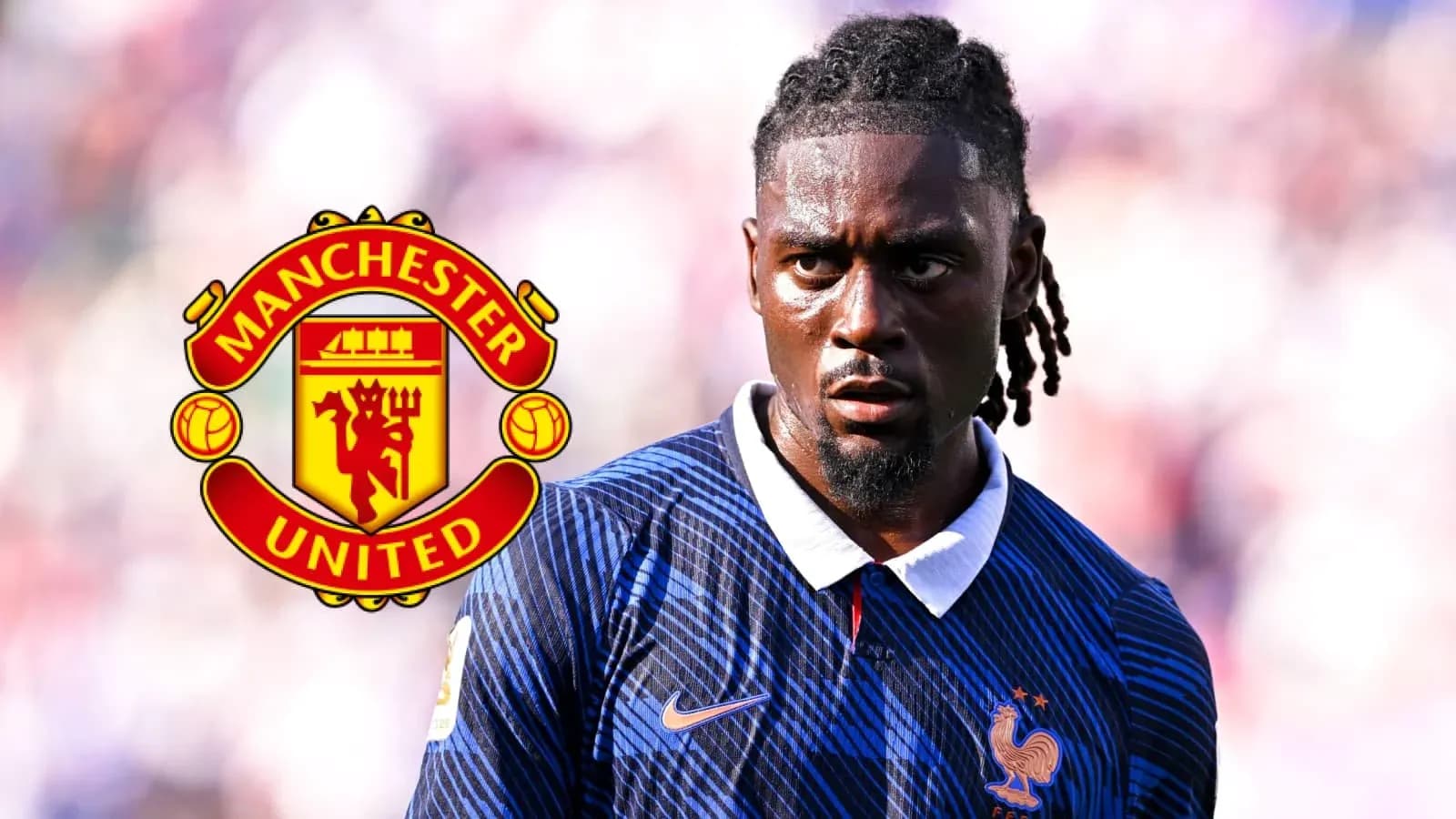
Manu Kone: The Missing Piece in Manchester United's Midfield
Manchester United’s midfield rebuild is missing one last piece, and if the plan is to drop Manu Kone in front of the back four and walk away satisfied, they are about to miscast a very good footballer.
Casemiro has gone, Manuel Ugarte is out long term, yet United have not stood still. Andrey Santos and Youri Tielemans bring numbers, pedigree and Premier League nous. On paper, the depth looks healthier. On the pitch, there is still a clear vacancy: a true specialist to anchor Michael Carrick’s team. Carrick, in effect, needs his own Carrick.
Not a destroyer. A director.
Carrick the player was never an old-school enforcer. He read the game, set the tempo, lived in that pocket just ahead of his centre-backs. That role can be filled in different ways, and that nuance is exactly where United risk getting Kone wrong.
A World Cup shop window
Kone has caught the eye for France at the World Cup, a dangerous shop window for impulsive buyers but, in his case, a fair reflection of his quality. At 25, he is no project. Five seasons across the Bundesliga with Borussia Monchengladbach and Serie A with Roma have hardened him in two of Europe’s toughest environments.
Roma see him as a jewel. He arrived on deadline day in the summer of 2024 and immediately injected life into their midfield. Not because he patrolled the space in front of the defence, but because he ripped through lines with the ball.
He ran. He drove. He shrugged opponents aside and dragged his team up the pitch. His profile looked far closer to a number eight than a classic number six.
That picture shifted under Gian Piero Gasperini in his second season. On paper, Gasperini and Kone sounded like a perfect marriage: a high-energy coach with a man-to-man blueprint, and a powerful, dynamic midfielder. The reality was more complex.
Gasperini often asked Kone to slide into the defensive line in the first phase of build-up, curbing those surging runs. The Frenchman still performed well, but the fireworks faded into a quieter, more understated influence.
The lesson for United is obvious. You can use Kone as your deepest midfielder, but you will be paying a premium to limit the best part of his game.
United’s history of miscasting midfielders
This is a club with form in this area. The Fred–Scott McTominay partnership became a byword for compromise: two willing, industrious players asked to do jobs that never quite matched their strengths, leaving United with a double pivot that never fully convinced.
The Casemiro signing briefly papered over that crack. At his peak, he was one of the world’s best holding midfielders, and even at 30 when he arrived in 2022, he produced big moments. But the fantasy version of the deal was always Casemiro at 25, not 30-plus, and reality eventually caught up.
United then bet that Ugarte’s elite tackling numbers for PSG in Ligue 1 would translate cleanly. They did not. Different league, different system, different problems.
Now comes the next gamble. Tielemans and Santos have not been recruited to sit and screen. That responsibility, in theory, falls to Kone. He can do it. He has the athleticism, the frame, the defensive instincts. Yet the trade-off is brutal: you are asking him to park the part of his game that truly separates him.
The data underlines it. Last season, even in a more restrained role, he ranked in the 78th percentile of Serie A midfielders for the average distance of his progressive carries. That is a player who naturally wants to break lines with the ball, even when the system reins him in.
A box-to-box midfielder with blunt edges
Kone is not the finished article. If he is to convince as a top-level box-to-box midfielder, one flaw stands out: his shooting.
Four goals in 82 games for Roma is a poor return for someone who often arrives in promising areas. He can look hesitant in the final third, as if the move slows just when it should explode.
Gasperini said as much in December, after Kone finally opened his account for the 2025–26 season. Score more, and he would already be outgrowing Roma. Since that night, he has played 22 times for club and country and scored once. The numbers back the eye test.
That lack of end product feeds a misconception. People see a powerful, hard-working midfielder who does not score and lazily file him under “defensive midfielder”. At his best, he is not that. He is a central midfielder who can defend, not a pure shield.
Then comes the market question. In this climate, what is that profile worth?
Elliot Anderson just moved to Manchester City for £116m after contributing fewer than 10 goals last season. Tottenham paid £85m for Mateus Fernandes, another player United liked before walking away. Against that backdrop, Roma’s expected asking price of £50m-plus for Kone – having already rejected around £38m from Inter last year – suddenly sits in the middle ground rather than the top end.
You are not buying goals or assists. You are buying control of the middle third, ball-carrying, and tactical flexibility. That only makes sense if you use him correctly.
Positional polish still required
There is another refinement needed. Kone’s movement off the ball in possession can be erratic. At Roma, he too often failed to slide into the right pocket to receive, or he drifted into areas that clogged passing lanes instead of opening them.
Those are details a true holding midfielder cannot afford to get wrong. The deepest player must be the reference point, the outlet, the organiser. Positional awareness is the job.
United’s structure might help. In a 4-2-3-1, Kone could play alongside Tielemans or Santos rather than as a lone six. That creates a simple, old-fashioned understanding: when one goes, the other stays.
That is how France have used him at the World Cup. Adrien Rabiot and Aurelien Tchouameni have both happily sat when Kone has surged, giving him licence to mix his game. At Roma, Bryan Cristante often provided that balance, even if the Italian himself stepped forward more frequently over the course of the Serie A season.
The template for United is clear. When Tielemans roams, Kone holds. When Kone drives, Tielemans drops. It sounds basic, but it has to be shared properly. If one man is pinned back as the de facto holder, you are no longer getting the full version of either player.
Is there a better fit elsewhere?
United are not alone in circling. Atletico Madrid have been mentioned. Arsenal, too, at one stage, and there are quiet suggestions Liverpool could revive long-standing interest dating back to his Borussia Monchengladbach days.
Arsenal, with Martin Zubimendi as a fixed anchor, might offer a cleaner role. Declan Rice has already shown what happens when a perceived holding midfielder is freed to step higher, safe in the knowledge there is a specialist behind him.
But Arsenal’s gaze appears to have shifted towards Bruno Guimaraes. That leaves Liverpool as a potentially intriguing destination. They, like United, are searching for a number six. If Andoni Iraola leans into a 4-2-3-1, Kone alongside someone like Ryan Gravenberch in a true double pivot could be a powerful, roaming pairing.
Wherever he goes, the same truth holds. Manu Kone is a high-level midfielder with clear strengths and obvious flaws, and time to polish both. Used properly, he can transform the feel of a midfield. Used as a static shield, he becomes an expensive compromise.
The club that wins this race will not just be judged on the fee they pay. They will be judged on whether they truly know what they are buying.




