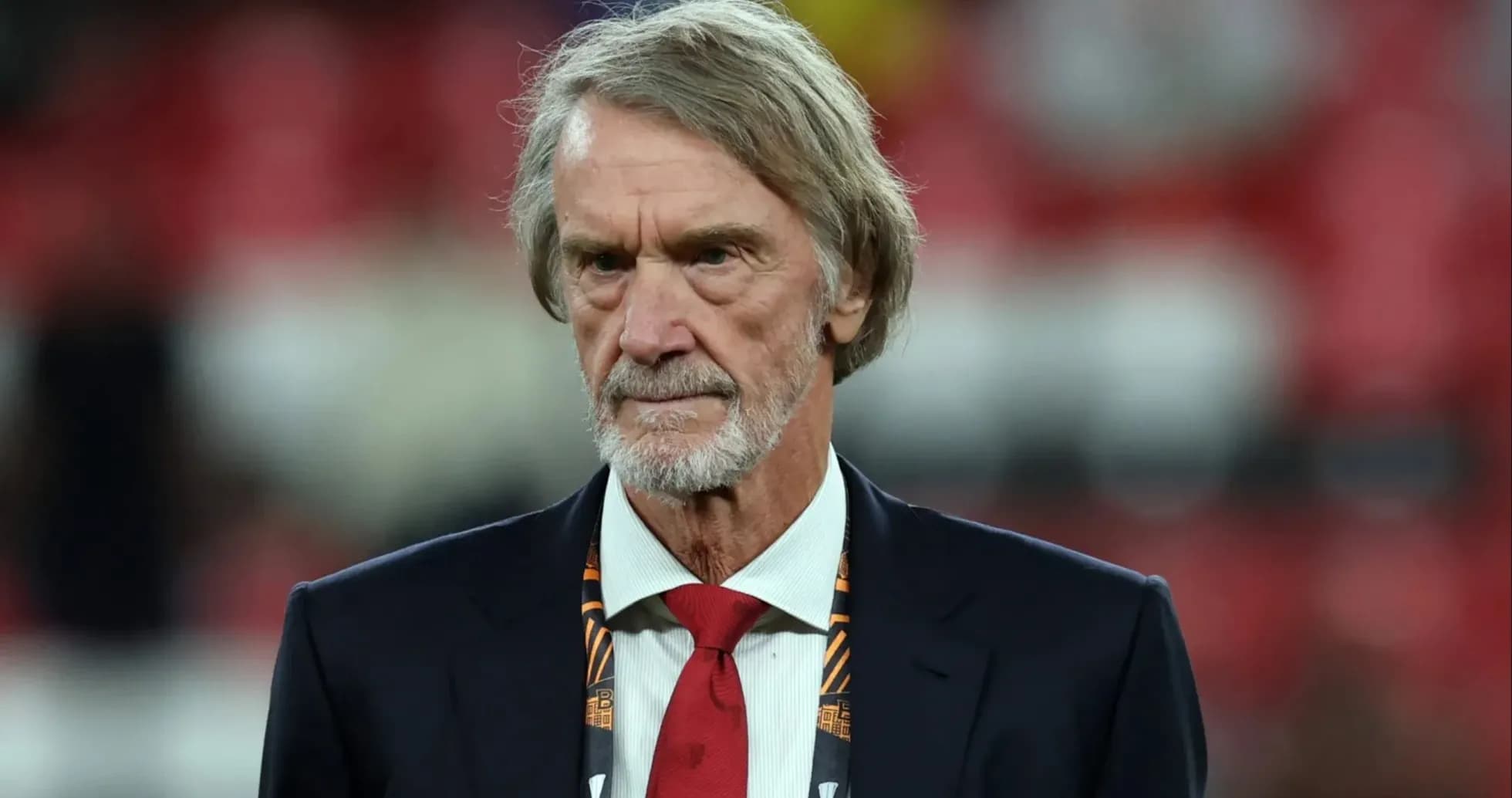
Manchester United Women’s Team: A Struggling Vision Under Ratcliffe
Marc Skinner’s Manchester United exit has exposed one thing above all: under Sir Jim Ratcliffe and INEOS, the women’s team sits nowhere near the top of the priority list.
That is the blunt reading from talkSPORT’s women’s football correspondent Angelina Kelly, who sees little tangible evidence that the new regime at Old Trafford is serious about building an elite women’s side. Skinner has walked away a month before the new WSL season, citing a lack of resources and investment. It is not an isolated story. It is a pattern.
Casey Stoney left in 2021 for similar reasons, furious at recruitment failings and the club’s inability – or unwillingness – to match the ambition of its rivals. Three years on, Manchester United Women have just lost a second head coach who felt he could not compete with the tools he was given.
Overachievement and frustration
Skinner’s reign was never simple. It was turbulent, often polarising, and yet, on the numbers, undeniably impressive.
“He has actually overachieved,” Kelly told talkSPORT’s Darragh MacAnthony and Alex Crook, pointing to the gulf in spending power between United and the WSL’s heavyweights. Arsenal, Chelsea, Manchester City – all operate on a different financial plane.
Despite that, Skinner delivered history. Manchester United Women’s first-ever major trophy with the FA Cup. League finishes of fourth, third, fifth, second, fourth. A Champions League qualification for the first time in the club’s history.
On paper, that is a manager punching above his weight. On the terraces and online, it never quite felt like that.
“The fans weren’t his biggest fan,” Kelly said. Selections and game management drew regular criticism. United reached four domestic cup finals under Skinner and won only one; the other three ended in aggregate defeat to Chelsea, 6-0 across those ties. A brutal reminder of the gap at the very top.
So his departure lands in a strange middle ground. Not a shock. Not a formality either.
Kelly compared it to Eddie Howe’s situation at Newcastle before the club moved on: “You’re looking at a manager who, within his world, is very well respected.” Ex-professionals speak highly of Skinner. Those who deal with him talk about his politeness, his respect, his standards.
But respect does not build squads. Money does.
Last season, Skinner faced a shallow bench and a lack of star quality in the biggest moments. This summer, more players have gone. The squad is even thinner. The issues he flagged have not been fixed; they have deepened.
“He’s looking at it and thinking, I’m not going to be able to do anything with this team,” Kelly said. For a manager conscious of his reputation, walking away starts to look less like surrender and more like self-preservation.
The message from above? The powers that be are not backing you. And while Newcastle once had genuine restrictions on what they could spend, Kelly’s view is blunt: “Manchester United Women won’t spend money.”
Ratcliffe’s words, Ratcliffe’s reality
The timing is damning when you trace the recent past.
Before Ratcliffe’s arrival in 2023, United appeared to be edging towards a more ambitious model. They lost Alessia Russo and Ona Batlle on free transfers – two elite talents allowed to walk – but they responded with a club-record deal for Brazilian forward Geyse, alongside Melvine Malard, Hinata Miyazawa and Irene Guerrero.
There was at least a sense of momentum. A sense that United were trying to live in the same world as Arsenal and Chelsea.
Then came Ratcliffe’s comments on the women’s team, which sparked anger among supporters, and the awkward training-ground moment when he asked then-captain Katie Zelem what her role was at the club. For a man positioning himself as the architect of a new Manchester United, not knowing the name or job of the women’s captain landed badly.
“Definitely,” Kelly replied when MacAnthony stressed that the men’s team drives the global revenue. “I just think it doesn’t help matters when you don’t even know who your women’s team captain is. You don’t even know her name. It’s going to come across as a bit disrespectful.”
The financial reality is not in dispute. The men’s side is the cash cow. But around the league, other owners are making different choices.
Arsenal, Chelsea, Brighton – clubs with men’s and women’s teams under the same umbrella – are “pumping money into the women’s side,” Kelly pointed out. They are not turning a profit on that investment. They are doing it because they see the women’s game as a growth market, a long-term play, an identity piece.
Manchester United Women, by contrast, “just about turned a profit last season,” Kelly noted, closer to breaking even than banking serious money. Other clubs accept losses as the cost of building something meaningful. United, at present, look more concerned with the balance sheet.
Kelly name-checked Brighton owner Tony Bloom as the benchmark: a sharp operator in business and betting, not known for sentimental spending. Yet he is “pumping money into Brighton women,” and crucially, “building a stadium in Brighton just for the women… specifically designed for women.”
That is what a plan looks like.
A ‘sustainable’ plan or a cheap one?
This summer has exposed the gap again. While United hesitate, rivals move.
Lyon defender Alice Sombath has joined Tottenham. London City Lionesses, who finished sixth in the Championship last season, have stunned the game by signing two-time Ballon d’Or winner Alexia Putellas. A second-tier club, without United’s global reach, is making one of the biggest signings in women’s football history.
United, meanwhile, have sold Malard to Chelsea for £850,000 and pivoted to a new strategy: build around home-grown youth.
Kelly spelled out the club’s internal line: “Sources are claiming that the club feel that spending is not sustainable in the women’s academy. So the focus is on sustainability with homegrown players, which is understood to fit the identity of developing youth, etc. And they want to go down this route.”
On the surface, it sounds noble. United, after all, built their myth on the Class of ’92 and a devotion to the academy.
Pressed on whether “homegrown” is simply code for “doing it on the cheap,” Kelly did not hold back. If you want to sell a vision to young players, you need something to show them.
“At the moment, they have absolutely nothing going into this new season,” she said.
There are bright spots. A “fantastic goalkeeper.” A captain in Maya Le Tissier, “a wonderful centre back.” Ella Toone, “the biggest star at Manchester United.” Jess Park, impressive since arriving from Manchester City.
But beyond that spine? “There is nothing else to show that they really care about this club and that they are building around those players to actually achieve something,” Kelly argued.
While United talk sustainability, London City Lionesses are “spending a lot of money bringing in a two-time Ballon d’Or winner.” The contrast could not be sharper.
So what is Ratcliffe’s play here? Kelly sees two options.
Either Sir Jim genuinely believes he has found a smarter route than the Arsenal hierarchy, than Tony Bloom, than Michelle Kang and the other big investors in the women’s game. He thinks his sustainable model will outfox everyone.
Or he has simply decided that serious investment in the women’s team is “not viable” and is prepared to leave it on the margins.
A club still catching up
The context matters. Manchester United’s senior women’s side only reformed in 2018. For years, the club left girls’ and women’s pathways to wither. Talented players hit a dead end and were waved away.
Even Ella Toone, now the face of the team, had to leave as a youngster to find a route to the top. She played at Blackburn and Manchester City because the pathway “wasn’t there” at Old Trafford.
United are trying to make up lost ground in a landscape where others have sprinted ahead for a decade. That demands clarity, conviction, and cash.
Right now, Kelly cannot see the plan.
“I just struggle to understand what the plan is at Manchester United,” she admitted. She wants to believe in the idea of a seamless youth system that can go toe-to-toe with Arsenal, Chelsea and the rest. She simply cannot see how United get there from here.
The numbers involved are hardly eye-watering. Kelly estimated that “about 10 million” would transform United’s women’s side – “less than Mason Mount earns a year.” She accepted that you cannot simply redirect his wages, but the point stands: “What they’re asking for isn’t hundreds and hundreds of millions. It’s nothing on the men’s side.”
That level of spending would not just plug gaps. It would give United the chance to compete properly. To sign difference-makers. To stop watching the best talent walk away.
And it would help with something else: keeping fans engaged.
Holding on to a restless fanbase
The women’s game has changed. Allegiance is no longer just about the badge. It is about players, personalities, moments.
“There will be people that supported Man United Women when Alessia Russo was there,” Kelly said. “Now she’s at Arsenal. People switch gears.”
To keep that next generation hooked, you need more than a badge and a slogan about youth. You need stars. You need ambition. You need to “still be bringing in big players,” to “put on a little bit of a show.”
Right now, United are walking into a new season with a handful of top-class players and a thinning squad. A manager has walked away rather than front it. Rivals are building. Even clubs outside the WSL elite are making statements.
Kelly’s fear is stark. “I don’t know how they’re going to even hold on to the fan base that they’ve got.”
For all the talk of sustainability and long-term strategy, the question hangs in the air: is this really a bold new model for Manchester United Women, or just a cut-price plan dressed up as vision?