Manchester City Faces a New Era Under Enzo Maresca
Manchester City stand on the edge of a new era, and nothing about it feels gentle.
A decade of Pep Guardiola has given way to Enzo Maresca. The handover alone would be seismic at any elite club. At City, it comes with a squad being pulled apart and rebuilt at the same time.
Four starters from the Treble-winning side of 2022-23 have gone in one summer: Manuel Akanji, Nathan Ake, Bernardo Silva and John Stones. That is not rotation. That is ripping out structural beams.
In their place, City have pushed £116m on Elliot Anderson and put faith in 17-year-old Jeremy Monga. Talented, yes. Proven at this level, under this weight of expectation, in this kind of dressing room? Not yet.
And the story of this summer may not even be those departures. It may be the one that has not happened. Yet.
Rodri at the crossroads
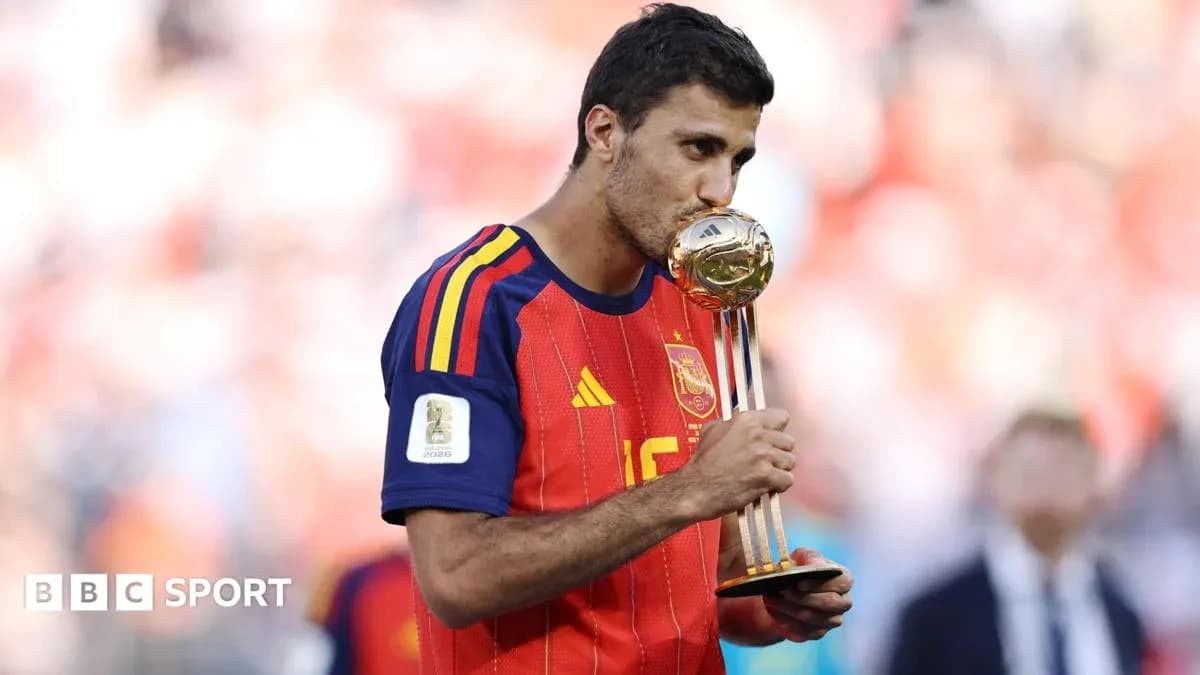
Rodri, fresh from captaining Spain to World Cup glory and collecting the Golden Ball as the tournament’s outstanding player, goes under the knife on Monday for back surgery. He has a year left on his contract. Speculation around his future is no longer background noise; Real Madrid are reported to be “operating on the basis” that he will join them.
This is the axis on which City’s next phase could turn.
No-one at the club is pretending he is expendable. Maresca made that clear the moment he sat down in front of the cameras for the first time.
“I think every manager wants to have Rodri because he is a top player,” he said. The rest was practical: surgery, holiday, rest, recovery, back with the group. The message beneath it all was simple. The plan is to keep him.
The market may test that resolve. If Madrid push and Rodri hesitates over a new deal, City will face the most uncomfortable question of the summer: cash in on a 30-year-old once he returns to fitness, or back Maresca’s insistence that he remains central to the project?
This is not just about a holding midfielder. It is about the brain of their football.
When Rodri came back from an anterior cruciate ligament injury last year, there were doubts about whether he could ever again reach the Ballon d’Or-winning heights of his peak. Guardiola brushed that aside last October: “In the World Cup, he will be the best Rodri, and next season he will be the best Rodri.” He nailed the first prediction. Spain’s World Cup win, Rodri’s armband, his Golden Ball – all of it underlined just how rare a player City possess.
Lose him now, and Maresca’s first season becomes something else entirely.
Maresca’s board, Rodri’s role
To understand the scale of that potential loss, you have to understand how Maresca sees the game.
He is a positional-play purist, a coach who openly compares his football to chess. Not in the clichéd sense of “thinking a few moves ahead”, but in the way he structures the pitch and his players.
“There are a lot of similarities,” Maresca said. “The most important is positional play and strategy. For a coach, it’s important to have the mentality of a chess player: develop a plan, study counter-moves, choose the arrangement of the pieces.”
His teams attack most comfortably in a 3-2-2-3 shape. It is less a formation than a grid. Players rotate within it, but the zones are sacred.
Rodri is almost built for this. Across the World Cup, he showed how easily he can slide between lines. When Aymeric Laporte stepped out with the ball, Rodri dropped into the backline. When Spain needed a screen, he anchored midfield. When space opened up, he strode forward and played as a de facto playmaker.
In City’s Treble season, when Maresca was Guardiola’s assistant, John Stones became the most vivid example of this shape in motion. City defended in a 4-4-2. Then, as they attacked, Stones would step from centre-back into midfield, forming a double pivot alongside Rodri and completing that 3-2-2-3 pattern.
At Chelsea, Maresca’s tweak was different but the principle identical. Moises Caicedo started on the teamsheet as a right-back, defended in a back four, then drifted inside in possession to become one of the holding midfielders. Again, the same attacking structure, created in a different way.
This is where Rodri’s value spikes. He does not just occupy a role. He understands the geometry. He judges risk, tempo, and spacing in real time. Elliot Anderson may grow into that. Ayyoub Bouaddi, the 18-year-old Lille midfielder City are monitoring after his impressive World Cup displays for Morocco, might too. But it will take time.
It took Rodri years, even under Fernandinho’s guidance, to fully master the demands of Guardiola’s system. Maresca’s version will not be simpler.
Life with – or without – the anchor
City with Rodri are one thing: a side with a reference point in every phase. He drops, he covers, he builds, he breaks lines. He makes Maresca’s 3-2-2-3 feel natural rather than forced.
City without him would be something else entirely. Not necessarily worse in the long term, but very different in the short.
Anderson will be one contingency. The club’s interest in Bouaddi is another. Maresca has already shown he is willing to redraw a player’s career path if it unlocks the structure he wants. Stones into holding midfield. Caicedo into full-back. Marc Cucurella pushed into attacking midfield. He sees positions players could move into before they, or anyone else, do.
That is his advantage if the worst happens and Rodri goes. He will not look for a like-for-like replacement. He will rewire the board.
The other shift is in squad philosophy. Guardiola preferred to work with a smaller, tight-knit group, trusting a core and rotating selectively. Maresca leans the other way. He wants more pieces, more flexibility, more options to create that same 3-2-2-3 from different starting points.
Whether Rodri stays or goes, that alone changes City’s feel. The club that once prized continuity in both dugout and dressing room is now embracing volume, variety and, to an extent, volatility.
Maresca will believe that gives him a better chance of landing on a winning formula next season. The question hanging over the Etihad is stark: will the most important piece on his board still be there when he makes his first move?