
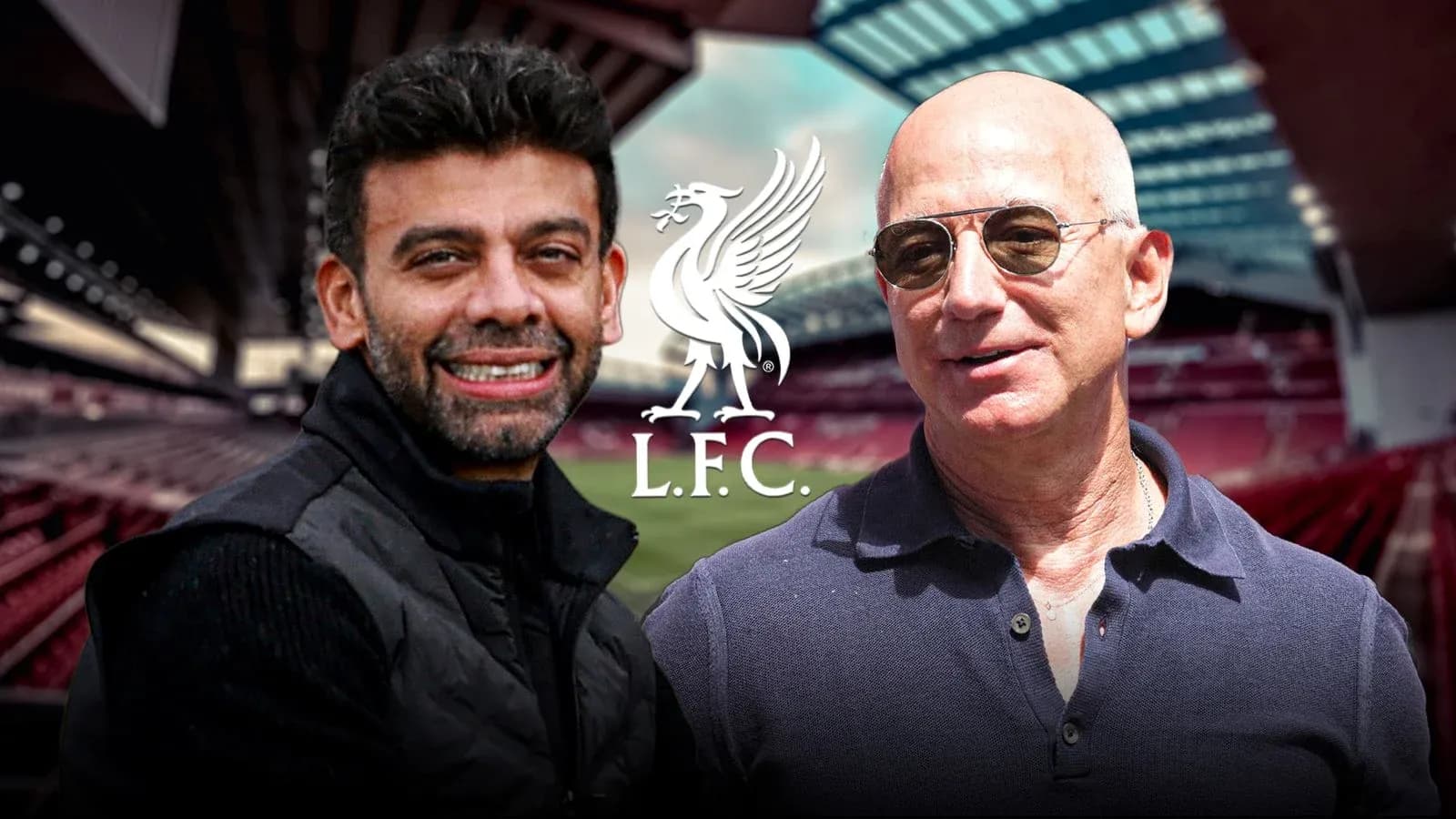
Liverpool's Eye-Catching Ownership Deal Involving Jeff Bezos
Liverpool stand on the brink of one of the most eye-catching ownership deals in modern football – and it has the fingerprints of Jeff Bezos all over it.
Fenway Sports Group (FSG) are closing in on the sale of a significant minority stake in the club to a heavyweight consortium fronted by former QPR co-owner Amit Bhatia, with the Amazon founder and Facebook co-founder Eduardo Saverin among the headline names involved. The deal, according to Sky News, would see the group acquire roughly a one-third share and value Liverpool at around £4.4bn ($6bn).
For a club once sold in crisis for £300m, this is a different universe.
Bezos, Bhatia and a new financial era
Bezos needs little introduction. The Amazon founder, whose personal fortune Forbes pegs at around $281bn (£209bn), is the third-richest person on the planet, behind Elon Musk and Larry Page. He built Amazon from a garage in Seattle in 1994 and has since spread his empire into aerospace with Blue Origin and media with The Washington Post via Nash Holdings.
He has long been linked with American Football, having explored potential moves for the Washington Commanders and Seattle Seahawks. A major stake in Liverpool would be his most significant play yet in global sport.
Bhatia, 46, brings a different profile but no less clout. A British Indian entrepreneur with an investment banking background, he runs AyBe Capital, a multi-asset investment firm with interests across technology, media, property, real estate, consumer retail and health. He is also deeply embedded in elite sport.
Bhatia joined the QPR board in 2007 at just 28, becoming vice-chairman after the Mittal family bought a 20 per cent stake in the club. He later served as QPR chairman between 2018 and 2023 and only stepped away as a director and co-owner earlier this week, transferring his stake to majority owner Ruben Gnanalingam.
His reach stretches beyond football. Through AyBe Capital, he has invested in TGL, the tech-driven golf league fronted by Rory McIlroy and Tiger Woods, and in Switch Hitter, Kevin Pietersen’s cricket media brand. His father-in-law, steel magnate Lakshmi Mittal, acquired a 75 per cent stake in the Rajasthan Royals IPL franchise earlier this year.
This is not tourist money. It is experienced, sport-savvy capital.
Why FSG are ready to cash in – but not walk away
FSG are not under pressure to sell. On the contrary, they have presided over one of the most successful periods in Liverpool’s modern history, with the club lifting every major trophy available under their stewardship.
Yet the signals have been clear for some time. In 2022, FSG indicated they were open to new investment. A year later, they sold a small stake to Dynasty Equity in a deal that valued Liverpool at more than $4.5bn. This latest move goes several steps further.
There is a simple logic. Liverpool’s value has soared. FSG, who bought the club in October 2010 as New England Sports Ventures for £300m after the chaotic Hicks and Gillett era, now sit on an asset being priced at around £4.4bn. Even selling a minority slice locks in a vast profit while retaining overall control.
And that control matters. FSG remain the majority owners. Private equity firms RedBird Capital and Arctos Sports Partners already hold minority stakes, while Dynasty Equity are passive investors. The incoming consortium would join that group, not replace it.
For FSG, it is a way to bank gains, share risk and bring in fresh capital for an arms race that shows no sign of slowing.
One-third of Liverpool – and one of the richest deals in sport
The numbers are stark. A roughly one-third stake at a £4.4bn valuation would rank this among the most lucrative transactions in football history. Liverpool are already the fourth most valuable club in the world; this deal would harden that status in black and white.
Bezos is the standout name, but he is not alone. Saverin, 44, adds another layer of Silicon Valley wealth. The Facebook co-founder was part of a consortium that tried – and failed – to buy Chelsea in 2022 after the forced sale triggered by Vladimir Putin’s invasion of Ukraine. Now he is back at the table, this time on Merseyside.
The rest of the investor group remains in the shadows for now. Their identities are not yet public, and the structure of the stake beyond the reported one-third figure has not been detailed. But the direction of travel is unmistakable: Liverpool are moving deeper into an era defined by global tech money and institutional investors.
When will it happen?
The timeline is tight, but fluid. The proposed transaction first emerged at the end of last month. Since then, talks have accelerated. An announcement could land as early as this week, though it may slip into next.
No formal date has been set. Yet the pace and the valuations being discussed underline how advanced the negotiations have become.
Liverpool have spent the last decade climbing back to the summit of European football under FSG. Now, with Bezos, Bhatia and a deep-pocketed syndicate poised to buy into the project, the question shifts.
What does a club of Liverpool’s scale look like when powered not just by history and smart management, but by some of the richest individuals on earth?




