
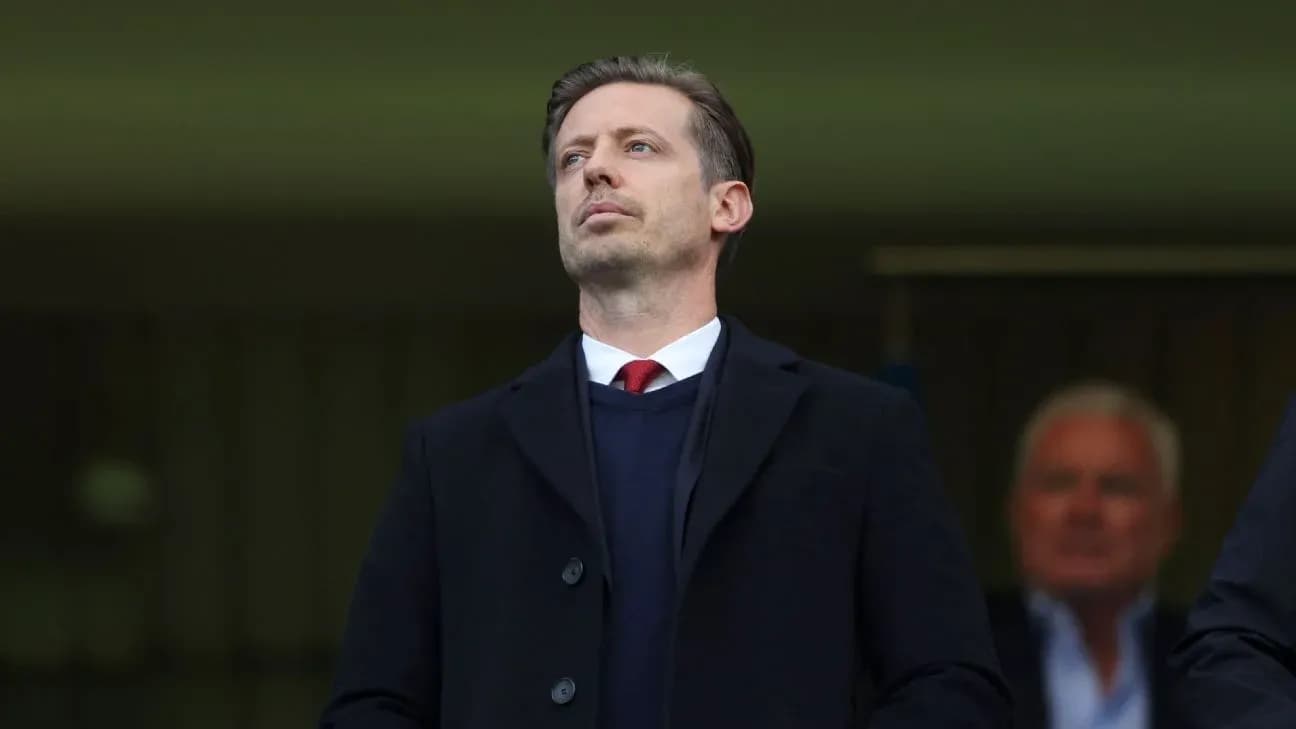
Liverpool Faces Turbulence as Michael Edwards Resigns
Liverpool have grown used to change on the pitch. Now the real turbulence is upstairs.
Michael Edwards, the architect of much of the club’s modern success and the man FSG brought back to drive their multi-club ambitions, has walked away with a year still to run on his deal. His resignation is immediate. The timing is brutal.
Edwards walks, Gordon steps in
Edwards, once the data-driven sporting director who worked in lockstep with Jürgen Klopp until 2022, returned to Fenway Sports Group in 2024 in an elevated role: chief executive officer of football. The brief was clear. Build a wider football empire. Find and secure a second club for FSG.
That project stalled. No second club. No portfolio expansion. No clear breakthrough after months of work.
With frustration over the lack of progress mounting, Edwards informed FSG he was done. Despite attempts from the American ownership to change his mind, he stood firm and is leaving now, not in 12 months’ time.
In the vacuum, FSG president Mike Gordon is set to move closer to the controls again, taking a more hands-on role in Liverpool’s day-to-day football operations. For a club that has prized structure and stability, it is a sharp shift at a delicate moment.
A club in transition on every level
The sense of flux at Anfield was already unmistakable. On the touchline, Arne Slot has gone, replaced by former AFC Bournemouth manager Andoni Iraola as head coach. Behind the scenes, uncertainty lingers over sporting director Richard Hughes, the man who hired Iraola and whose own contract runs until the summer of 2027.
Hughes has been linked with Saudi Pro League side Al Hilal, adding another layer of doubt to a hierarchy that once felt watertight. If he were to follow Edwards out of the door in the medium term, Liverpool’s carefully constructed football structure would need another rapid rebuild.
This is not the seamless succession plan the club once projected.
FSG’s stalled multi-club dream
FSG’s ambitions were never limited to Anfield. Edwards returned to help them step into the multi-club era, to mirror the models that have reshaped modern football ownership.
The search was extensive. FSG explored more than 20 potential acquisitions, including French club Bordeaux and Spanish side Málaga. The brief: find the right fit, the right price, the right pathway to a broader football network.
Then, the trail went cold. Earlier this year, plans to add another team were shelved. For Edwards, who had come back in part to drive that very project, the dead end proved decisive.
FSG framed his departure in a statement as “the culmination of a planned transition following the completion of key strategic priorities.” Behind that polished line lies a simple truth: they could not convince him to stay once his patience with the stalled expansion ran out.
Legacy of a title architect
Edwards leaves with his fingerprints all over Liverpool’s modern era. His first spell at the club helped transform the football operation, marrying analytics with smart recruitment and clear-eyed decision-making. That work underpinned a team that climbed to the summit of English football, culminating in the Premier League title in 2025.
He returns to the exit door with that achievement on his record and with the conviction, voiced in his parting statement, that Liverpool remain in “a strong position, with outstanding people, a clear direction and the foundations in place for continued success.”
He also acknowledged the disappointment of the wider FSG project evolving “differently to how we had originally envisaged,” even as he expressed pride in the breadth and depth of the options presented to ownership.
The names he thanked — Mike Gordon, John Henry, Tom Werner — underline how central he had become to the group’s football thinking. His final words reserved for the supporters, whose passion, he said, makes the club “so special,” were a reminder of how deeply he had embedded himself in Liverpool’s story.
Now that story moves on without him. With a new head coach, a sporting director whose long-term future is under scrutiny, and an ownership group recalibrating its ambitions, Liverpool stand at another crossroads.
The question is no longer what Edwards will build for them next, but who shapes the next phase of Anfield’s era-defining decisions.




