Lionel Messi's Heartbreaking Silver Medal at 2026 World Cup
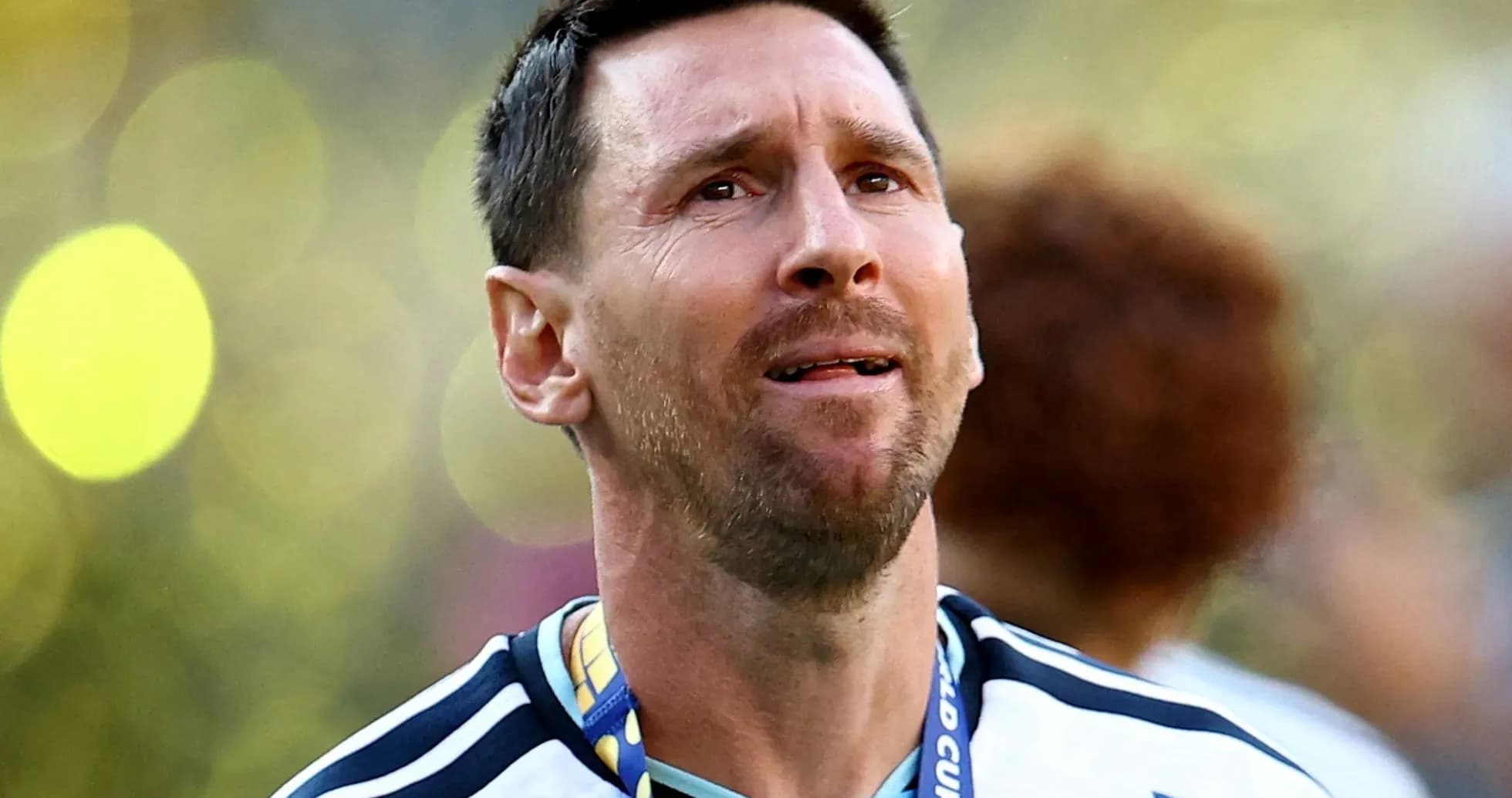
Lionel Messi stood alone in the rain of East Rutherford, silver medal around his neck, eyes glazed with the kind of pain only football can inflict. If this was his last World Cup match, it ended not in coronation, but in quiet devastation.
Spain had just beaten Argentina 1-0 in the 2026 World Cup final, shutting down one of the most gifted attacks the tournament has seen and holding the defending champions without a single shot on target. The title slipped away, and with it, perhaps, Messi’s final chance to add a second World Cup to his legend.
He didn’t say the words “this is the end.” He didn’t have to.
Tears, a silver medal and a message
On Monday evening, the emotion that had spilled onto the MetLife Stadium pitch found its way into an Instagram post. Messi, writing in Spanish alongside a photo of himself wearing the runner-up medal, did not hide from the hurt.
“The pain is immense, and this wound will take time to heal,” he wrote.
The sentence cut straight to the point. No bravado. No excuses. Just the rawness of a man who has spent two decades carrying a nation’s expectations and knows exactly what slipped through his fingers.
But he refused to let the night be defined only by failure.
“But I also hold onto all the good things… The matches we turned around by giving it our all – moments that will remain in our memories forever – and the support of an entire country which, combined with this group’s hard work and effort, brought us back among the world’s elite once again.
“It is hard to fully appreciate our achievement right now, but this group reached two consecutive World Cup finals.”
That last line matters. Argentina did what very few teams in modern football manage: back-to-back World Cup finals, four years after the epic in Qatar that finally gave Messi the trophy that had eluded him his entire career.
From Qatar glory to North American heartbreak
In 2022, the story closed perfectly. Argentina beat France on penalties after a 3-3 classic in Lusail, Messi lifting the World Cup in a scene that felt almost scripted. The missing piece was in his hands at last.
Four years later, the script turned harsher.
Argentina arrived in North America as reigning champions and played like it. They were one of the standout teams of the tournament, navigating pressure, expectation and the weight of history. They rallied past England in the semifinal, showing the same resilience that defined their run in Qatar.
Then came Spain.
In the final, Spain’s defence locked the game in a vice. Argentina, usually so inventive in the final third, found no way through. Messi, 39 years old and still the heartbeat of the side, could not bend this match to his will. The scoreboard stayed 1-0. The clock ran out.
The pressure finally told – just not in Argentina’s favour.
A career rewritten, even in defeat
Even in a losing campaign, Messi kept reshaping the World Cup record book.
Early in the tournament he broke Miroslav Klose’s long-standing mark of 16 World Cup goals. By the time Argentina walked off the field in New Jersey, Messi had 21. For a brief moment, he stood alone at the top.
Then Kylian Mbappé came storming past.
The French forward finished the tournament on 22 World Cup goals, overtaking Messi and seizing the record that had just changed hands. Mbappé also snatched the Golden Boot, scoring 10 times to Messi’s eight.
It was a familiar duel, the echo of 2022 – the veteran genius and the heir apparent, trading records and headlines on the biggest stage. This time, both watched Spain celebrate from afar.
The clock and the calendar
Messi turned 39 during this World Cup. When the next one kicks off in 2030, hosted by Spain, Portugal and Morocco, he will be 43.
He has not closed the door on another run. He has not opened it either. His post made no declarations about retirement, no farewell speech to the World Cup. Just gratitude, pride and a deep, visible ache.
“Thank you from the bottom of my heart for every greeting and message,” he wrote. “Once again, we managed to unite as a country and stand together, sharing the immense pride of being Argentine.
“I also want to congratulate Spain on winning the championship.”
That last line, simple and direct, carried the mark of a captain who understands the game’s hierarchy of respect. The night belonged to Spain. Messi acknowledged it.
Rest, recovery, and what comes next
The immediate future is clearer than the long-term one. According to ESPN, Messi and his Argentina and Inter Miami teammate Rodrigo De Paul will sit out Inter Miami’s next two regular-season matches and will not take part in the MLS All-Star Game. After a World Cup that demanded everything from body and mind, both will step away to rest and recover.
For Messi, recovery now means more than just shaking off fatigue. It means deciding what remains of his international journey.
He has already delivered what a generation of Argentines dreamed of: the 2022 World Cup, the Copa América, the Finalissima. He has carried his country back “among the world’s elite,” as he put it, and kept them there long enough to reach two straight finals.
The pain of East Rutherford will fade. The image of him in tears, silver medal on his chest, will not.
The question is whether that was the last World Cup snapshot of Lionel Messi in an Argentina shirt – or merely the penultimate chapter in a story that still refuses to end on anyone else’s terms.