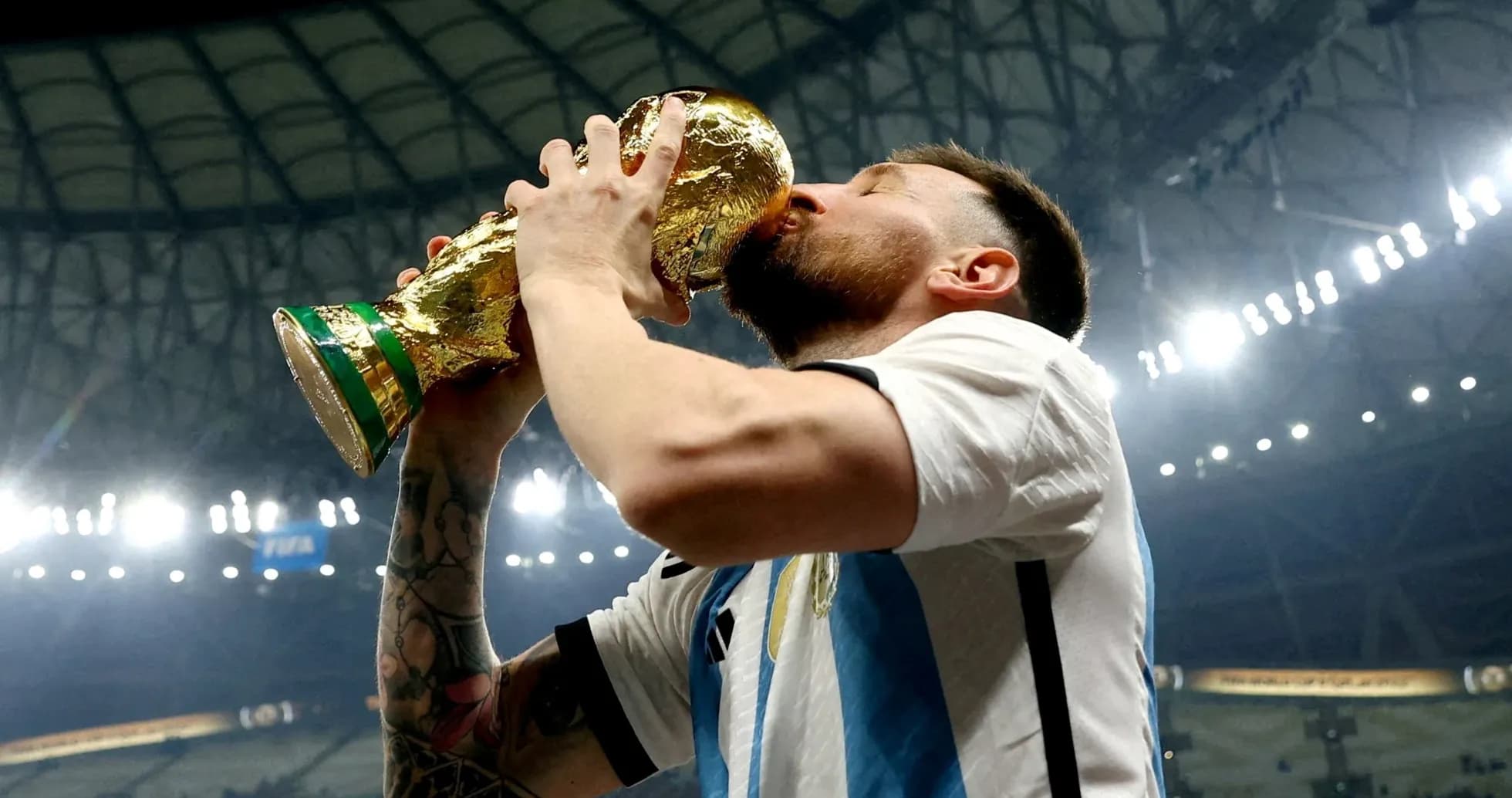
Lionel Messi Leads Argentina in 2026 World Cup Bid
Lionel Messi will lead Argentina into another World Cup. One more dance, one more shot at history.
National coach Lionel Scaloni ended months of quiet suspense on Thursday as he named his 26-man squad for the 2026 tournament and confirmed that the 38-year-old will captain the defending champions in what will be his record sixth World Cup.
Messi had never publicly guaranteed he would go again. The assumption was always there – how could Argentina walk into a World Cup without the man who lifted the trophy in Qatar? – but an untimely injury with Inter Miami had thrown a shadow over the storyline.
The shadow has gone. The captain is in.
Messi cleared, but not without a scare
The concern began in Miami’s final MLS match before the World Cup break. Messi left in the 73rd minute of a wild 6-4 win over Philadelphia, his exit abrupt enough to jolt both club and country. Inter Miami’s tests later diagnosed muscle fatigue in his left hamstring, and the club refused to pin down a return date, saying only that his recovery would depend on “his clinical and functional progress”.
Scaloni moved quickly this week to cool the panic, playing down the seriousness of the problem while acknowledging the forward would undergo further tests. No detailed update followed, but the squad list itself delivered the message Argentina wanted: Messi is fit enough to travel, fit enough to lead.
Germany 2006, South Africa 2010, Brazil 2014, Russia 2018, Qatar 2022 – and now North America 2026. Six World Cups, a mark only a handful of footballers will touch. Alongside Messi, Cristiano Ronaldo and Guillermo Ochoa are also expected to appear at their sixth tournament this summer, a rare club of longevity and stubborn excellence.
Old guard stays, new blood waits
Scaloni’s list carried another headline: no place for Real Madrid’s Franco Mastantuono. The 18-year-old, widely tipped as one of the brightest young talents in Argentinian football, will have to wait for his World Cup debut. In a squad loaded with experience and continuity, the coach chose caution over hype.
Argentina retain 17 of the 26 players who conquered France in that unforgettable final in Qatar. The spine remains intact: Emiliano Martinez in goal; Nicolas Otamendi and Cristian Romero in defence; a midfield packed with Enzo Fernandez, Alexis MacAllister, Rodrigo de Paul and Leandro Paredes; and Messi at the heart of everything.
Romero’s inclusion brings its own gamble. The Tottenham Hotspur captain has not played since suffering a knee injury last month, when he was shoved into his own goalkeeper in a collision involving Sunderland striker Brian Brobbey and later ruled out for the rest of the Premier League season. Scaloni has backed his defender’s recovery and temperament, betting that Romero’s aggression and leadership are worth the risk.
There is room too for youth, but only in carefully chosen doses. Twenty-one-year-olds Nicolas Paz and Valentin Barco make the cut, the latter listed among the midfielders after his move to Strasbourg. Palmeiras forward Jose Manuel Lopez, who only made his international debut last year, also forces his way in, a nod to form and versatility.
The omissions are just as striking. Emiliano Buendia, in excellent form at Aston Villa, misses out. So does Roma star Paulo Dybala, a World Cup winner left on the outside looking in as Scaloni leans towards continuity and tactical balance over big names.
The road to North America
The 2026 World Cup, the largest in history, will be shared by the United States, Canada and Mexico and kicks off on June 11. Argentina open their defence five days later against Algeria in Kansas City, a date that will echo around the football world. The group also includes Austria and Jordan – a section Argentina will be expected to control, but one that offers little margin for complacency.
Before that, the champions will cross the Atlantic for final tune-ups in the United States. They face Honduras on June 6 and Iceland on June 9, fixtures that will serve as Scaloni’s last laboratory sessions before the real thing begins.
The squad carries the familiar names that now define this era:
- Goalkeepers: Emiliano Martinez (Aston Villa, ENG), Geronimo Rulli (Marseille, FRA), Juan Musso (Atletico Madrid, ESP).
- Defenders: Gonzalo Montiel (River Plate, ARG), Nahuel Molina (Atletico Madrid, ESP), Lisandro Martinez (Manchester United, ENG), Nicolas Otamendi (Benfica, POR), Leonardo Balerdi (Olympique Marseille, FRA), Cristian Romero (Tottenham Hotspur, ENG), Facundo Medina (Marseille, FRA), Nicolas Tagliafico (Lyon, FRA).
- Midfielders: Leandro Paredes (Boca Juniors, ARG), Rodrigo de Paul (Inter Miami, USA), Exequiel Palacios (Bayer Leverkusen, GER), Enzo Fernandez (Chelsea, ENG), Alexis MacAllister (Liverpool, ENG), Giovani Lo Celso (Real Betis, ESP), Valentin Barco (Strasbourg).
The forwards, Messi included, round out a group built not on nostalgia but on the conviction that this core still has one more summit in it.
The World Cup will ask the same question of Messi it has asked for two decades: can he drag Argentina to glory? This time, though, it comes with a twist. He already holds the trophy. Now he chases something even rarer – a defence of the crown, and a final chapter worthy of the greatest of careers.