
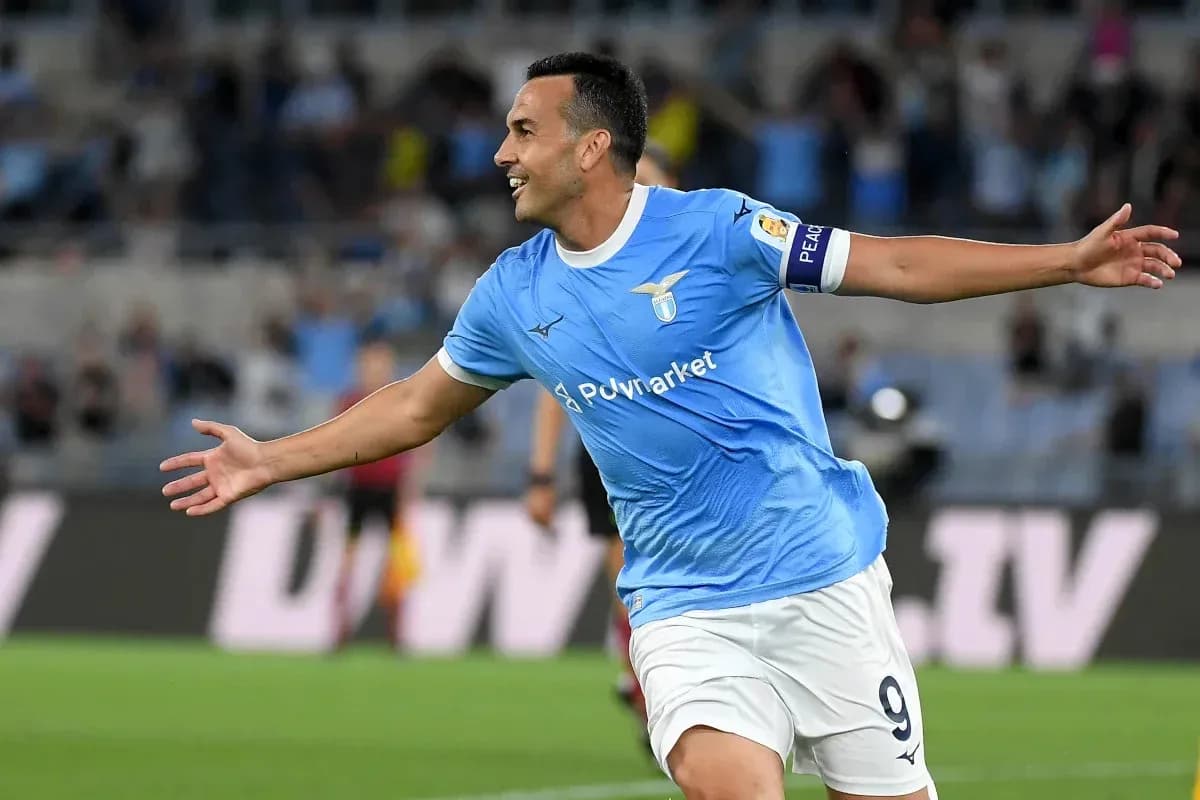
Lazio Ends Partnership with Polymarket Due to Italian Gambling Laws
Lazio’s brief and lucrative partnership with Polymarket is over almost as quickly as it began, cut down not by results on the pitch but by the hard line of Italian regulation.
The club confirmed that its €19 million agreement with the prediction platform has been terminated by mutual consent, after the Italian authorities ruled the website illegal in the country under strict gambling laws.
For a club that only recently ended a long spell without a main shirt sponsor, it is an abrupt return to commercial uncertainty.
From big deal to dead deal
Lazio signed with Polymarket in April 2026, a two-year contract with an option to extend into the 2028-29 season. It was a significant move. The Aquile had gone through last season as the only Serie A side without a primary jersey sponsor, an unusual sight in a league where shirt space is prime real estate.
Polymarket was meant to change that. The deal brought in serious money and, on paper, a modern, tech-driven partner for a club trying to keep pace with Europe’s commercial heavyweights.
Then came the ruling.
Italian law draws a hard boundary around gambling promotion, and Polymarket tried to position itself on the safer side of that line, arguing it operated as a prediction market where users traded odds with each other. The Customs and Monopolies Agency (ADM) saw it differently.
ADM classified Polymarket as a betting site. That classification triggered a ban, blocking access from Italy and making the sponsor’s logo on Lazio shirts untenable.
Once that decision landed, the partnership was living on borrowed time.
Legal wall, commercial fallout
Faced with a sponsor that Italian users could no longer legally access, Lazio had little room to manoeuvre. The club and Polymarket moved to unwind the agreement, presenting the outcome as a joint, orderly exit rather than a public rupture.
“S.S. Lazio announces that it has reached a mutual agreement with Polymarket to terminate the sponsorship agreement entered into between the parties,” the club stated, stressing “mutual cooperation” and a solution designed to “safeguard the interests of both parties” after the new measures from the authorities.
The key detail for Lazio’s balance sheet is buried in the formal language: as part of the settlement, Polymarket will still pay the full amount due for the 2026-27 sporting season. The club loses the sponsor on the shirt, but not the money for the coming campaign.
For a side trying to compete financially with Italy’s biggest clubs, that matters.
Door closed, but not locked
Despite the legal roadblock, both parties went out of their way to keep the tone diplomatic. Lazio underlined that the relationship had remained one of “mutual respect and cooperation” and even hinted at a possible reunion if the legal landscape changes.
“Should the applicable regulatory framework permit in the future, S.S. Lazio and Polymarket will look favourably upon the opportunity to establish a new partnership,” the statement concluded.
For now, though, the reality is simple: Lazio are once again heading into a season without a main commercial logo guaranteed on the front of their shirt.
In a league where every centimetre of fabric is monetised, the next name that appears across that sky-blue jersey will say a lot about the club’s pulling power – and about how quickly they can turn regulatory chaos back into commercial opportunity.




