
Kylian Mbappé Takes a Stand Against Far-Right Politics in France
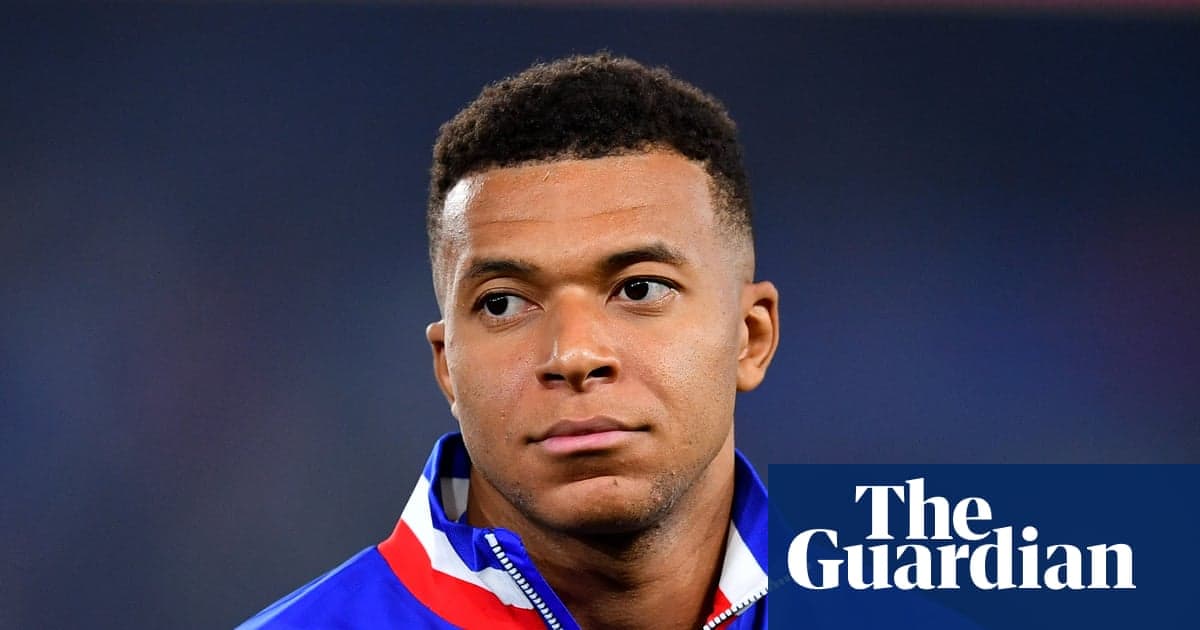
Kylian Mbappé has spent most of his career deciding the biggest games on the pitch. This week, he walked straight into the centre of France’s political storm.
The France captain, 27, used an interview with Vanity Fair to voice alarm at the prospect of Marine Le Pen’s far-right National Rally (RN) winning next year’s presidential election. The words were clear, and pointed.
“I know what it means and what consequences it can have for my country when people like them come to power,” said Mbappé, who grew up in Paris’s northern suburbs in a family of Algerian and Cameroonian heritage.
In a country where footballers are often told to “stick to sport”, the reaction was instant.
Bardella swings back – with a football jibe
Jordan Bardella, 30, the RN president and Le Pen’s protégé, moved quickly. He didn’t just reject the criticism. He went for the footballer’s record.
“I know what happens when Kylian Mbappé leaves PSG: the club wins the Champions League! (And maybe soon a second time),” he wrote on social media.
The dig cut to a sore point. Mbappé left Paris Saint-Germain in 2024 for Real Madrid in search of the one club trophy that had eluded him. PSG then lifted the Champions League the following year, without their former talisman.
Bardella’s message was obvious: if Mbappé’s sporting choices don’t always pay off, why should voters follow his political instincts?
Le Pen: “Football fans know who to vote for”
Marine Le Pen herself chose a different angle. Speaking to RTL radio, she tried to turn Mbappé’s star power against him.
She called it “reassuring” that the striker did not want her party to win, arguing that his own plan to leave PSG to win more at Real Madrid had failed.
“Frankly I think football fans are free enough to know who to vote for without being influenced by Mbappé,” she said.
The message was calibrated: respect the player, dismiss the influence.
Inside the party, the tone hardened. Julien Odoul, RN MP and spokesperson, insisted that as captain of the French national team, Mbappé must “represent all of France”, including millions of RN voters, and should not become a “political activist”.
The battle lines were no longer just ideological. They ran straight through the image of the national team itself.
A long-running feud
This is not a new clash. Bardella and Mbappé have been circling each other for years.
During France’s snap parliamentary elections in 2024, Mbappé had already broken ranks with the usual sporting neutrality. Watching RN gains across the country, he called the results “catastrophic”.
Bardella fired back then too, accusing “deep-pocketed athletes” of lecturing “people who can no longer make ends meet, who no longer feel safe”.
The subtext hasn’t changed: Bardella paints Mbappé as a distant millionaire, out of touch with everyday struggles. Mbappé, for his part, insists that wealth doesn’t strip away citizenship.
“Even as a footballer, you’re foremost a citizen,” he told Vanity Fair. “We’re not disconnected from the world … or from what’s happening in our country. People sometimes think that because we have money, because we’re famous, these kinds of problems don’t affect us.” Footballers, he said, “have our say, like everyone”.
Inside dressing rooms, the rise of RN has not gone unnoticed.
He admitted that the party’s surge in parliament in 2024 had shocked him and other players. “We’re citizens and we can’t just sit there saying all will be fine and go and play. We have to fight this idea that a footballer should just be content to play and keep quiet.”
The weight of a jersey
Mbappé carries more than a captain’s armband. He is the face of a France team that politicians of all stripes love to claim as their own.
Born in 1998, the year France won the World Cup with Zinedine Zidane at the helm, he grew up under the shadow of that “Black-Blanc-Beur” myth – the idea that a multicoloured national team could heal the country’s identity wounds. The current squad, with Mbappé at its head, is again hailed as a symbol of diversity and is widely tipped to win this summer’s World Cup.
That symbolism cuts both ways. To some, Mbappé’s voice on politics is a natural extension of what he represents. To others, including RN figures, it is an overreach.
A risky target
For Bardella, the confrontation is a calculated gamble.
William Thay, from the thinktank Le Millénaire, told Reuters that the RN leader’s response was tactically astute. Mbappé’s popularity has dipped since his departure from PSG, Thay argued, with criticism over perceived arrogance and underwhelming results at Real Madrid. Taking on the star, in that reading, no longer carries the same electoral danger it once did.
But there is a flip side. Thay warned that RN risks unsettling its broader strategy by going after one of France’s biggest sporting icons while offering little reassurance to moderates who fear the party will deepen social divisions.
The question now is not whether Mbappé will keep speaking. He already has. It is whether France’s most explosive forward has just become one of its most influential – and polarising – political voices.




