
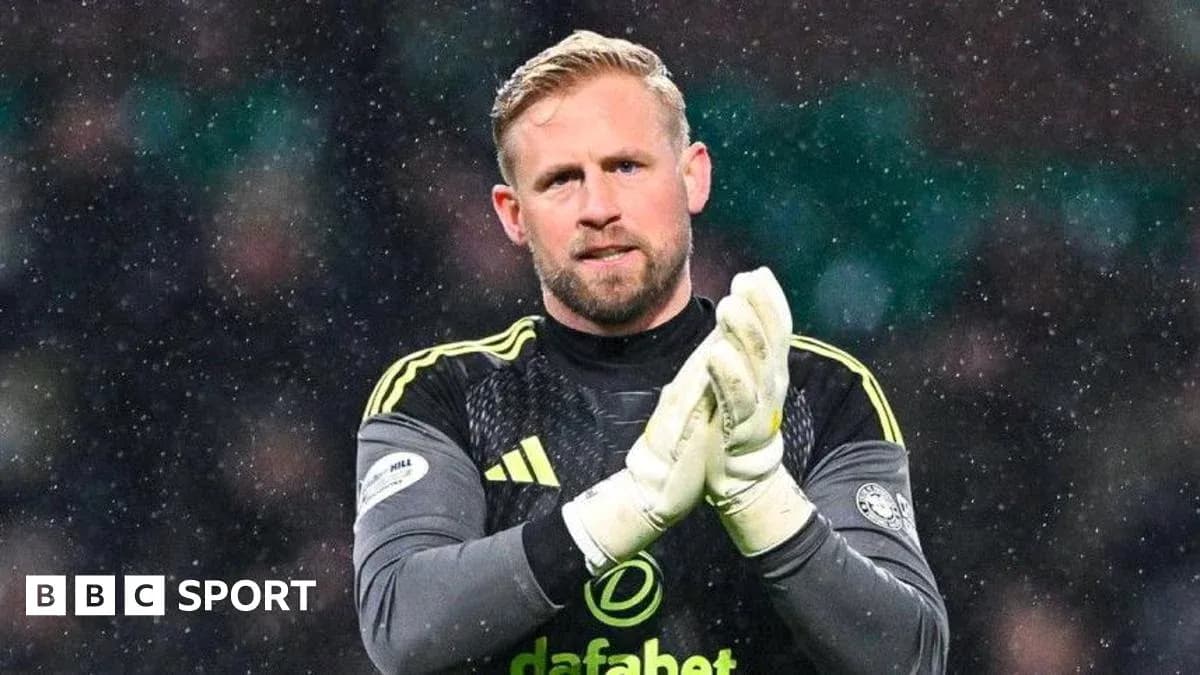
Kasper Schmeichel Retires: A Resilient Career Cut Short by Injury
Kasper Schmeichel has never been one to step away from a fight. On Wednesday, at 39, he finally had to.
The Celtic and Denmark goalkeeper has retired from football after failing to recover from a serious shoulder injury, drawing a line under a career built on resilience, longevity and big‑stage nerve.
Out of action since February and approaching the end of his contract at Celtic, Schmeichel sought multiple medical opinions. The verdict was brutal and unanimous: the shoulder would not allow him to return to top-level football.
“I believe that now is the right time,” he told TV2, the son of Manchester United great Peter Schmeichel confirming what his body had already decided for him.
An injury that never let go
The damage traces back to March 2025, in a Nations League quarter-final against Portugal. Denmark had used all their substitutes when Schmeichel suffered the initial shoulder injury. He stayed on. Of course he did.
He played through the pain that night, but the cost lingered. Eleven months later, in Celtic’s Europa League defeat to Stuttgart, he aggravated the same shoulder. From there, the slide was steady and unforgiving.
“I didn't realise how bad it was back in March. It's been a long process,” he admitted. “When I landed on it in February, I could tell straight away that something was seriously wrong.”
He explored every option, even staring down the prospect of a year of rehabilitation if that was what it took to squeeze a final chapter out of his career. The specialists closed that door.
“I have consulted with various surgeons and experts regarding my shoulder, and they have told me that I should not expect to return to playing top-flight football,” he said. “This is a decision that has been made for me.”
From Manchester City prospect to Leicester legend
Schmeichel’s journey began at Manchester City, in the shadow of both his father’s reputation and a club on the brink of transformation. He never became the face of City. Instead, he built his legacy elsewhere.
It was at Leicester City that his story truly roared into life. Across 10 seasons, he became the heartbeat of a club that ripped up the script. The 2015-16 Premier League title remains one of football’s great miracles, and Schmeichel stood firm behind it, an ever-present symbol of belief in a season that defied logic.
He added the FA Cup in 2021, another historic first for Leicester, reinforcing his status not just as a dependable goalkeeper but as a leader in moments that defined the club.
Spells at Nice and Anderlecht followed his Leicester decade, a veteran still chasing new challenges rather than coasting on past glories. Scotland came next, and with it, Celtic.
Celtic chapter and a final medal
In Glasgow, Schmeichel slotted into a club that demands trophies as a bare minimum. He featured 39 times for Celtic this season, a central figure in a campaign that delivered him a second Premiership winners’ medal in his two years at the club.
He wanted more. He expected to say goodbye on his own terms, on the pitch, with a final wave to the stands.
“I think everyone dreams of saying goodbye on the field, but you don't always get what you want,” he reflected. The honesty carried the weight of a competitor forced to accept the one opponent he could not outlast.
A Danish cornerstone
For Denmark, he was far more than just the son of a legend. He became a pillar in his own right.
Schmeichel closes his international career with 120 caps, a landmark that places him among the most enduring figures in Danish football. He played at the 2018 and 2022 World Cups and stood in goal during Denmark’s stirring run to the semi-finals of Euro 2020, a tournament that tested the nation emotionally and physically.
In those moments, he was calm, authoritative, unflinching – the kind of presence that steadies a team when the stakes rise and the noise grows.
No debts, only memories
As he steps away, there is no bitterness in his words, only perspective.
“I've had so much else along the way, so football doesn't owe me anything. I've had so many opportunities, so many experiences,” he said.
What matters most to him now is not the medals, not the improbable titles or the packed stadiums, but the human side of a life in the game.
“What stands out most are the friendships and connections I've made. The moments I've shared with them – for better or worse.”
For a goalkeeper who spent a career defying odds, blocking shots and carrying expectations, it is a quietly powerful final save: refusing to let one cruel injury define everything that came before.




