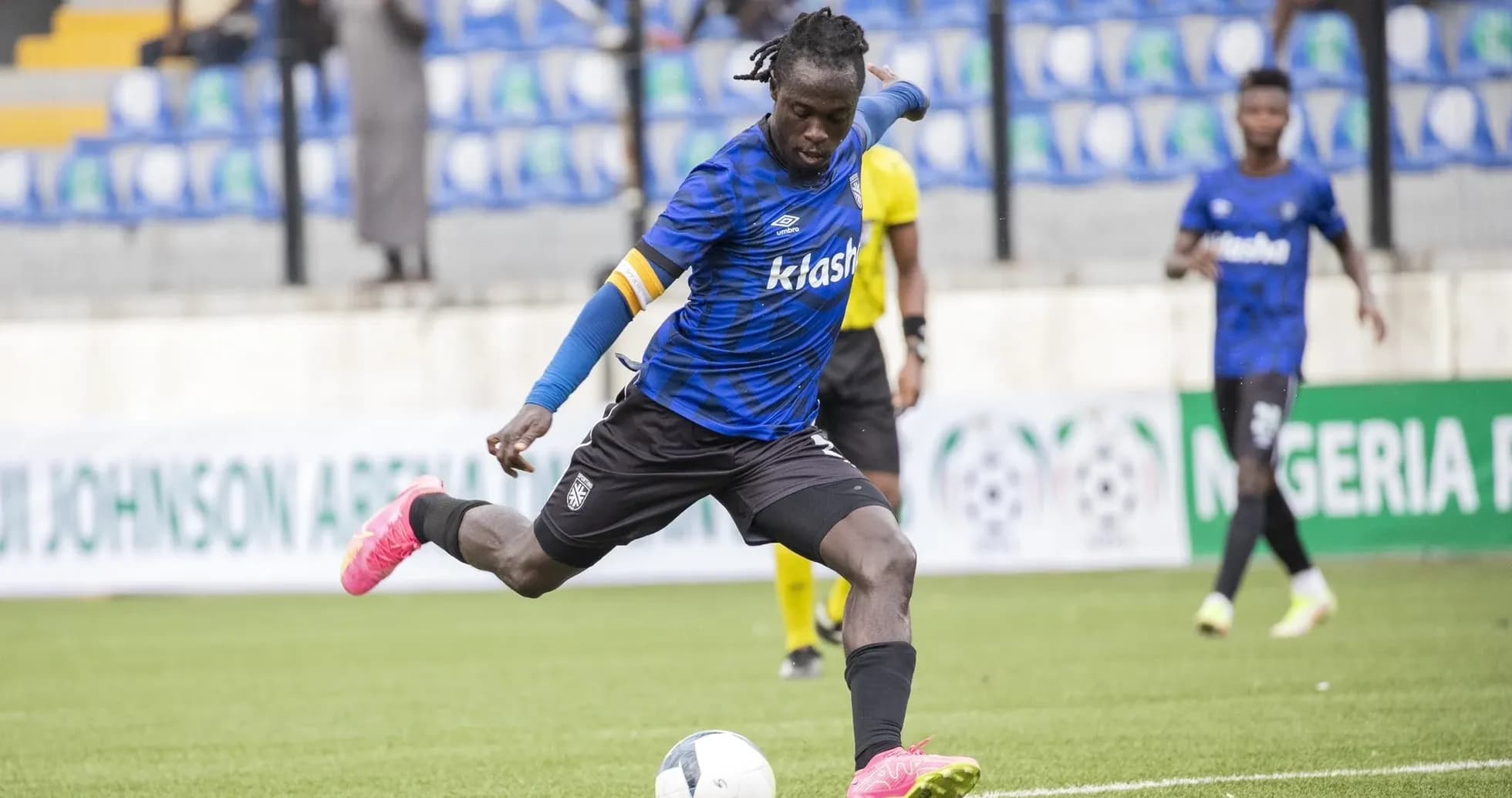

Kano Pillars Dominate Doma United 4-1 in NPFL Clash
Under the fierce Kano sun at Sani Abacha Stadium, this Regular Season - 4 clash in the NPFL felt like an early statement game. League leaders Doma United arrived with nine points from four matches and the sheen of a side chasing the CAF Champions League route. Kano Pillars, third with seven points from three games and eyeing CAF Confederation Cup qualification, defended home ground with the swagger of a team that had already scored 7 goals at home and 9 overall this season.
Final Score: Kano Pillars 4 - 1 Doma United
By full time, the scoreboard read 4-1 to Kano Pillars, a result that did more than dent Doma United’s aura. It confirmed what the early numbers had hinted: in Kano, the hosts are a different animal.
Kano Pillars' Profile
Heading into this game, Kano Pillars’ seasonal profile was clear: high-scoring, high-risk. Overall they had 9 goals for and 5 against, with a total average of 3.0 goals scored and 1.7 conceded per match. At home, those numbers were even more extreme: 3.5 goals scored on average and 1.5 conceded. They had yet to lose in any venue, and they had not failed to score once. The trade-off was defensive vulnerability and no clean sheets, but at Sani Abacha they trusted their firepower.
Doma United's Profile
Doma United, by contrast, travelled with a more balanced, structured identity. Overall they had 6 goals for and 4 against, averaging 1.5 scored and 1.0 conceded. At home they were watertight with 4 goals for and 0 against, but away they were more fragile: 2 goals scored and 4 conceded, an away average of 1.0 scored and 2.0 conceded. Their only defeat had already come on their travels, a 4-1 loss that foreshadowed the difficulties they would face in Kano.
Tactical Lineups
The squads told their own tactical stories. Kano Pillars’ starting XI blended experience and direct running. In goal, O. Frank anchored a back line built around the defensive presence of A. Musa (shirt 5), A. Abdullahi (2), F. Maduabuchi (13) and F. Usman (30). Ahead of them, the double-Musa axis was notable: Z. Musa (6) offering ballast in midfield, and the talismanic wide threat of A. Musa (7) higher up the pitch. Between the lines, captain-figure R. Ali (10) and the energetic F. Ubong (14) connected midfield to attack, with A. Shola (26) adding another aggressive runner in the final third. It was a side built to attack in waves, not to sit in.
On the bench, Kano Pillars had options to either protect a lead or chase the game. S. Abdallah (1) provided goalkeeping cover, while defenders like S. Agu (27) and N. Salihu (25) could tighten the back line late on. In midfield, Y. Ibrahim (19) and I. Sani (16) offered legs and pressing, while forwards R. Ayemwenre (20), A. Samson (15) and S. Ismaila (12) gave the coach the possibility of fresh pace and direct running if the match opened up.
Doma United’s XI was set up more cautiously, at least on paper. I. Pius (1) in goal sat behind a defensive core of A. Umar (3), S. Collins (20), B. Philimon (4) and C. Uzoagara (5), a unit that had been near-perfect at home but more exposed away. In midfield, the likes of H. Abutu (31), H. Abubakar (27) and N. Agu (30) were tasked with screening and recycling possession, while M. Adegbite (19) and S. Ulunwa (11) supported lone forward R. Sadiq (18). It was a shape that depended on compactness and quick counters rather than extended possession.
Their bench, however, hinted at flexibility. A. Benedict (2) and A. Edwin (6) could adjust the defensive structure, while J. Omah (8) and R. Usman (24) offered different midfield profiles. Up front, J. Abah (9) and Y. Fantami (7) provided alternative routes if Doma United needed to chase the game, with D. Simon (16) and B. Melai (12) as further depth.
Discipline and Game Management
Discipline and game management were always going to be decisive. Kano Pillars’ yellow card profile showed a clear late-game edge: 50.00% of their cautions came between 61-75 minutes and another 50.00% between 76-90. They play on the limit when protecting or chasing a result late on. Crucially, they also carried the psychological scar of penalties: overall this season they had taken 1 penalty and missed it, with 0 scored and 1 missed, a 100.00% miss rate. Any spot-kick in this fixture was never going to feel routine.
Doma United, by contrast, had not taken a penalty at all this season, but their discipline curve was revealing. Their yellow cards were concentrated in the final half-hour: 28.57% between 61-75 minutes and a striking 42.86% between 76-90. Away from home, under pressure and chasing, they tended to lose composure. Against a home side as relentless as Kano Pillars, that was a red flag.
Narrative Context
In narrative terms, the “Hunter vs Shield” duel was always going to be Kano’s rampant attack against Doma’s away defence. Kano Pillars had already recorded a 4-1 home win as their biggest victory; Doma United’s heaviest defeat on their travels was also 4-1. The symmetry was ominous. The “Engine Room” battle pitted the guile of R. Ali and the industry of Z. Musa against the screening work of H. Abutu and H. Abubakar. If Kano’s midfield could pin Doma back and deny them clean transitions, the away side’s structure would start to fray.
That is exactly how the contest unfolded. A 2-0 half-time lead for Kano Pillars reflected their season-long habit of starting fast at home and trusting their attackers to overwhelm. Doma United, forced to open up, walked straight into the storm that their away numbers had warned about. Conceding four by full time meant their overall goal difference tightened uncomfortably, while Kano Pillars’ attacking identity was reinforced.
Statistical Prognosis
Following this result, the statistical prognosis for both squads sharpens. Kano Pillars remain a high-variance, high-ceiling side: no clean sheets, but relentless scoring, especially at home. Their late yellow-card trend suggests they will continue to walk a disciplinary tightrope, but their depth across the front line and midfield gives them multiple ways to hurt opponents.
Doma United, for all their early-season leadership, are now clearly a split personality: dominant and secure at home, but vulnerable when dragged into open games on their travels. Their away defensive average of 2.0 goals conceded per match and a history of 4-1 defeats away underline a structural issue, not a one-off.
In the end, this was more than a 4-1 scoreline. It was a tactical confirmation: in Kano, the hosts’ squad is built to turn home advantage into a siege, and even the league leaders can be swept away.