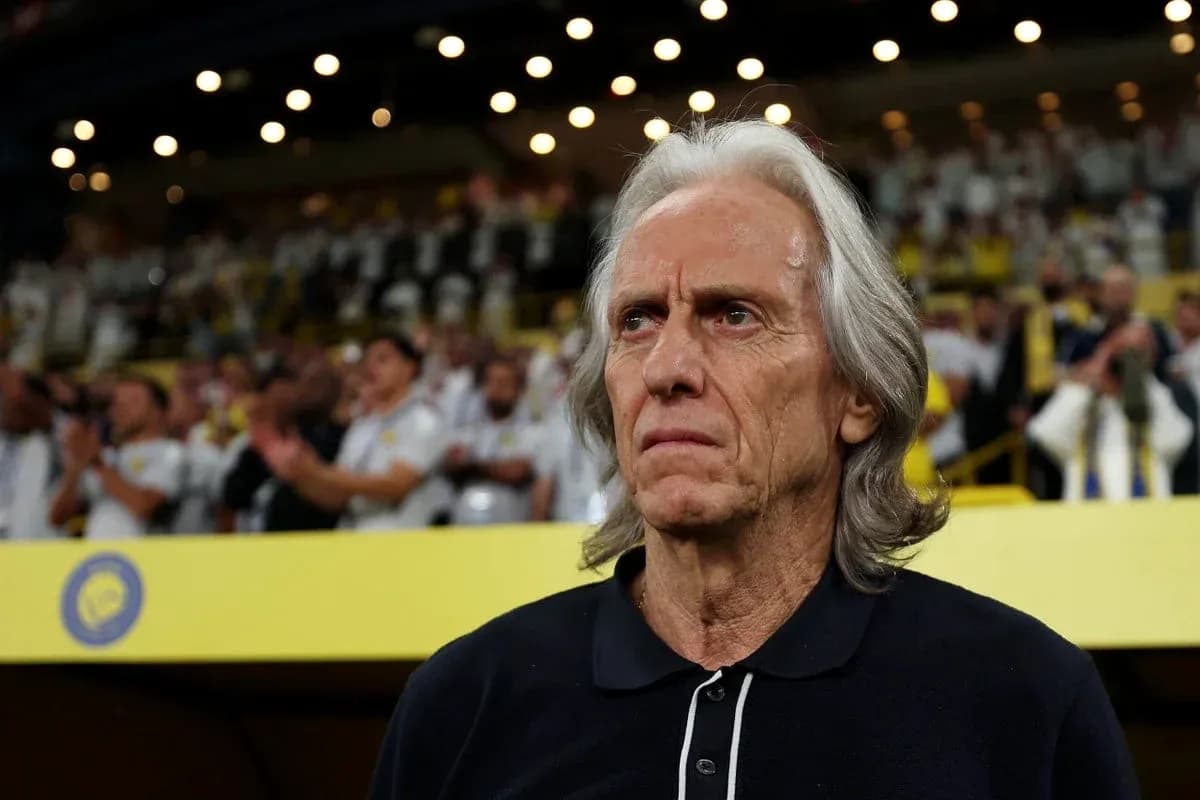
Jorge Jesus Appointed Portugal's New Head Coach
Jorge Jesus has been named Portugal’s new head coach, handed the job of reshaping a national side still coming to terms with another early World Cup exit and the looming end of the Cristiano Ronaldo era.
The 71-year-old replaces Roberto Martinez, who left his post after Portugal’s last-16 defeat to Spain on Monday – a result that cut short a campaign many inside the camp believed was built for a deeper run.
A serial winner returns home
Jesus is no stop-gap or sentimental choice. His managerial career stretches across 36 years, defined by bold, front-foot football and a relentless pursuit of trophies.
Twice he has sat in the Benfica dugout, winning three Portuguese league titles and turning the Lisbon giants into a relentless domestic machine. He crossed the city divide in 2015 in dramatic fashion to take charge of Sporting CP, a move that underlined both his ambition and his willingness to embrace controversy.
His work has long since travelled beyond Portugal’s borders. In Brazil, he led Flamengo to a league title and left Rio de Janeiro as a cult figure. In Saudi Arabia, he collected championships with both Al Hilal and Al Nassr, lifting the latter to their first title in seven years during a spell that ended at the close of the 2025-26 season.
Ange Postecoglou has since taken over at Al Nassr, but Jesus’s imprint there is clear. His reputation as a builder of winning teams is the very currency that has brought him back to the national stage.
The Ronaldo connection and a changing era
When Jesus joined Al Nassr last summer, he did so at the invitation of Cristiano Ronaldo. He admitted then he “could not refuse the invitation” of the Portuguese icon, a line that spoke to the weight Ronaldo still carries within the game and within Portugal’s footballing psyche.
Now, their paths intersect again, but in a different light. Ronaldo, the country’s record scorer with 146 international goals in 233 appearances, confirmed earlier this month he will not play at another World Cup. For the first time in two decades, Portugal must plan a tournament cycle without the guarantee of his presence.
That cycle will be unique. Portugal will co-host the 2030 World Cup alongside Spain and Morocco, with Uruguay, Argentina and Paraguay staging games at the start of the finals. The pressure on the host nations will be immense. For Portugal, the demand will be simple: arrive as genuine contenders, not just gracious hosts.
Jesus has been hired to make that expectation feel realistic.
Chasing a new high
Portugal have not reached a World Cup semi-final since 2006, when a generation led by Luis Figo and a young Ronaldo fell just short of the final. The years since have still brought silverware: the European Championship in 2016, the Nations League in 2019, and another Nations League crown in 2025.
Those trophies proved Portugal can win on the biggest stages. The frustration now lies in their inability to translate that success into deep World Cup runs.
Jesus inherits a squad used to competing for honours but still searching for a defining World Cup story. His track record suggests he will not be shy in imposing his methods, his structure, his intensity. He has managed big clubs, big egos and high-pressure environments across continents. He has been courted by national federations before, too: in March 2025, he was reported as a leading contender for the Brazil job, a role that ultimately went to Carlo Ancelotti after his departure from Real Madrid.
Portugal have now made their move.
A demanding road to 2030
The appointment comes at a moment of transition. A coach in his seventies, but with the energy and edge of someone still chasing the next challenge, steps into a dressing room that must evolve beyond its greatest ever player.
Jesus has 25 trophies as proof of concept. He has coached Ronaldo up close. He understands the weight of expectation that comes with the Portugal shirt and the Lisbon clubs’ crests. Now he must weld a new leadership core, recalibrate an attack that no longer revolves around a single, historic goalscorer, and push a talented group towards a World Cup on home soil.
Portugal have their serial winner. The question now is whether Jorge Jesus can deliver the one stage on which the country has been waiting far too long to make its return: the final weekend of a World Cup.