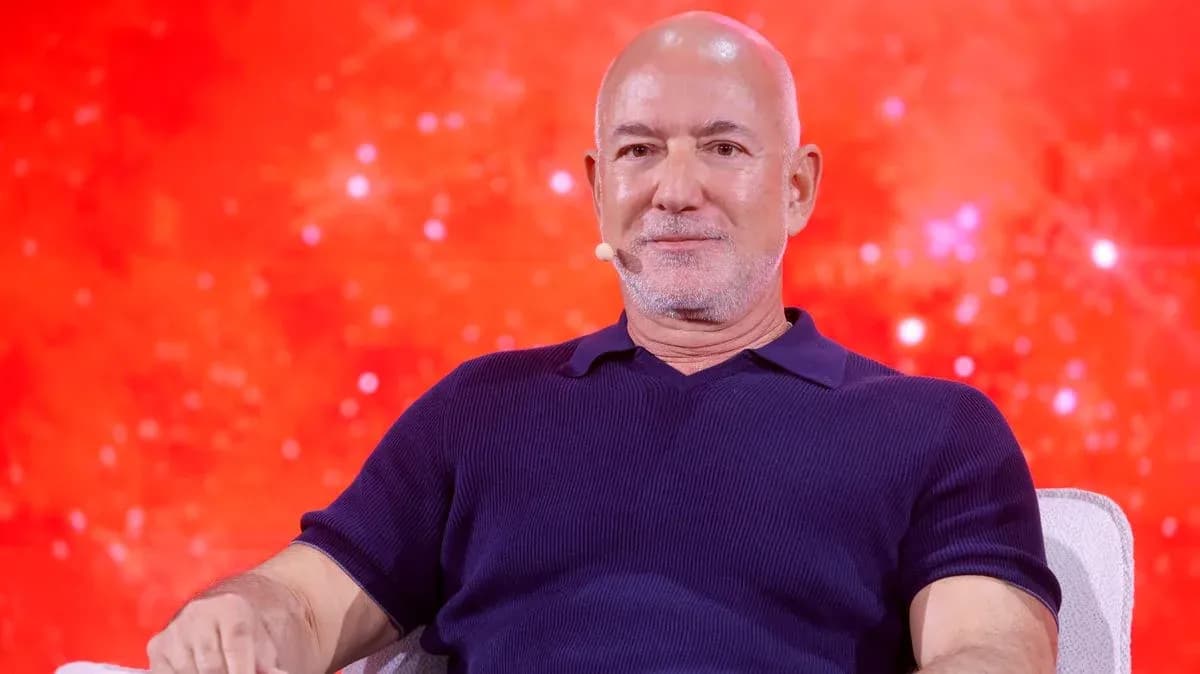
Jeff Bezos Nears Liverpool Stake in FSG Deal
Liverpool are bracing for one of the most seismic off‑field developments in their modern history, with Jeff Bezos closing in on a move into Anfield’s boardroom.
An investment consortium led by Amit Bhatia is in advanced talks to buy a minority stake in the club, with the Amazon founder poised to join as part of a heavyweight group that also includes Facebook co‑founder Eduardo Saverin.
The proposed stake? Roughly one third of Liverpool Football Club.
A new power bloc at Anfield
Fenway Sports Group, Liverpool’s controlling shareholder since 2010, has confirmed that it is in discussions with the Bhatia‑fronted syndicate. In a statement, FSG said: “An investment consortium led, managed, and represented by Amit Bhatia has expressed interest in making a strategic minority investment in Liverpool Football Club.”
Sky News reports that FSG is preparing to announce a transaction “as soon as this week”, though the timeline could easily drift into next week if final details take longer to lock in. The direction of travel is clear: fresh money, new faces, and a reshaped power structure behind the scenes.
If the deal goes through, Liverpool would count among their co‑owners three of the world’s richest men. The club’s valuation under the proposed investment sits at around $6bn (£4bn), a figure that would place this among the most lucrative transactions in football history.
Bezos alone is estimated by Forbes to be worth over $280bn (£207bn). Saverin’s fortune is put at more than $32bn (£23bn). Add Bhatia, the son‑in‑law of steel magnate Lakshmi Mittal and a former shareholder in Queens Park Rangers, and Liverpool would suddenly be backed by a financial coalition few clubs on the planet could match.
FSG’s next chapter
For FSG, this is not an exit but a recalibration.
The American group, which also owns MLB giants the Boston Red Sox, stepped in back in 2010 to rescue Liverpool from the brink of administration under Tom Hicks and George Gillett. Since then they have presided over a Champions League triumph, a long‑awaited Premier League title and a transformation of Anfield and the club’s commercial muscle.
Now, with valuations soaring and US capital flooding into English football, they are preparing to share the load.
Half of the Premier League’s 20 clubs are now predominantly owned by US‑based investors. Liverpool, already a flagship of that trend, are on the verge of becoming a case study in what happens when traditional sports ownership collides with the deepest pockets in global tech and finance.
Bezos and Saverin: unfinished business in sport
Bezos has flirted with elite sport before. He explored major investments in the NFL, running the rule over the Seattle Seahawks and Washington Commanders, but ultimately walked away from both opportunities. This move would mark his most significant step into the sporting arena yet.
Saverin, meanwhile, knows the Premier League landscape well. He was part of a consortium that tried – and failed – to buy Chelsea during the 2022 auction that followed sanctions on Roman Abramovich after Russia’s invasion of Ukraine. Liverpool could be his route back into English football, this time via a minority role rather than a full takeover.
Bhatia, who fronts the group, brings direct experience of the English game from his spell at QPR, along with deep connections through the Mittal family’s industrial empire.
A club in transition on the pitch
All of this unfolds against a backdrop of uncertainty on the field.
Liverpool last lifted the Premier League title in 2024/25. Since then, the landscape has shifted again. Arne Slot has been sacked, Mohamed Salah has departed, and the club is bracing for a season that feels more like a reset than a continuation.
Recruitment has started, but not yet transformed the mood. Jeremy Jacquet, Victor Munoz and Ronald Araujo have arrived on loan, useful pieces but not yet the kind of statement that rattles rivals.
Bradley Barcola has been identified as a priority attacking target, with Paris Saint‑Germain open to a sale, yet negotiations have stalled short of a breakthrough. The squad looks competitive, but incomplete. Ambitious, but in need of a spark.
That is where the timing of this investment becomes so intriguing.
Money, ambition, and the next Liverpool
A minority stake does not hand Bezos, Saverin or Bhatia the keys to Anfield. FSG will remain in charge of strategic direction. But a deal of this size changes the conversation.
Extra capital can reshape transfer budgets, accelerate stadium and infrastructure projects, and sharpen Liverpool’s hand in the arms race with Manchester City, Real Madrid and the emerging state‑backed powers. It can also raise expectations among a fanbase that has already tasted the top and will not settle for drifting back into the pack.
Liverpool have lived through chaotic ownership before. They know the cost of the wrong partners. FSG’s tenure has, on balance, been one of stability and growth. Now they are choosing to invite in some of the most powerful figures in global business.
The numbers are huge. The names are bigger.
The real question is simple: will this be the financial jolt that powers Liverpool’s next great era, or the moment the club steps into an entirely new kind of pressure cooker?