Iraola's Unbeaten Liverpool: A New Era Begins
Twelve months ago Liverpool opened their title defence with five straight Premier League wins, swatting aside Bournemouth on the opening night and cruising under Arne Slot. The machine looked well oiled, the crown secure, the path clear.
Nobody in that stadium imagined the man in the opposite dugout, Andoni Iraola, would be the one in charge at Anfield a year later.
Football does not wait. It twists.
Now Iraola brings an unbeaten Liverpool back to the south coast, six points worse off than at this stage last season, but still without a league defeat and still trying to stitch his ideas into the fabric of a club that had grown weary by the end of the last campaign.
From seaside to Formby
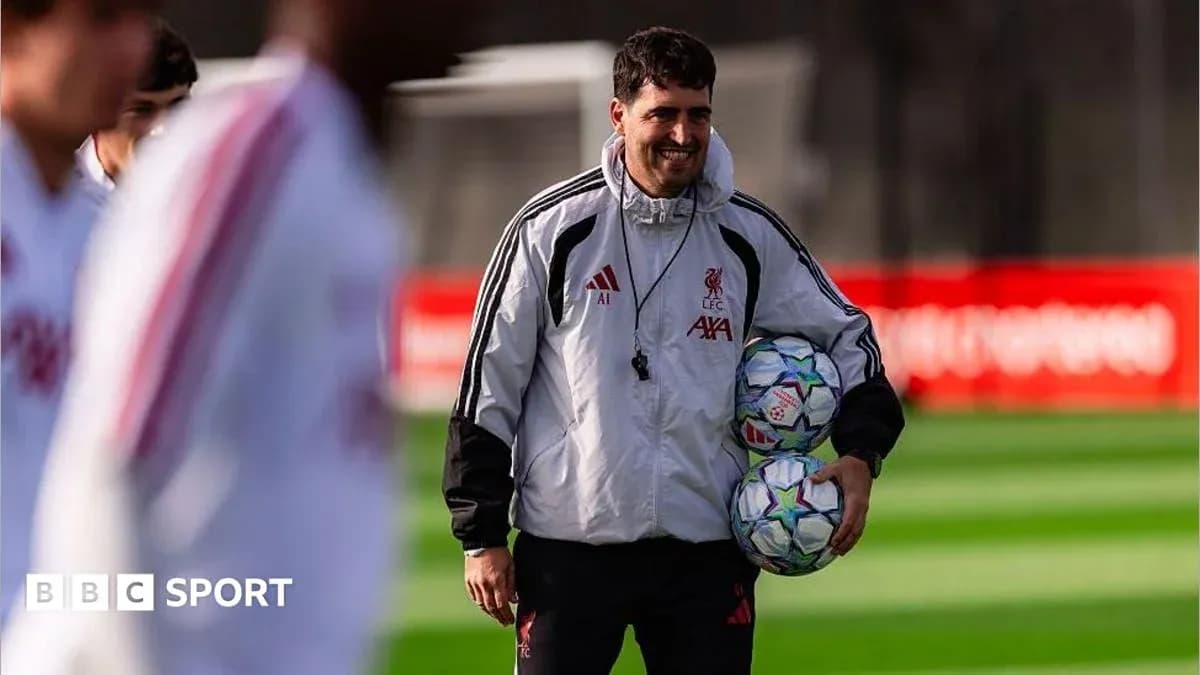
Iraola has traded the Bournemouth shoreline for the quieter sands of Formby, following a path once taken by Jurgen Klopp and Brendan Rodgers. He is settling into the area, seen in the city centre, seen on his bike along the coast. But his real habitat is the training pitch.
At Kirkby, staff describe him as a “six days a week” coach. He is often first out on the grass, setting cones, shaping drills, building the intensity he demands.
“It’s really intense. There’s a lot of hard work and no sort of light days. Everyone’s putting in 100%,” said forward Lewis Koumas. That line might as well be pinned to the dressing-room door.
Inside the AXA Training Centre, Iraola keeps a low profile. His office is rarely used. He prefers the coaches’ room, shoulder to shoulder with Tommy Elphick, Shaun Cooper and Pablo de la Torre. No big-manager aura, no theatrical presence in corridors. Just a coach with his staff, working.
De la Torre, who followed Iraola from Rayo Vallecano to Bournemouth and now to Liverpool, is central to the project. His job: make sure every player can handle the physical demands of Iraola’s game. At a club that will play at least 49 matches this season, and possibly drift into the 60s if cup runs deepen, that role is not a luxury. It is survival.
Learning Liverpool’s rhythm
The structure of the head coach role at Liverpool means the revolution is more subtle than it might look from the outside. Iraola’s appointment owed much to his sharp work at Bournemouth, but he is learning in real time what it means to manage a squad through Liverpool’s relentless schedule.
He listens. Medical staff, fitness teams, analysts – their voices matter in the planning. Training times now bend to the fixture list. Late-afternoon and early-evening sessions are becoming normal, shaped around kick-off times. Under Slot, training tended to hit the same window each day.
The academy has been pulled tight into that picture. Rob Page, who leads Liverpool Under-21s, speaks of a clear alignment.
“We have an understanding of how the first team play and key principles, like how we press, how he [Iraola] wants his number 10 to press, how he wants his number eight to press, how he wants his centre-backs to press – we mirror that absolutely,” Page said.
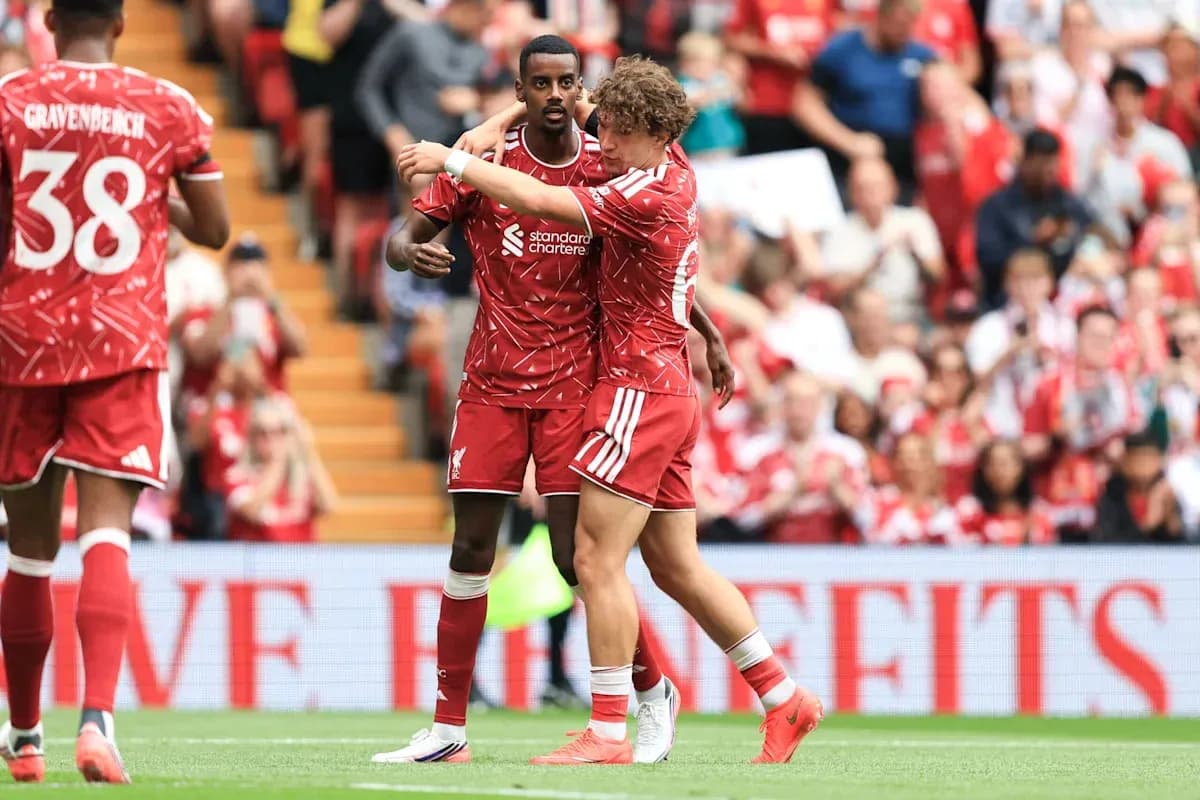
That clarity is already visible in selection. The average age of Liverpool’s Premier League squad this season is 25.3, with only five teams younger. Rio Ngumoha (18), Trey Nyoni (19) and Koumas (20) all started against Tottenham in the Carabao Cup and are expected to feature far more than they did last year. This is not token youth. It is policy.
System, sweat and scrutiny
On the pitch, Iraola’s Liverpool play with a clear midfield structure: a six, an eight and a 10. Dominik Szoboszlai outlined it this week, a reminder that the cries for a specialist defensive midfielder in the transfer window sit alongside a manager convinced his system can function if the collective level rises.
Intensity is the non-negotiable. Sprint numbers back that up – Liverpool have made the most sprints in the Premier League going into the weekend – but the schedule has already bitten. Against Fulham, less than 72 hours after beating Atletico Madrid in the Champions League, they looked heavy-legged in a goalless draw.
The pressure finally told on their energy, not the opposition.
Iraola knows he must bend without breaking his principles. There will be days when the press does not bite as sharply, when the legs are dulled by travel and minutes. On those days, Liverpool will need a set-piece routine or a flash of individual brilliance to drag them over the line.
He has adapted his communication style too. After a pre-season game against Monaco, Iraola told LFC TV that Liverpool had “run out of steam” after 30 minutes and did not yet have the energy to play with his desired intensity. It was meant as an honest snapshot of fitness levels, not a rebuke. The comments spread, clipped and shared, and served as a sharp reminder of the scrutiny at a club of this size.
Since then, his public tone has remained calm, open, but measured. Every word weighs more at Liverpool. He knows it.
Inside the dressing room, he prefers clarity over theatre. The team is usually named on the morning of a game. Post-match debriefs wait until the following day, once emotions have cooled and data is in. Again, structure and intensity, not impulse.
A familiar walk down the tunnel
Sunday brings Bournemouth away – Iraola’s old home, and a very different walk down the Vitality Stadium tunnel. He will head not for the main home dressing room, but the smaller, recently renovated away one, upgraded to meet Europa League regulations. A small detail, but a neat symbol of how far both he and Bournemouth have travelled.
He will have enjoyed, quietly, their Europa League win over Real Sociedad on Thursday, a victory in the Basque region where he grew up. The personal and professional threads of his career keep crossing.
Between 11 October and 7 November, Liverpool will play nine times. This weekend’s match is their fourth in 12 days. After the international break, four games arrive in 10 days. The calendar is merciless. For a coach who trades in intensity, the biggest challenge may be knowing when to ease off.
For now, the baseline is clear: Liverpool have not lost under Iraola. After 12 league defeats last season, simply becoming hard to beat is progress. But inside the dressing room, the standards are sharper than that. Vice-captain Alisson said last week that draws are not enough for Liverpool.
Iraola knows it too. He is unbeaten in the Premier League since January across his two clubs. A win, on familiar turf, going into the international break would not just protect that record.
It would mark the moment his Liverpool stopped merely avoiding defeat and started looking like a team ready to chase something bigger again.