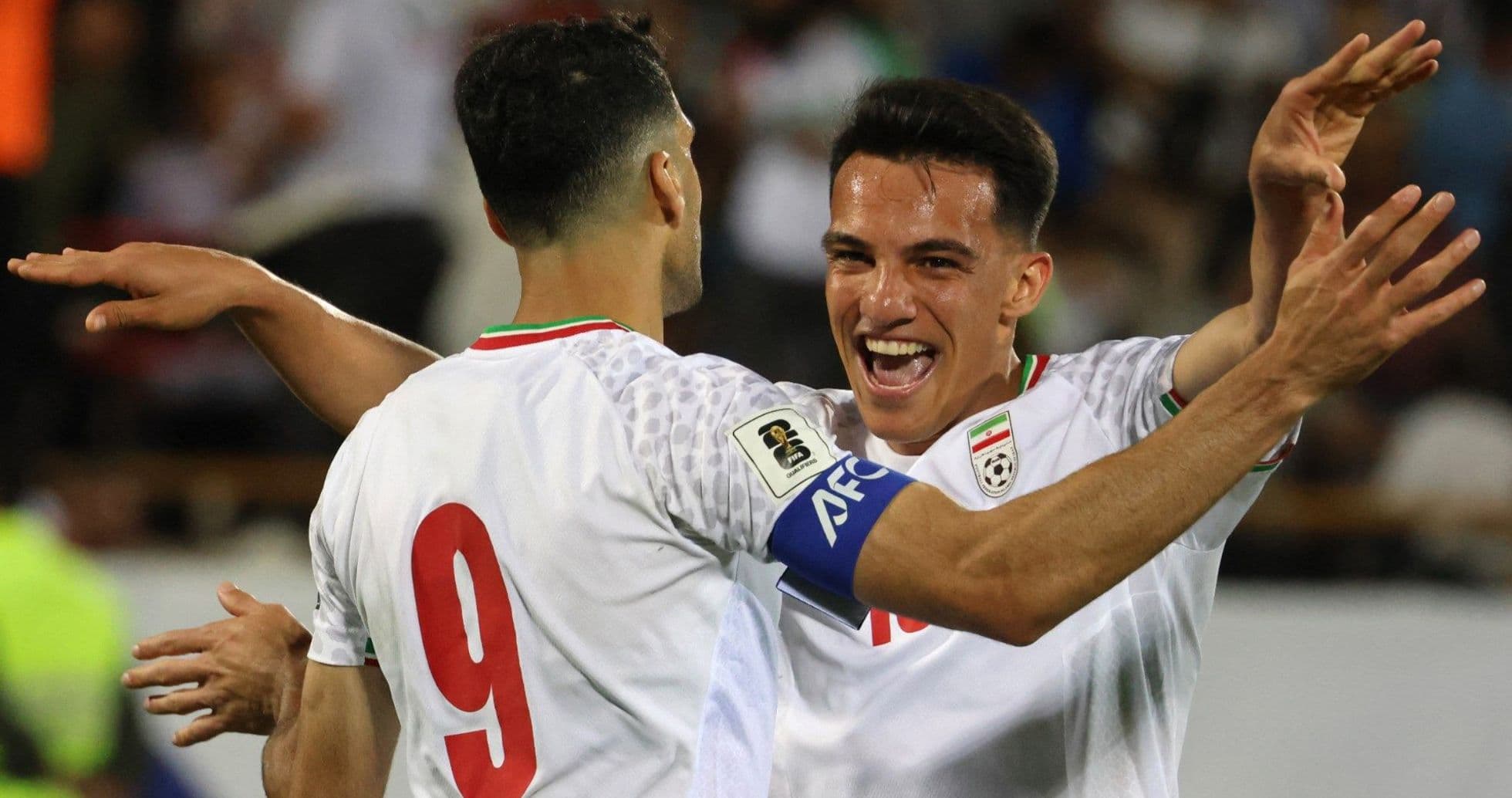
Iran’s Road to 2026: Beiranvand, Taremi, and the Azmoun Absence
Iran will arrive in North America in 2026 with a familiar spine, a familiar style, and one very unfamiliar absence.
This is still Mehdi Taremi’s team. It is still Alireza Beiranvand’s penalty area. But without Sardar Azmoun, the shape, mood and ceiling of Team Melli feel different.
Beiranvand, from the streets to the World Cup spotlight
Some positions invite debate. Iran’s goalkeeper does not.
At 33, Alireza Beiranvand remains the overwhelming favourite to keep the gloves for a third straight World Cup. More than 80 caps, a career built on resilience, and one moment that still echoes around the tournament’s history: the penalty save from Cristiano Ronaldo in 2018, the first time Portugal had missed from the spot on this stage.
His story is already part of World Cup folklore. A boy who ran away from his nomad family at 12, sleeping rough on the streets of Tehran, piecing together a living with odd jobs while chasing a football dream that looked, at best, distant. Now he stands on the brink of another World Cup as Iran’s undisputed No. 1, currently with Tractor and still the reference point for every defender in front of him.
Behind him, the hierarchy is clear. Hossein Hosseini of Sepahan is the main challenger, a reliable, experienced deputy likely to spend the tournament as the “break glass in case of emergency” option. Payam Niazmand of Persepolis and young Mohammad Khalifeh from Aluminium Arak FC round out the pool, both hoping the expanded squad lists and long tournament road open a seat on the plane as the third-choice keeper.
Midfield balance: Ghoddos’ craft, Ezatolahi’s control
If Beiranvand offers stability at the back, Saman Ghoddos brings imagination further up the pitch.
The Kalba midfielder is one of Iran’s key figures, a player expected to shoulder responsibility in the biggest moments. His versatility between the lines and ability to connect defence and attack make him central to Amir Ghalenoei’s plans for 2026.
Alongside him, Saeid Ezatolahi remains the metronome. The Shabab Al Ahli man missed the March friendlies with a foot injury, but the expectation is clear: he should be fit for the summer and will walk straight back into the core of the side. When Iran need to slow the game, when they need to build from deep, Ezatolahi is the reference point.
Ghalenoei is not short of experience around them. Omid Noorafkan of Sepahan and Mohammad Ghorbani of Al Wahda add depth, know-how and flexibility in the middle third. They give the coach options: a more conservative double pivot, a more adventurous press, or simple cover across a long tournament.
The wild card is Amir Razzaghinia. The Esteghlal youngster brings energy and intrigue, the kind of emerging talent who can change a World Cup narrative in a handful of minutes if trust and opportunity align. If he sees the pitch in USA, Mexico and Canada, he will be one to watch.
Taremi, still the star, still the finisher
Up front, one name towers over the rest.
Mehdi Taremi, now 33 and heading for his third World Cup, is Iran’s headline act. The Olympiacos striker already owns more than 100 caps and over 50 goals for his country. He knows what it means to score on this stage, having netted twice against England in that wild 6-2 defeat at Qatar 2022.
His form in Greece has been prolific again, and Iran will lean heavily on his penalty-box craft, his movement, and his calm in front of goal. This is the man expected to carry the attack, to turn tight group games into victories, to turn half-chances into lifelines.
Around him, the supporting cast is varied and dangerous. Alireza Jahanbakhsh, now at FCV Dender EH after spells with Brighton and in the Eredivisie, brings width and experience on the flank. Mehdi Ghayedi, currently with Al-Nasr, is almost certain to be in the squad, a nimble, inventive forward who can drift into pockets and break defensive lines.
There is depth behind them too. Ehsan Mahroughi (Foolad), Ali Alipour and Hossein Abarghouei (both Persepolis), Shahriyar Moghanlou (Kalba), Mohammad Mohebi (Rostov), Amirhossein Mahmoudi (Persepolis), Ali Gholizadeh (Ekstraklasa), Mehdi Torabi (Tractor) and Amirhossein Hosseinzadeh (Tractor) all crowd the attacking conversation. Each offers something slightly different: pace, pressing, set-piece quality, or sheer work rate.
The Azmoun void and the Eckert gamble
And yet, every discussion about Iran’s attack circles back to the same absence.
Sardar Azmoun, with 57 goals in 91 internationals, has been left out since March’s friendlies following reports of a perceived act of disloyalty to the government. On the pitch, the loss is obvious. Azmoun’s partnership with Taremi once gave Iran one of Asia’s most feared strike duos. His penalty-box instincts and aerial threat are not easily replaced.
Ghalenoei has responded by looking outward. Dennis Eckert, the Standard Liege forward with Iranian ancestry, has been called up for those March fixtures in Azmoun’s place. It is a bold move, an invitation to stake a claim in the most pressurised audition imaginable. If Eckert seizes it, he could reshape the attacking hierarchy before the squad is finalised.
For now, though, the shadow of Azmoun hangs over the project. Iran must prove they can evolve without one of their most prolific modern forwards.
The likely shape: solid base, familiar faces
Tactically, Iran are unlikely to rip up the blueprint.
A traditional back four is expected. Salheh Hardani should slot in at right-back, with Milad Mohammadi on the opposite flank. In the centre, Shojae Khalilzadeh and Hossein Kanaanizadegan form a rugged, experienced pairing in front of Beiranvand.
In midfield, Ghalenoei could lean on a two-man shield of Ezatolahi and Ghoddos, a pairing that balances control and creativity. Ahead of them, a trio of Alireza Jahanbakhsh, Mehdi Ghayedi and Mohammad Mohebi would operate behind Taremi, giving Iran width, dribbling threat and late runs into the box.
On paper, it looks like this:
Predicted Iran XI for World Cup 2026 (4-2-3-1)
Beiranvand; Hardani, Khalilzadeh, Kanaanizadegan, Mohammadi; Ezatolahi, Ghoddos; Jahanbakhsh, Ghayedi, Mohebi; Taremi.
It is a line-up built on continuity, on players who have carried the shirt through qualifying and previous tournaments. It is also a line-up that asks a simple, demanding question of its stars.
Can Beiranvand summon one more World Cup surge, can Ghoddos and Ezatolahi control games at this level, and can Taremi, without Azmoun beside him, drag Iran into the knockout rounds on his own terms?