
Inquest into Nobby Stiles' Death Ordered as Brain Injury Evidence Mounts
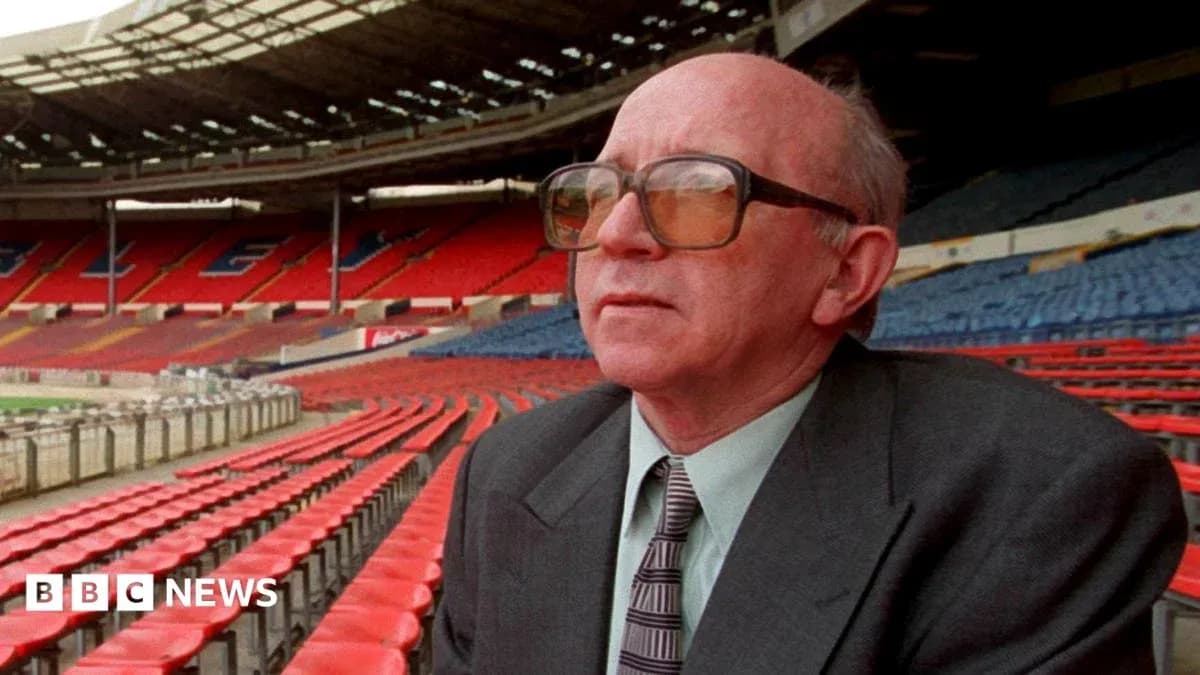
Nobby Stiles, the toothless terrier of England’s 1966 World Cup triumph, died with a traumatic brain injury and will now be the subject of a full inquest, a coroner has ruled.
Stiles, who passed away in 2020 aged 78, was found to have chronic traumatic encephalopathy (CTE) – the degenerative brain disease increasingly linked with repeated head impacts – alongside Alzheimer’s disease. The findings were revealed at Stockport coroner’s court, where area coroner for Greater Manchester South, Chris Morris, said the presence of a traumatic injury meant an inquest was “required” into the former midfielder’s death.
Born in Manchester in 1942, Norbert “Nobby” Stiles became a symbol of English football’s grit: a tough-tackling defensive midfielder, capped 28 times by England and a mainstay of Manchester United with nearly 400 appearances. His jig at Wembley with the Jules Rimet trophy and his false teeth in his hand became one of the defining images of 1966. Now, his legacy sits at the centre of a battle over football’s duty of care.
Brain Expert’s Findings Force Formal Inquiry
Morris told the court that, “for reasons not entirely clear” to him, Stiles’s death had not been reported to the coroner at the time. The investigation only began after new information from the family, who have long argued that his suffering in later life was rooted in his playing days.
Stiles’s brain was examined by neuropathology expert Dr Daniel du Plessis. After reviewing the medical records and the post-mortem findings, Dr du Plessis concluded that the primary cause of death was Alzheimer’s disease. Yet that was only part of the story.
He also found high-stage CTE, along with what was described as “stage three limbic predominant age related TDP-43” and small vessel cerebrovascular disease. Crucially, CTE is classified as a traumatic brain injury, and that changed the legal landscape.
“On the basis of that cause of death, particularly the inclusion of a traumatic injury included in the cause of death, I’m satisfied an inquest is required into the sad death of Mr Stiles,” Morris said. A full hearing will take place on Wednesday at the same court.
A Family’s Fight and a Game Under Scrutiny
For Stiles’s family, the ruling is another step in a long and painful campaign. His son John has repeatedly said that football “killed” his father. He watched as the man who once shackled Eusebio on the biggest stage faded under the weight of dementia. The family were eventually forced to sell Nobby’s World Cup and European Cup winner’s medals to fund his care.
John Stiles now leads Football Families for Justice (FFJ), a group demanding stronger support for former players living with neurodegenerative disease and more decisive action from the game’s authorities. He is also among dozens of former professionals and relatives suing the Football Association, the Football Association of Wales and the English Football League.
Their claim is stark: that the governing bodies were “negligent and in breach of their duty of care” by failing to protect players from the long-term risks of repeated heading and concussions in training and matches. Lawyers representing the families argue that football’s rulers knew, or should have known, for decades that such impacts were likely to cause brain injuries.
The sport’s hierarchy disputes that conclusion. In March, lawyers for The Football Association told the High Court that it has “not been established by science” that heading a ball or “occasional” concussion leads to permanent brain damage. The science, they argue, is still evolving. The human cost, however, is already visible.
A Growing Roll Call of Casualties
Nobby Stiles is not an isolated case. In January, an inquest into the death of Gordon McQueen, the former Scotland, Manchester United and Leeds United defender, found that heading the ball was “likely” to have contributed to a brain injury that played a role in his death at 70. McQueen, like Stiles, was diagnosed with CTE.
His daughter, TV presenter Hayley McQueen, has spoken bleakly of the toll on England’s 1966 World Cup winners, saying the team has been “pretty much wiped out” by neurodegenerative disease. The heroes of English football’s greatest day are increasingly being remembered not only for what they won, but for what it may have cost them.
The numbers are hard to ignore. A 2019 study, co-funded by The FA and the Professional Footballers’ Association (PFA), found that former professional footballers were three-and-a-half times more likely to die of neurodegenerative disease than people of the same age in the general population. That research helped push the issue from the medical journals into the heart of the game.
The response has been cautious but noticeable. The FA is in the process of phasing out all heading in youth football up to under-11s by 2026, a move that would have been unthinkable in Stiles’s era, when defenders and midfielders were expected to attack every cross and clearance with their heads.
What Price Glory?
The inquest into Nobby Stiles’s death will not change the way he is remembered on the pitch: the ferocious tackling, the relentless work, the famous grin. It may, though, sharpen the questions now facing football’s leaders.
How many more families will stand in courtrooms, armed with medical reports and memories of a loved one who once lit up the game? And how long can a sport built on heading the ball ignore what is happening to the men who did it best?




