
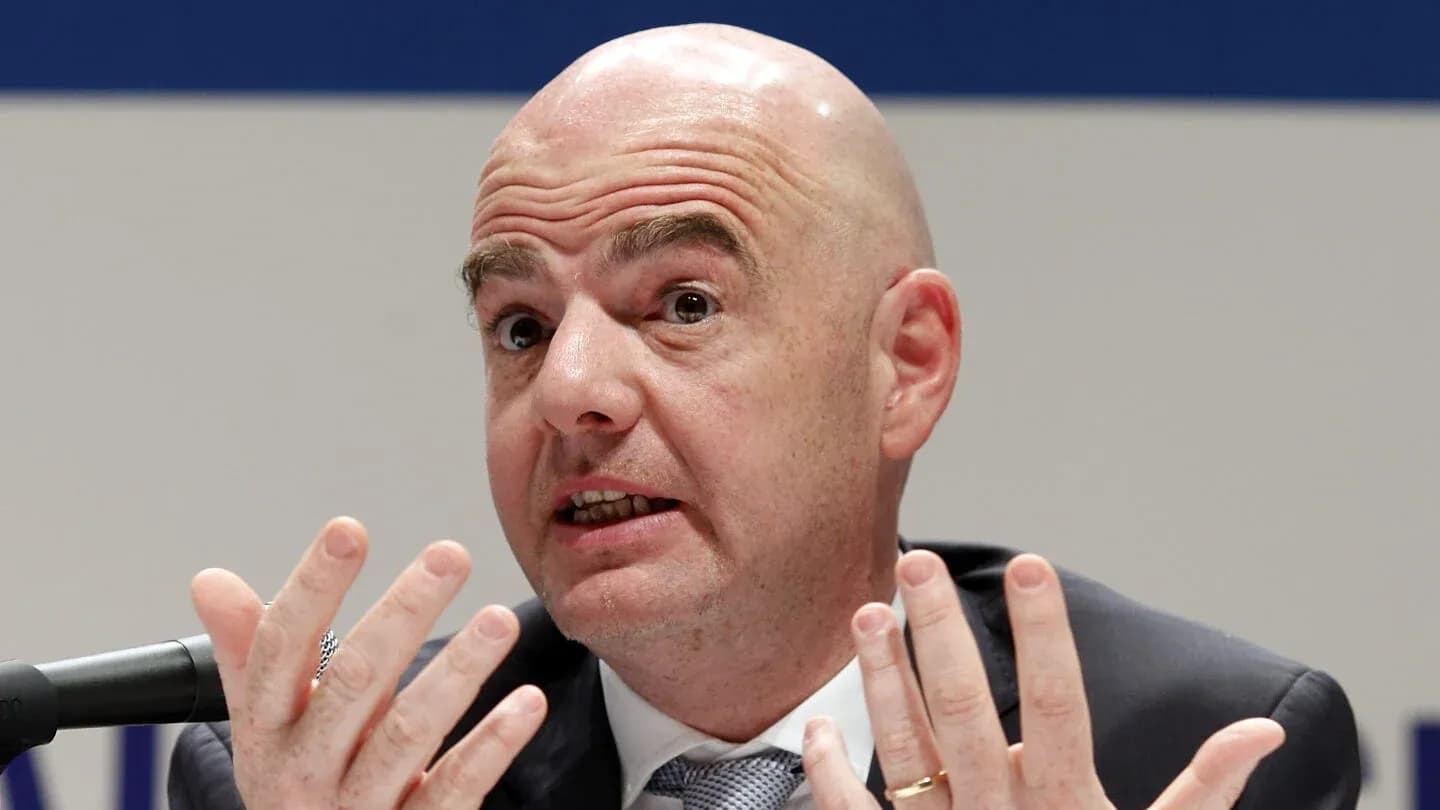
Infantino Scraps Controversial FIFA Forward Enterprise Proposal
Gianni Infantino has scrapped his most explosive idea yet.
Under fierce pressure from across the football world, the FIFA president has withdrawn the controversial FIFA Forward Enterprise (FFE) proposal, a plan that would have opened a slice of World Cup revenues to private investors in exchange for a massive cash injection into the global game.
The project, sold as a way to “further strengthen” FIFA’s 211 member associations and boost support in countries “where support is most needed,” never made it past the political firestorm it created.
A plan engulfed by backlash
Infantino’s blueprint was simple in theory, incendiary in practice: allow a private investment group to buy into a percentage of World Cup commercial rights, then funnel that money back to member associations through an expanded development scheme.
Reports quickly linked Jason Kushner — brother of Jared Kushner, the son-in-law of former US president Donald Trump — as the figure fronting the investment group. That connection alone sharpened the spotlight on a project already viewed with suspicion in many quarters.
Resistance hardened fast.
Infantino was hit from all sides, not only by confederations and national associations, but from within his own inner circle. Carlos Cordeiro, the former US Soccer president serving as an advisor, stepped down over the issue. Kevin Lamour, FIFA’s chief operating officer, publicly declared he felt “deceived” by his boss.
The internal fractures mirrored a global revolt. UEFA announced that all of its member nations would boycott every FIFA competition — including both the men’s and women’s World Cups — if the plan went ahead. That threat did not stand alone; UEFA’s stance drew backing from CONCACAF and the Asian Football Confederation (AFC), turning what began as a governance dispute into a full-blown institutional crisis.
At that point, the numbers no longer mattered. Even if Infantino could still count a majority of member associations behind him, the cost of pushing through was clear: open conflict with Europe, North and Central America, and Asia’s leadership, and a World Cup under boycott.
The pressure finally told.
Infantino backs down
Late on Friday, FIFA released a brief communication, starkly titled: “Statement attributable to the FIFA President.” Inside, Infantino confirmed that the FIFA Forward Enterprise project was dead.
He reiterated the original intent: to strengthen member associations and grow the sport worldwide, “especially in those countries where support is most needed,” and to proceed only if a majority of member associations backed it and after consultation with the FIFA Council, confederations, and wider stakeholders.
Then came the admission that the idea had detonated the unity he so often cites as his mission.
“Having listened carefully to all the views, it has become clear that the project has created divisions of a nature that, regardless of the level of support, are no longer in the interest of the objective set out in the first place,” Infantino said.
“Our purpose has always been — and will always be — to unite and improve. As a result, this proposal will not proceed.”
No caveats. No rebranding. The FFE proposal is off the table.
The fight behind the rhetoric
The language of unity has long been Infantino’s shield. He has framed his presidency around the promise of growing the game “everywhere,” especially in developing football nations that rely heavily on FIFA funding.
FFE was pitched squarely at that audience: a way to unlock more money, faster, for infrastructure, competitions, and grassroots programs. But the price — allowing private capital into the World Cup, football’s most sacred commercial asset — triggered deep alarm among traditional power brokers and governance hawks who saw it as a step too far.
The revolt from UEFA and its allies cut to the heart of FIFA’s legitimacy. A World Cup without Europe is barely conceivable. A World Cup without Europe, CONCACAF and major Asian nations is unthinkable. The threat of boycotts turned a financial project into an existential question.
Infantino chose to retreat rather than risk that showdown.
What comes next for FIFA?
The president insists this is not the end of the conversation about how to fund the game’s growth.
“Moving forward, my intent is to bring all interested parties back together in the coming days and weeks in the spirit of shared interest in our game,” he said, adding that the objective remains “to continue growing football everywhere, particularly in those countries that mostly need our support.”
The battle over FFE may be over, but the underlying issue remains: how does FIFA balance the hunger for more money with the need to protect the integrity and control of its flagship tournament?
Infantino has pulled one proposal. He now has to find another path that can satisfy the associations who want more funding without provoking another mutiny from the sport’s most powerful blocs.




