
Ikorodu City Defeats Enugu Rangers 2–0 in NPFL Clash
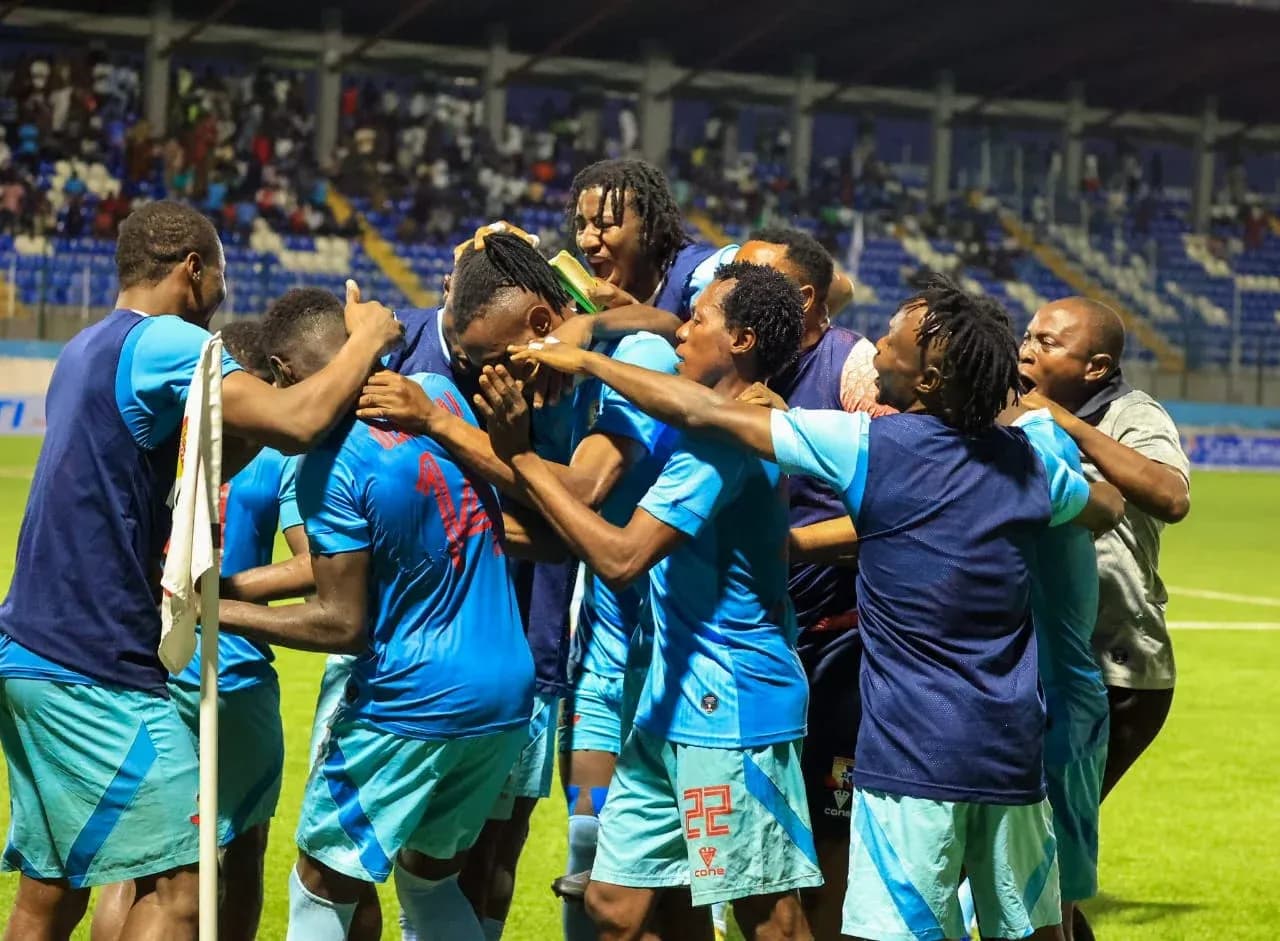
Mobolaji Johnson Arena felt like a proving ground more than a mere backdrop as Ikorodu City and Enugu Rangers walked out for this NPFL Regular Season - 6 clash. The table said it was eighth against fourth, but the 2–0 full-time scoreline told a richer story: a young Ikorodu side sharpening its identity at home, and a Rangers team discovering the limits of its early-season momentum on the road.
Heading into this game, Ikorodu City had quietly built one of the most reliable home profiles in the league. At home they had played 3, winning 2 and drawing 1, scoring 5 and conceding just 1. That defensive return was backed by an average of 0.3 goals conceded at home, a platform that allowed them to be patient rather than frantic. Overall, they had 8 goals for and 5 against across 5 matches, a goal difference of 3 and a balanced scoring rate of 1.6 goals per match.
Enugu Rangers arrived as the more decorated and more in-form side, fourth in the table with 10 points from 5 games, and an overall goal difference of 2 (8 scored, 6 conceded). Their attack had been particularly dangerous on their travels: away from home they had played 2, winning 1 and losing 1, scoring 4 and conceding 4, with an away scoring average of 2.0. On paper, this was the classic collision: a home side built on control and defensive discipline, versus a visitor that embraced chaos and open-field football away from home.
The opening 45 minutes reflected that tension. Ikorodu City, without a named coach in the data but clearly well-drilled, set up with a compact block that used the front line as the first shield. The starting XI carried a strong spine: M. Atata and E. Ujunwa offered structure, while the attacking thrust came from the likes of A. Adeoye, A. Tomiwa, and the wide energy of F. Salami and D. Obiajulu. The first-half goal, giving them a 1–0 lead at the break, fit the season’s pattern: Ikorodu rarely blow teams away early, but they are efficient when chances arrive.
Rangers, under Ilechukwu Fidelis, named an XI that hinted at front-foot intentions. The presence of K. J. Akugre and J. Emo suggested verticality and direct running, while F. Temitope and W. Ebirim were tasked with linking midfield to attack. At the back, K. Igboke and M. Daniel had to manage both the space behind them and the physical duels that Ikorodu’s forwards relish. Yet the visitors struggled to translate their usual away fluency into clear chances, a reflection of Ikorodu’s compact distances between lines.
If there was a tactical void in Rangers’ approach, it lay in their inability to stretch Ikorodu horizontally. With no clear width profile emerging from the lineup, too many attacks funneled into central traffic, where D. Mse and E. Ikechukwu were able to contest second balls and keep the game in front of them. Ikorodu’s season-long defensive numbers—only 5 goals conceded in total across 5 matches, and 2 clean sheets at home—were not an accident; they were the product of a team that accepts long spells without the ball but rarely loses its shape.
Discipline also played a subtle role. Ikorodu’s yellow-card timing this season shows a distinct late-game edge: 33.33% of their bookings come between 61–75 minutes and another 33.33% between 76–90 minutes, with 16.67% in the 31–45 window. That profile suggests a side that is willing to foul smartly to protect leads as intensity rises. Rangers, by contrast, spread their cautions more evenly, with 20.00% of their yellows in each of the 0–15, 16–30, 46–60, 76–90, and 91–105-minute ranges. In Lagos, that meant Ikorodu were more comfortable turning the game into a series of controlled stoppages once ahead, while Rangers never quite managed to rattle them into panic.
The second half followed the logic of the season’s numbers. Ikorodu, who had already shown their biggest home win as 3–1 and a tendency to score multiple goals without losing defensive balance, added a second to close out the 2–0. Their total of 8 goals for and 5 against heading into the round painted them as a side that doesn’t need a high volume of chances to be decisive. With no penalties taken or missed by either team this season, there was no set-piece bailout to rely on; the game had to be won in open play and structure, and Ikorodu were superior in both.
For Rangers, the defeat on their travels echoed their only previous away loss of the campaign, a 2–0 reverse that already sat in their statistical profile as their heaviest away defeat. Their away goals against average of 2.0 remained a concern: they can score, but they give opponents too many clean looks. Without an away clean sheet yet this season, and with only 1 clean sheet overall, their defensive platform is far less stable than their attacking numbers suggest.
Individually, the match underlined the emerging identities within each squad. For Ikorodu, the likes of A. Adeoye and A. Tomiwa gave the front line its bite, while the supporting cast—players such as F. Ganiyu, K. Peter, and M. Freedom—ensured the team could compress space and spring forward together. From the bench, options like F. Umar, O. Akinwande, and A. Ayodeji offered different profiles to either lock down a lead or chase transitions.
Rangers, meanwhile, leaned heavily on their starting core: A. Okeke as the last line, K. Igboke and M. Daniel as the defensive anchors, U. Ejike and W. Ebirim as the midfield carriers, and the attacking trio of F. Temitope, K. J. Akugre, and J. Emo to find gaps. The bench—featuring L. Jimoh, D. Itodo, W. Akintola, P. Igwe, I. Assurance, C. Igwilo, A. Chinemerem, P. Agu, and G. Obaje—offered variety, but the structural issues in possession and out of possession were not about individual freshness; they were about spacing and risk management.
Following this result, the statistical prognosis for both squads sharpens. Ikorodu City look every inch a top-half contender built on home solidity: a side that concedes very little at Mobolaji Johnson Arena and has enough firepower to turn tight games. Their goal difference of 3 overall reflects a team that wins margins rather than chases chaos.
Enugu Rangers remain a dangerous opponent, especially at home where they concede just 0.7 goals on average and have yet to lose, but their away profile is more fragile. Scoring 2.0 goals per away game is impressive; conceding 2.0 as well is a warning. In matches like this, against compact and disciplined hosts, that imbalance will continue to cost them.
In narrative terms, Lagos belonged to Ikorodu City: a disciplined, patient, and increasingly confident side that used its home strengths to blunt a more heralded opponent. For Rangers, the lesson is clear. If they are to turn early-season promise into sustained contention, the next chapter of their story must be written in the spaces between their own penalty area and midfield—where structure, not just flair, decides the biggest games.