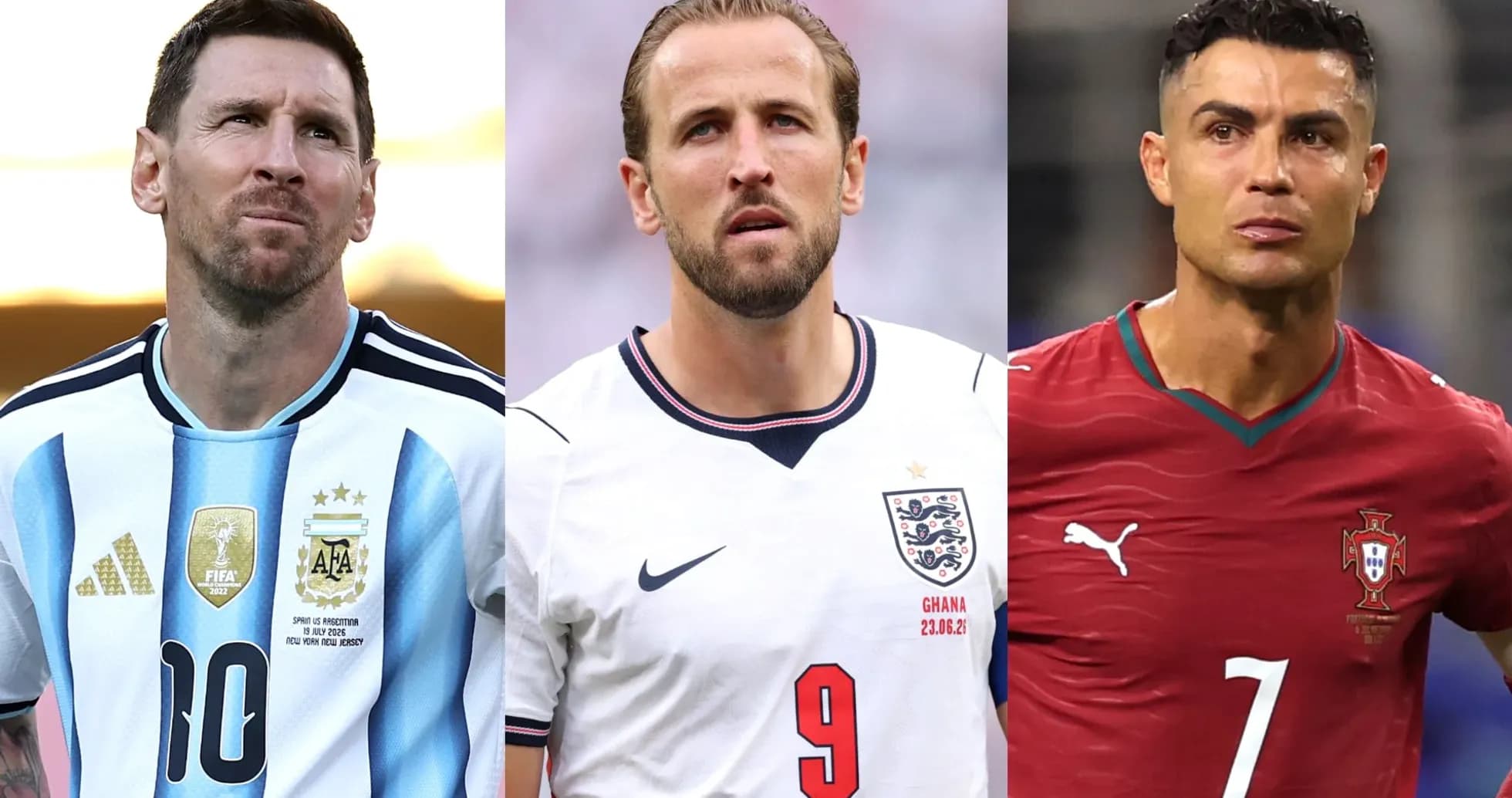
Harry Kane: The Paradox of Greatness and Future Uncertainty
Harry Kane stands at the peak of his powers, yet the debate around him is already about endings.
He has just lit up another major tournament, scoring six times as England’s captain on a run that stalled in the semi-finals against Argentina and ended with a third-place finish. The armband never left his sleeve. The responsibility never left his shoulders. The trophy, once again, stayed out of reach.
This is the Kane paradox. The medals cabinet may not match the mythology, but the numbers are brutal. He is England’s all‑time leading scorer with 85 goals. He left Tottenham as their record marksman. In Munich, he has treated Bayern’s penalty area as his own private office: 146 goals in 147 games, a strike rate that looks like a misprint.
At 33, there is no sign of a gentle fade. A new contract at the Allianz Arena is expected, with only a year left on his current deal and no appetite from Bayern to even contemplate life without their No.9. He is among the leading contenders for the 2026 Ballon d’Or. Evergreen? So far, yes. But nobody outruns the clock forever.
England know it. There is no obvious heir to his role at the tip of the attack, no ready-made centre-forward to inherit the captaincy and the burden. The working assumption inside and outside the camp is simple: Kane leads the line, and the team, into Euro 2028 on home soil. A home Euros with Harry Kane as skipper – that is the plan.
Beyond that, the picture blurs.
Can he stretch his international career to another World Cup, into his late thirties, in the era of extreme pressing and relentless schedules? When that question was put to Dietmar Hamann, the former Bayern midfielder did not sugar-coat his view.
“He’s turned 33 now so he'll be 36 going on 37 in four years' time. It's a big ask,” Hamann told GOAL, speaking courtesy of MrQ. He pointed to the last World Cup, where two of the game’s ultimate outliers were still on the stage. “Obviously, we saw two of the all-time greats playing in the World Cup, one 39, one 41. One did well, the other one didn't. You know, I wouldn't put him in the same bracket as those two.”
The comparison matters. Those veterans had stretched careers to near breaking point. Kane, Hamann argued, has already crammed an enormous amount of football into his legs.
“Even though he would be a few years younger than these two guys playing in the World Cup, I think it's a big ask,” he continued. “It's a big ask because he started playing pretty early. He went out on loan in the lower leagues, played an awful lot of games in the Premier League, didn't really have many injuries. The odd ankle injury, I think he's had.
“He hardly missed a game in the last couple of years here in Munich. To see him in the World Cup in four years' time, if you put me down to an answer now, I'd probably say no.”
That “no” will jar with England fans who have grown used to pencilling Kane’s name on the team sheet before anyone else. Yet Hamann is not alone in wondering how long this can last at the very highest level.
Chris Waddle, another former England international who knows the weight of a major tournament, has also raised doubts about Kane’s World Cup prospects.
“Fitness is a great thing to have. Some players develop, get better as they get older. Some find it easier. Not easier, but easy,” Waddle told GOAL when asked about Kane’s long-term international future. The next checkpoint, in his eyes, comes much sooner than 2030. “We'll see how his legs are in two years' time, at the Euros even. People will be questioning that.”
Waddle sees the strengths that have carried Kane this far and could yet prolong his career.
“The thing with Harry's advantage is he's a fit lad, we know that. He doesn't rely on pace. He's got a great football brain,” he said. That intelligence has always been Kane’s edge – the way he drops off the front line, links play, manipulates defenders. When the sprint fades, the mind can still dictate.
But Waddle has also watched legends hit the point of no return.
“Sometimes you see players in tournaments and you think, ‘His legs are going there’,” he said. “I'm looking at Ronaldo as an example. I watched Portugal play in the World Cup and his legs were gone in my eyes for that level of football. Lionel Messi still had bits of brilliance until the rest of his team-mates decided to try and kick everybody out of the country.”
The message is blunt: even the greatest reach a day when the top level moves too quickly. After that, the game offers softer landings.
“So I think there's a time and a place where you've actually got to think, ‘Yeah, he can still play, and he can still play like Messi does in Miami, a good level for him’,” Waddle added. “You know, Ronaldo in Saudi can still handle it. And Harry, eventually he'll come to a time where you think the Bundesliga is too quick. Where do you go from there?”
That question hangs over every late-career superstar. Do you chase one more World Cup, one more shot at immortality, or step away before the game exposes you?
“The next World Cup, it's a big ask for him, I think, to play in that tournament,” Waddle said. “I think some of these players can think, ‘Yeah, I'm still playing football, but that level's out of me now, and I've enjoyed it’. I think some of these players try and play too long and it doesn't look great on them. But I'm sure Harry will know when the time's right to say, ‘No, I can't play for England anymore’.”
For now, Kane is still the man England and Bayern build around, still the reference point for two footballing superpowers. The goals keep flowing, the records keep falling, the Ballon d’Or talk grows louder.
The real drama lies not in whether he can score again tomorrow, but in how – and when – he chooses to walk away from the very top.