Hapoel Beer Sheva Dominates Crvena Zvezda in UEFA Champions League
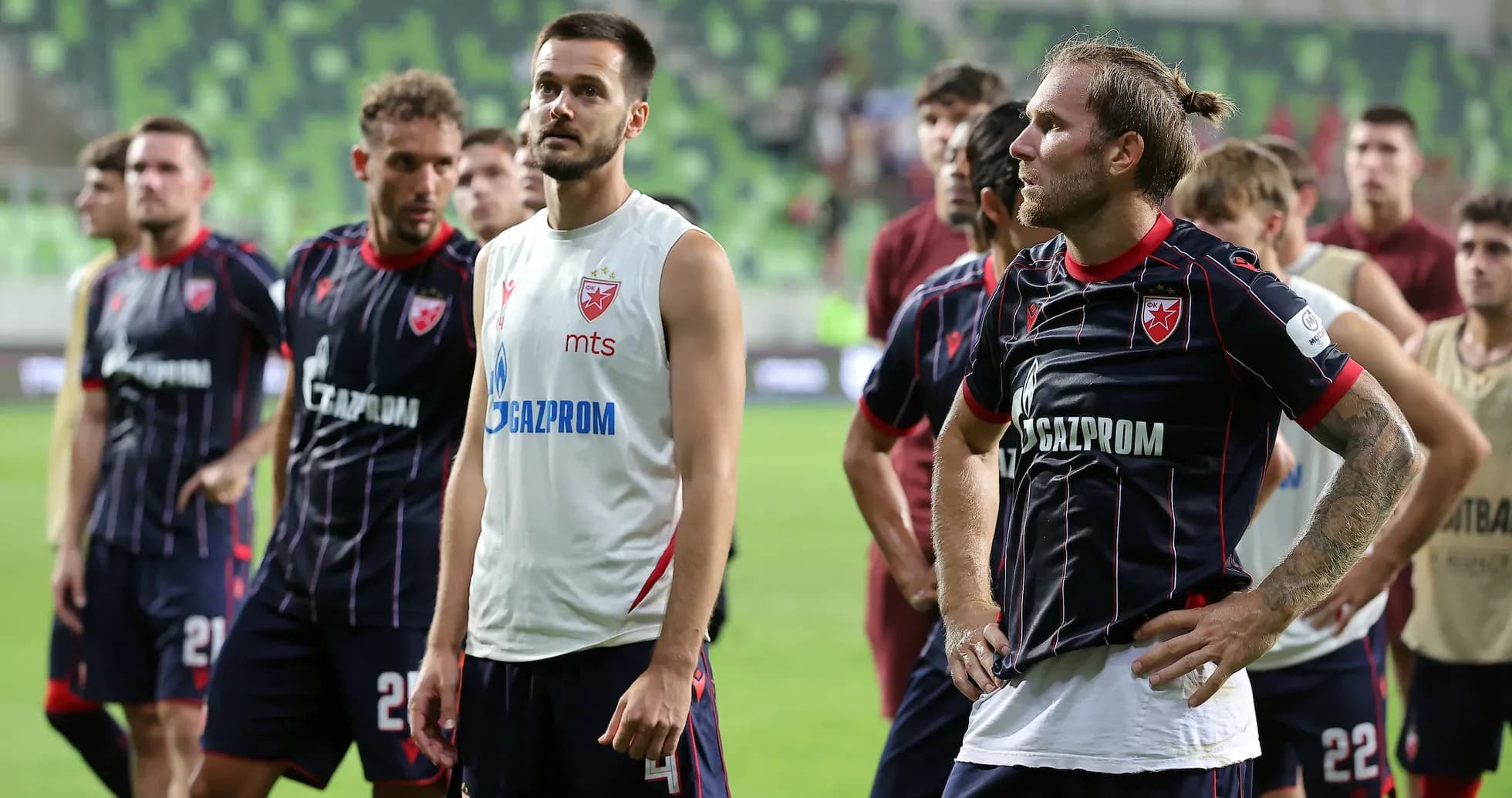
FK Crvena Zvezda 0-2 Hapoel Beer Sheva at Stadium Rajko Mitić leaves the Belgrade side with a damaging home defeat in the UEFA Champions League 3rd Qualifying Round, undone by a second-half red card and two well-worked goals from Igor Zlatanović and Javon East. With no standings data available for either league or qualifying table, the result is best read in pure competitive terms: Hapoel Beer Sheva take full control of the tie, while Crvena Zvezda face an uphill task in the return leg after a night where discipline and control deserted them.
Match Report
The first half passed without goals but not without incident. On 22', Hapoel Beer Sheva picked up the first booking of the night when I. Rotman (Hapoel Beer Sheva) received a yellow card for holding, underlining the visitors’ willingness to break up transitions early.
Crvena Zvezda attempted to reset at the interval with a double change. On 46', M. Arnautovic replaced J. Enem (FK Crvena Zvezda), and in the same minute M. Abu Fani replaced T. Elsnik (FK Crvena Zvezda), signalling a more aggressive attacking approach from the hosts.
The game’s balance tilted sharply just before the hour. On 57', D. Stankovic (FK Crvena Zvezda) was shown a red card, leaving the home side down to ten men and forcing a tactical reshuffle that they never fully recovered from.
Hapoel Beer Sheva capitalised quickly. On 61', Hapoel Beer Sheva goal — I. Zlatanovic (assisted by J. East). East dropped into the right half-space and threaded a pass into Zlatanović, who finished clinically to make it 0-1 and punish Zvezda’s numerical disadvantage.
Crvena Zvezda responded with another substitution on 62', as M. Ivanic replaced V. Kostov (FK Crvena Zvezda), adding creativity between the lines in search of an equaliser.
Hapoel Beer Sheva then collected a second caution. On 63', Lucas Ventura (Hapoel Beer Sheva) received a yellow card for roughing, a reflection of the visitors’ increasingly physical midfield duels as they tried to manage the game state.
The Israeli side refreshed their front line on 66'. First, M. Abu Rumi replaced N. Yehoshua (Hapoel Beer Sheva), then in the same minute H. Kanaan replaced G. Mizrahi (Hapoel Beer Sheva), injecting pace and energy on the flanks.
Crvena Zvezda made another attacking tweak on 73', with M. Cham replacing O. Bukari (FK Crvena Zvezda), seeking more direct running and one‑v‑one threat against a compact Hapoel back four.
Hapoel Beer Sheva continued to rotate their forwards. On 76', D. T. Diop replaced I. Zlatanovic (Hapoel Beer Sheva), the opening scorer making way after a decisive hour’s work.
The visitors then struck what proved to be the decisive second goal. On 79', Hapoel Beer Sheva goal — J. East (assisted by E. Peretz). Peretz advanced from midfield and slid a measured pass into East, who timed his run between the centre-backs and finished to extend the lead to 0-2, effectively killing the contest.
Crvena Zvezda’s final substitution came on 80', as A. Katai replaced N. Tiknizyan (FK Crvena Zvezda), a bold move that sacrificed defensive stability for additional attacking craft on the left.
In stoppage time, Hapoel Beer Sheva managed their resources and the clock. At 90+2', O. Davidzada replaced P. Amador (Hapoel Beer Sheva), followed moments later at 90+2' by A. Ohana replacing J. East (Hapoel Beer Sheva), withdrawing the influential forward after his goal and assist.
The night ended in further disciplinary trouble for the hosts. At 90+2', M. Abu Fani (FK Crvena Zvezda) was shown a red card for roughing, reducing Zvezda to nine men and encapsulating a second half where frustration overwhelmed structure and control.
Fixture Statistics & Tactical Audit
- xG: not available vs not available
- Possession: 4% vs 96%
- Shots on Target: 2 vs 6
- Goalkeeper Saves: not available vs not available
- Blocked Shots: 2 vs 1
The statistical profile underlines a dominant Hapoel Beer Sheva display in terms of territorial control (96% possession vs 4%) and chance creation (6 shots on target to 2). Even without xG values, the shot and possession numbers strongly support the 0-2 scoreline as a fair reflection of the balance of play. Crvena Zvezda, starved of the ball and reduced first to ten and then nine men, were largely limited to low-volume, low-quality efforts, while Hapoel Beer Sheva used their overwhelming share of possession to engineer repeated entries into the final third and two clear, well-constructed scoring actions.
Standings Update & Seasonal Impact
With no standings data provided for either side, the impact can only be assessed within the tie itself. Hapoel Beer Sheva leave Belgrade with a two-goal cushion and the psychological edge of having controlled both the ball and the key moments. Crvena Zvezda, by contrast, face the second leg needing at least a two-goal swing away from home, and must do so without suspended players following the two red cards that compounded an already difficult night.
Lineups & Personnel
FK Crvena Zvezda Starting XI
- GK: Matheus
- DF: Young-woo Seol, Derrick Luckassen, Strahinja Eraković, Nair Tiknizyan
- MF: Timi Max Elšnik, Rade Krunić, Osman Bukari, Vasilije Kostov
- FW: Bruno Duarte, Jay Enem
Hapoel Beer Sheva Starting XI
- GK: Ofir Marciano
- DF: Guy Mizrahi, Miguel Vítor, Itay Rotman, Pedro Amador
- MF: Eliel Peretz, Lucas Ventura, Niv Yehoshua
- FW: Javon East, Igor Zlatanović, Zahi Ahmed
Post-Match Verdict
Hapoel Beer Sheva delivered a dominant performance (96% possession, 6 shots on target to 2), built on controlled circulation and intelligent movement from their front three. The visitors repeatedly exploited the extra space created after Zvezda’s first red card, with East and Zlatanović combining for a goal and an assist each, and Peretz dictating tempo from midfield. Crvena Zvezda, by contrast, suffered a defensive and disciplinary collapse (two red cards, only 4% possession), unable to establish any sustained pressure or coherent pressing structure once reduced in numbers. The 0-2 scoreline reflects not just the decisive attacking quality of Hapoel Beer Sheva but also the hosts’ inability to manage game state and emotion on a pivotal European night.