Gornik Zabrze vs Fenerbahçe: Tactical Analysis of a 1-1 Draw
The 1-1 draw at Stadion im. Ernesta Pohla unfolded as a clear clash of structures and priorities: Gornik Zabrze in a 4-1-4-1 designed to compress space and spring from wide areas, against Fenerbahçe’s 4-2-3-1, which aimed to dominate the ball and progress through a technically strong double pivot. Over 90 minutes, Fenerbahçe’s 52% possession and 432 passes (372 accurate, 86%) underlined their territorial control, but Gornik’s compactness and set-piece threat kept the tie level and tactically intriguing.
Gornik Zabrze Structure
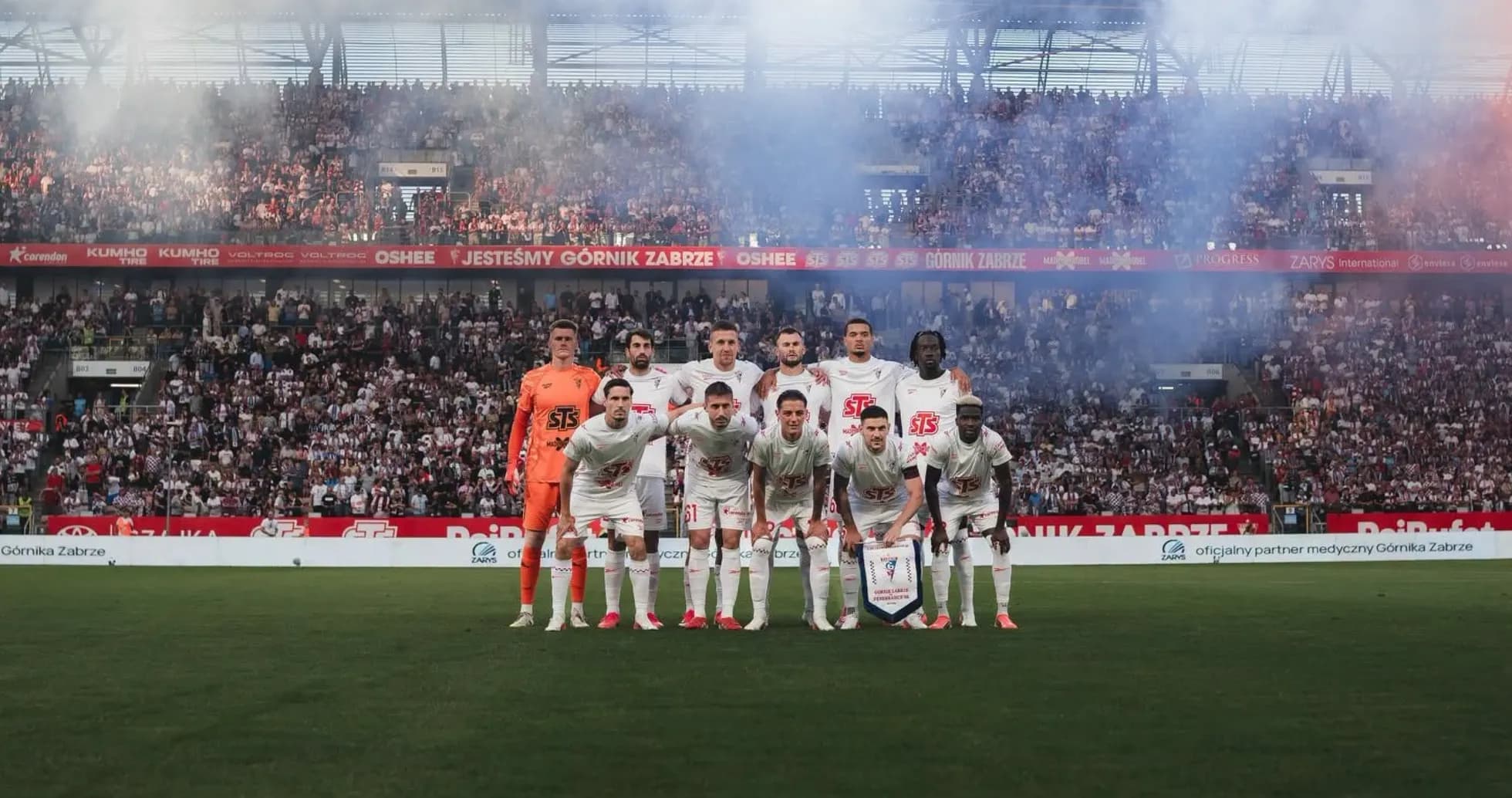
Gornik’s 4-1-4-1 was anchored by Maximilian Dietz as the single pivot in front of a back four of Erik Janža, Josema, Rafał Janicki and Michal Sáček. Ahead of him, Yvan Ikia Dimi and Lukáš Sadílek operated as industrious interiors, with Kacper Urbański and Taofeek Ismaheel providing width around lone striker Erik Prekop. Out of possession, this often flattened into a 4-5-1, with the wingers dropping to form a tight midfield line of five, aiming to block central access to Fenerbahçe’s No. 10 zone.
Fenerbahçe Structure
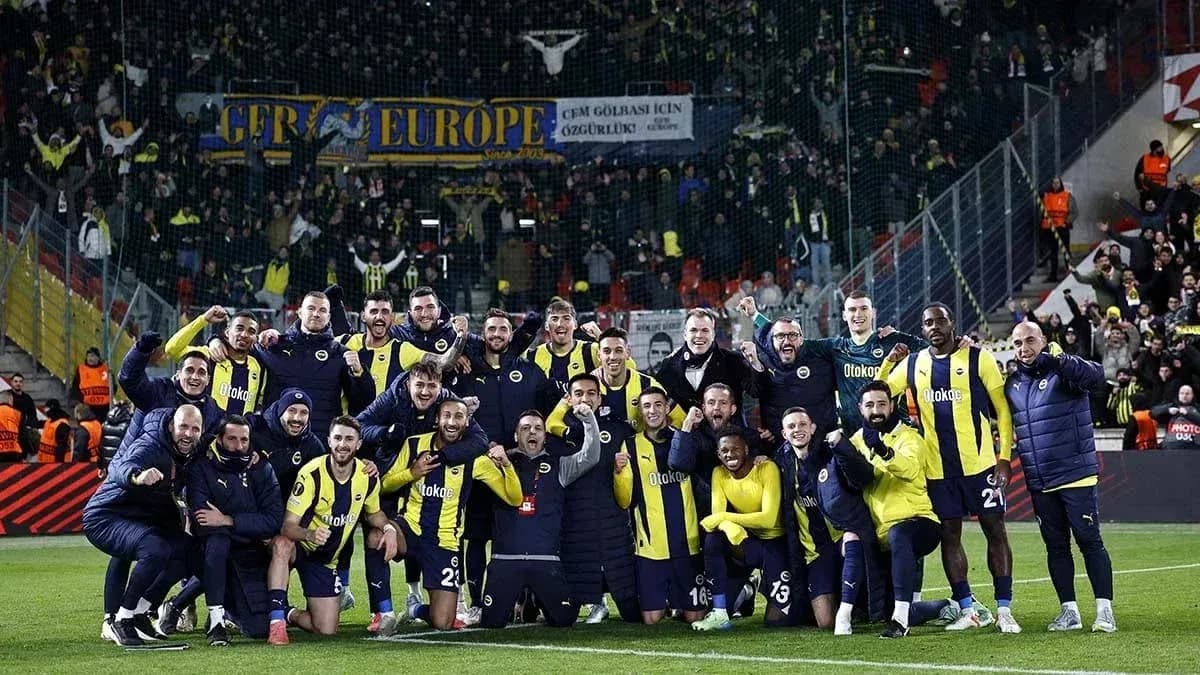
Fenerbahçe’s 4-2-3-1, with Fred and Mattéo Guendouzi as the double pivot, was built to circulate quickly and stretch Gornik laterally. Marco Asensio started as the central playmaker, flanked by Kerem Aktürkoğlu and İrfan Can Kahveci, with Talisca as the nominal striker. The back four of Jayden Oosterwolde, Nathan Aké, Milan Škriniar and Nélson Semedo stepped high to compress the pitch, trusting Mert Günok behind them.
Match Progression
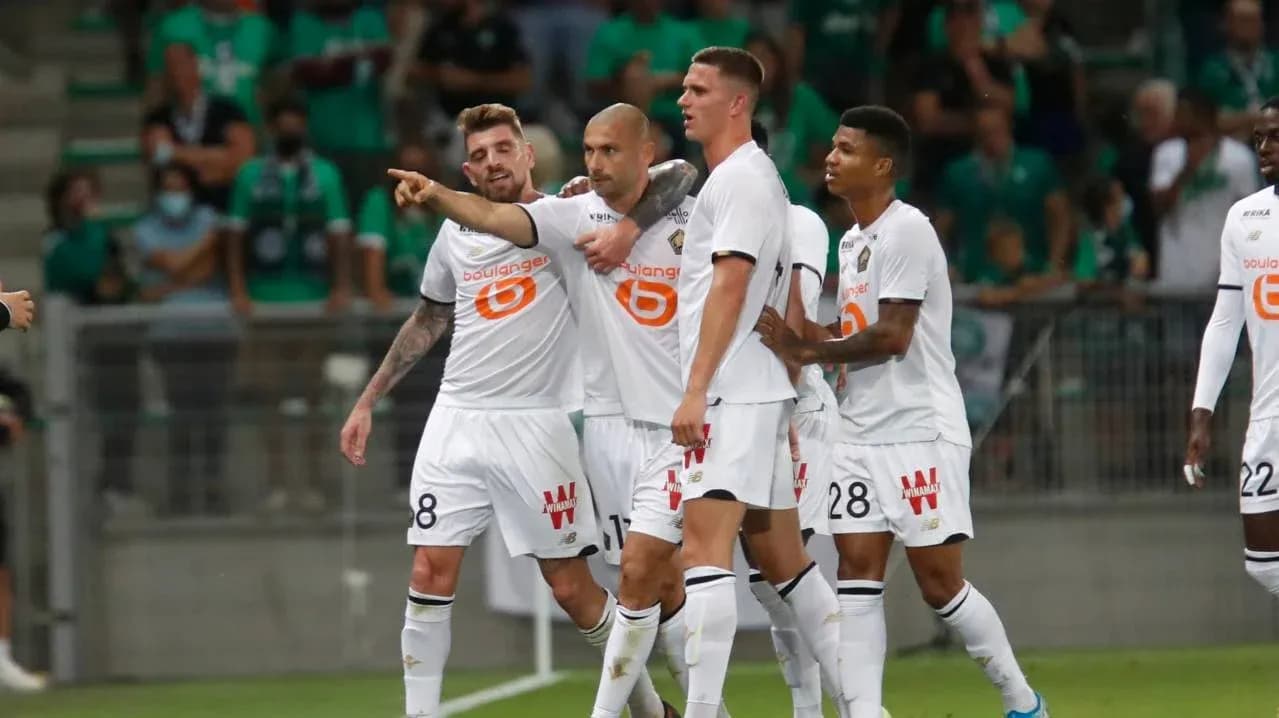
The early penalty converted by Talisca at 12' forced Gornik to open up slightly, but they did so in a controlled way. Their response was to push the full-backs higher in possession, particularly Janža on the left, and to use Prekop as a wall player to connect longer passes into midfield. The equaliser at 45+10', scored by Sáček from a Prekop assist, was emblematic: a late-arriving full-back exploiting the far side after sustained pressure and set-piece territory. It also justified Gornik’s emphasis on wide overloads and second balls, supported by their 9 corner kicks to Fenerbahçe’s 7.
Statistical Overview
Statistically, Gornik’s attacking profile was more direct and vertical. They produced 15 total shots to Fenerbahçe’s 14, but crucially hit 6 shots on goal compared to the visitors’ 2. That discrepancy, combined with 5 blocked shots for each side, shows Gornik were more efficient at turning their phases into genuine tests for the goalkeeper, even with slightly less of the ball and a lower passing volume (379 passes, 297 accurate, 78%).
Fenerbahçe’s shot map, inferred from 10 attempts inside the box versus only 4 from range, reveals a clear strategy: work the ball into prime central zones through combinations between the No. 10 and the wide players cutting inside. However, the fact they registered only 2 shots on goal suggests that Gornik’s central block and last-ditch interventions were effective. Janicki and Josema, supported by Dietz screening in front, consistently got bodies in the way, reflected in those 5 blocked shots and in Fenerbahçe’s need to probe patiently rather than shoot on sight.
Substitutions and Tactical Adjustments
The substitution pattern in the second half further underlines the tactical duel. At 46', Ismail Kartal moved early, replacing Asensio with İsmail Yüksek and Kahveci with Mason Greenwood. This shifted Fenerbahçe closer to a 4-3-3/4-1-4-1 hybrid at times, with an extra runner from midfield and Greenwood offering more direct penetration from the right. The idea was clear: increase dynamism and verticality against a Gornik side now defending a valuable 1-1.
Michal Gasparik answered on 63', introducing Maksym Khlan for Dietz and Sondre Liseth for Prekop. Removing the dedicated holding midfielder was a bold move; it traded some central protection for fresher legs and more counter-attacking threat. Khlan offered more forward thrust with the ball, while Liseth provided a different profile up front, more focused on running in behind and attacking crosses. This adjustment sought to exploit the space behind Fenerbahçe’s advanced full-backs as the visitors chased control.
The later introduction of Anthony Musaba for Aktürkoğlu at 70' and Oğuz Aydın for Talisca at 80' showed Fenerbahçe’s push for late pace and 1v1 threat on the flanks, effectively turning the front line into a more transition-oriented unit. Gornik, for their part, refreshed their wide and central midfield energy with Peter González replacing Ikia Dimi at 73' and Bruno Durdov coming on for Sadílek at 81'. These changes helped maintain the intensity of Gornik’s pressing and their ability to contest second balls, which was vital in seeing out the draw.
Goalkeeping Performance
In goal, Philipp Schulze (Gornik Zabrze) was statistically underworked in terms of saves, credited with 1 save, a testament more to his defence’s shot suppression than to any lack of Fenerbahçe possession. Mert Günok (Fenerbahçe), by contrast, had to make 5 saves, underlining how often Gornik’s more limited but sharper attacks broke through. The save disparity, combined with the shot-on-goal numbers, suggests that if either side was closer to a second goal from open play, it was the hosts.
Discipline and Tactical Rhythm
Discipline played into the tactical rhythm. Gornik’s 4 yellow cards, spread across Sadílek ("Holding"), Janža and Janicki ("Unsportsmanlike conduct") and Josema ("Roughing"), reflected a willingness to break up Fenerbahçe’s combinations with tactical fouls, especially when transitions threatened to expose their back line. Fenerbahçe’s 5 yellow cards — Oosterwolde and Semedo for "Tripping", Greenwood for "Roughing", Fred for "Unsportsmanlike conduct" and Guendouzi for "Delay of game" — tell a story of increasing frustration and late-game game-management as they failed to turn control into a winner.
Conclusion
From a statistical verdict, the match reads as a study in contrasting efficiencies. Fenerbahçe’s higher possession, cleaner passing percentage and greater number of shots inside the box show a side structurally superior in build-up and territorial dominance. Yet Gornik’s ability to generate more shots on goal from fewer passes, combined with their set-piece volume and defensive compactness, balanced the tie. In the context of a UEFA Champions League 2nd Qualifying Round fixture, Gornik’s 1-1 home draw looks like a tactically disciplined performance that maximised their structure, while Fenerbahçe left Zabrze knowing that, despite control and technical superiority, their attacking execution in the final third must sharpen for the return leg.