
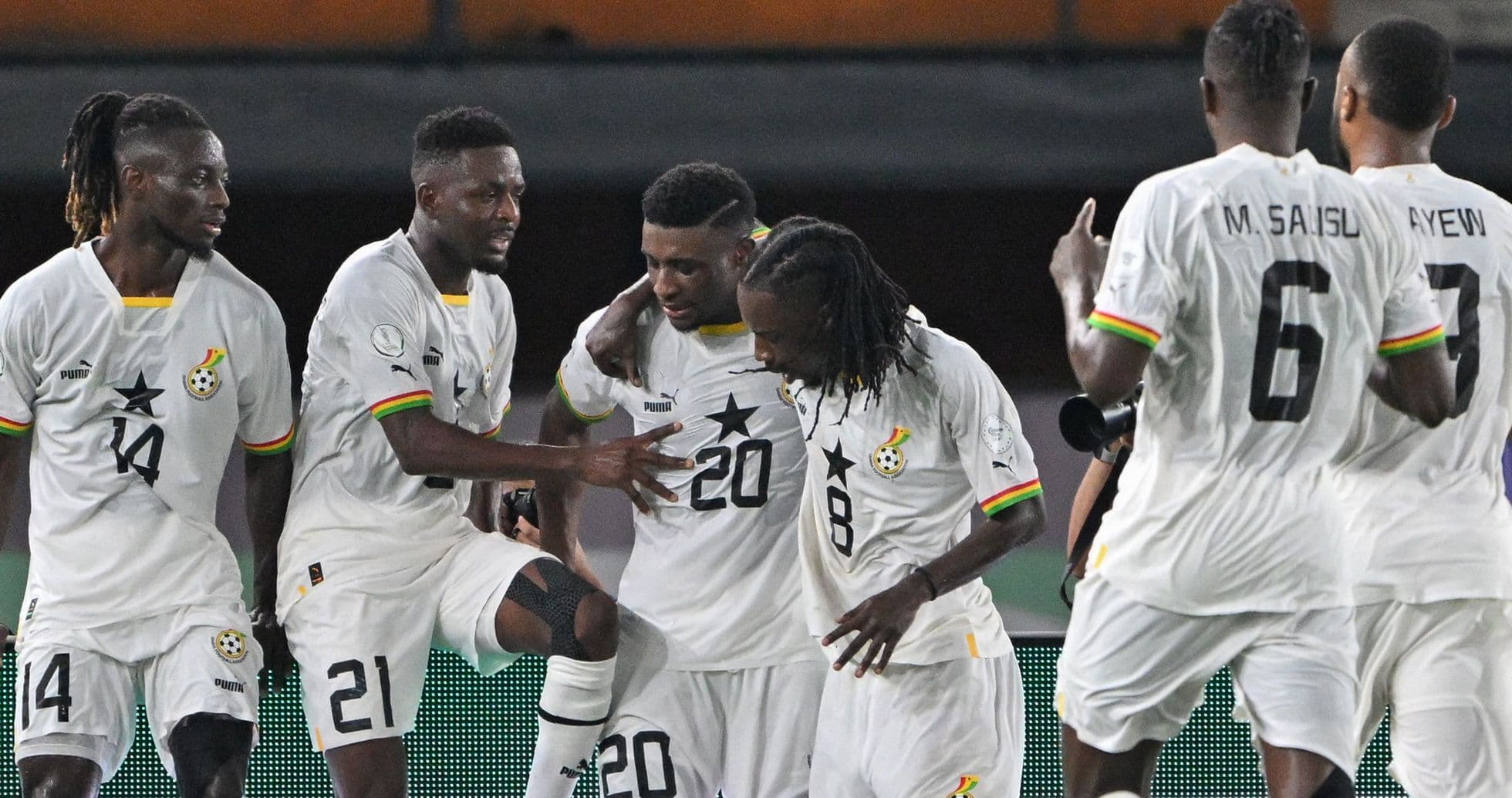
Ghana's World Cup Bid: Key Players and Tactical Insights
Ghana arrive at the 2026 World Cup with a simple message for the rest of the field: you will have to fight for every inch. Ten qualifiers, six goals conceded. The numbers tell you about organisation and discipline; the story behind them is a back line that has become the bedrock of Otto Addo’s team.
Defence: Rocked by Injury, Steeled by Competition
At the heart of that resilience stood Alexander Djiku and Mohammed Salisu, a partnership that gave Ghana a calm, uncompromising spine. That is why the news of Salisu’s ACL injury has hit so hard. The Monaco defender will miss the tournament, and with him goes familiarity, chemistry, and a left-sided balance that had quietly become one of the team’s strengths.
Djiku, now at Spartak Moscow, remains the constant. Next to him, though, the picture is wide open. Jerome Opoku of İstanbul Başakşehir is pushing hardest to slot in, offering presence and aggression that fit neatly with the Black Stars’ defensive identity.
Out wide, Gideon Mensah has long been a regular at left-back, his name almost inked onto the team sheet. Not anymore. Derrick Kohn’s impressive season with Union Berlin has dragged that position into open competition. Mensah’s experience counts, but Kohn arrives with form and momentum, and he will travel to the USA, Mexico and Canada with every intention of forcing his way into the XI.
On the fringes, the auditions are already under way. Young Kojo Peprah Oppong, rewarded with a first call-up after a bright start at Nice, is desperate to keep his place and ride that surge all the way to the World Cup. Patric Pfeiffer (Darmstadt 98), Marvin Senaya (Auxerre) and Derrick Luckassen (Pafos FC) have also been brought into the fold for the warm-up friendlies, each one handed a narrow window to convince Addo they belong in the final squad.
Names like Caleb Yirenkyi (Nordsjælland), Jonas Adjetey (Basel) and Ebenezer Annan (Saint-Étienne) round out a defensive pool that is deeper than it has been in years. Salisu’s absence is a blow. It also creates opportunity – and tension – in a unit that has become Ghana’s calling card.
Midfield: Kudus the Star, Partey the Anchor
Move into midfield and the spotlight swings quickly to Mohammed Kudus. Officially a Tottenham player, he remains the marquee name in Ghana’s engine room, and it was his goal that sealed qualification against Comoros. His club season has been bruising – a dismal Premier League campaign with Spurs and injury problems through 2026 – but tournaments often belong to players with a point to prove. Kudus will arrive with exactly that.
Behind him, Thomas Partey still sets the tone. Now at Villarreal and short of minutes in La Liga, he nonetheless played a central role in qualifying and remains one of the most trusted voices in the dressing room. When Ghana need control, he is the one who drops in, takes the ball under pressure and calms the chaos.
Elisha Owusu, a standout at Auxerre when fit, offers bite and balance. If he can finally leave his injury issues behind, he is a strong candidate to start alongside Partey. Ibrahim Sulemana, back in the fold in time for the March friendlies after his own lay-off, adds youthful energy and legs that can stretch games late on.
There is also depth in the supporting cast. Kelvin Nkrumah and Prince Owosu at Medeama, Kwasi Sibo at Oviedo, Salis Abdul Samed at Nice and Sulemana at Cagliari all give Addo different profiles and tactical options. Not everyone will make it.
One who almost certainly will not is Abu Francis. The midfielder is expected to miss out after suffering a double leg fracture in a friendly against Japan at the end of 2026, a cruel end to his World Cup dream before it ever really began.
Attack: Firepower Everywhere, Big Calls to Make
If the defence is about structure and the midfield about balance, the attack is pure, unfiltered competition. This is where Ghana bristle with star power.
Antoine Semenyo, now at Manchester City after lighting up the Premier League with Bournemouth, is the obvious focal point. His move in January has not slowed him; he has simply carried his form into a title-chasing environment and already has a Carabao Cup winner’s medal in his pocket. At this World Cup, Ghana will look to him for goals, for chaos in the box, for that one decisive moment when everything tightens and someone needs to break the game open.
Alongside him, Inaki Williams of Athletic Club and Leicester’s Jordan Ayew are as close to automatic picks as it gets. Williams brings relentless movement and experience from La Liga; Ayew brings goals and leadership. The Leicester forward finished as Ghana’s top scorer in qualifying with seven goals and will captain the side as he heads into his third World Cup.
The debate, as ever, swirls around Andrew Ayew. The 36-year-old has not featured since AFCON 2023, but his name refuses to leave the conversation. His influence, his history with the national team, his loyalty – all of it fuels calls for one last World Cup appearance. Addo must decide whether sentiment has a place in a squad already stacked with attacking options.
Those options are not just about big reputations. Abdul Fatawu Issahaku has been electric at Leicester, scoring spectacular goals and offering the kind of unpredictability defenders hate. Kamaldeen Sulemana, now at Atalanta, is a dribbler in the purest sense – low centre of gravity, quick feet, the ability to unpick a tight defence with a single run.
Christopher Bonsu Baah (Al Qadsiah), Ernest Nuamah (Lyon), Brandon Thomas Asante (Coventry) and Prince Adu (Viktoria Plzen) add yet more variety. Pace, power, direct running, link play – Addo has every type of forward at his disposal. The problem is not finding quality. It is deciding who to leave at home.
The Likely XI: Familiar Shape, Fresh Edges
Strip away the noise and a probable starting XI begins to emerge.
Benjamin Asare looks set to start in goal, protected by a back four that should feature Alidu Seidu on the right, Mensah on the left and Djiku at centre-back. The vacancy next to him is where the intrigue lies, with Opoku currently best placed to step into Salisu’s shoes.
In midfield, Partey will anchor in front of the defence, with Kwasi Sibo alongside him to share the dirty work and keep the ball moving. Ahead of them, Kudus will have licence to drift, create and drive at defenders, the main source of invention between the lines.
Up front, Jordan Ayew will lead the line as captain, Semenyo operating either alongside him or slightly off the right, and Fatawu Issahaku tipped to complete a front three that offers goals, movement and flair.
On paper, it looks like this: Asare; Seidu, Opoku, Djiku, Mensah; Partey, Sibo, Kudus; Fatawu Issahaku, Jordan Ayew, Semenyo.
In reality, it is more than a formation. It is a statement of intent. A team built on a hardened defence, guided by seasoned midfielders and armed with forwards who can hurt anyone on their day.
Ghana have the structure, the stars and the scars from past tournaments. The question now is simple: can this group turn all of that into a deep run on the biggest stage of all?




