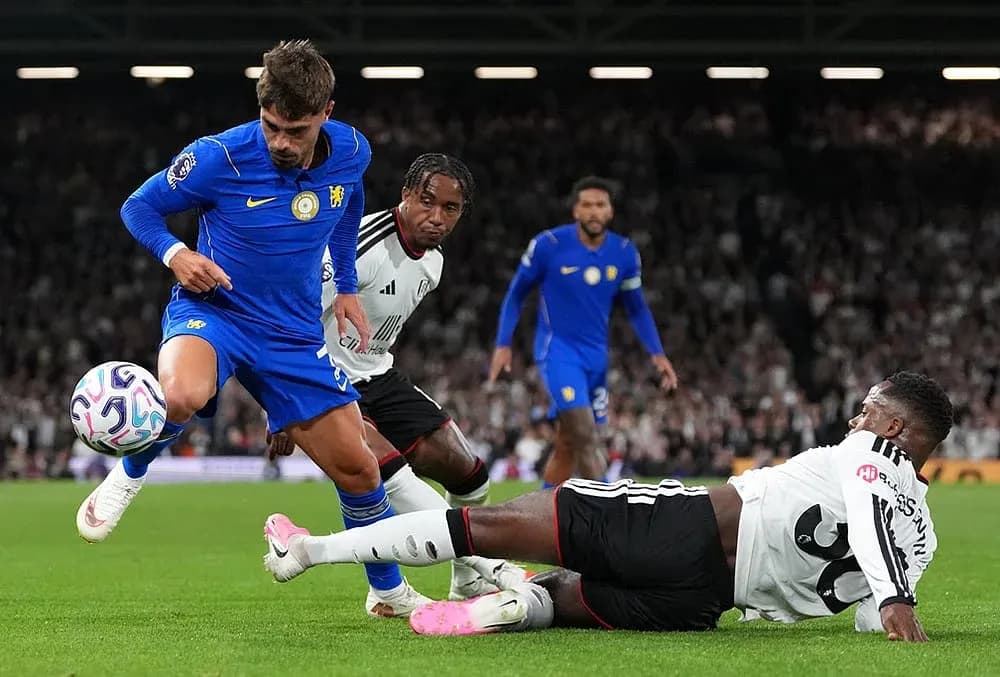
Fulham vs Chelsea: Tactical Insights from Premier League Opener
Under the Craven Cottage floodlights, Fulham and Chelsea opened their 2026 Premier League campaigns with a game that felt less like a curtain-raiser and more like a statement of intent. By the final whistle, the 3-2 scoreline to Chelsea had done more than just split the points column: it had sketched out the tactical DNA of both sides and hinted at the storylines that will define their seasons.
I. The Big Picture – Early Identities, Early Fault Lines
Following this result, Fulham sit 12th with 0 points, their overall record reading one defeat from one match. At home they have played 1, lost 1, scoring 2 and conceding 3. The goal difference overall is -1, exactly matching their home goal difference. The numbers are small but already revealing: an average of 2.0 goals scored at home and 3.0 conceded suggests a side that can trade punches but not yet protect its chin.
Chelsea, by contrast, leave London with the swagger of early momentum. They stand 6th with 3 points, their overall and away record identical: 1 match played on their travels, 1 win, 3 goals scored and 2 conceded. Their overall goal difference is 1, again mirroring the away split. An away scoring average of 3.0 and concession rate of 2.0 paints them as a front-foot outfit under Xabi Alonso, willing to stretch games to exploit attacking talent.
Formations told their own story. Alvaro Arbeloa’s Fulham lined up in a 4-2-3-1, a structure designed to give a double pivot in front of the back four and a fluid band of three behind the striker. Chelsea responded with a 3-4-2-1, a shape that morphs from a back three in build-up into a five-man press in midfield, with wing-backs pinning opponents deep.
II. Tactical Voids – Absences and Discipline
Both managers had to navigate notable absences. Fulham were without J. Andersen due to a red card suspension and T. Cairney through a knee injury. The absence of Andersen’s aerial presence and organisational voice forced Arbeloa to lean on C. Bassey and J. Cuenca as his central defensive axis, with B. Leno exposed behind them whenever the structure broke.
Chelsea’s list was longer and more varied: A. Anselmino (inactive), M. Caicedo and M. Sarr (injuries), E. Emegha (hamstring injury), plus W. Fofana and J. Henderson sidelined by a red card and a wrist injury respectively. That stripped Alonso of a natural destroyer in midfield and a key centre-back option, pushing responsibility onto R. Lavia as the single pivot shield and M. Lacroix as the defensive leader in the back three.
Discipline patterns add another layer. Fulham’s yellow-card profile this campaign is brutally concentrated: 100.00% of their cautions have come in the 76-90 minute window. It hints at a side that tires late or is forced into desperate challenges as matches slip away. Chelsea’s bookings are front-loaded: 66.67% of their yellows arrived between 0-15 minutes, with another 33.33% from 61-75. That early aggression is double-edged—intimidating but risky if referees set a strict tone.
III. Key Matchups – Hunter vs Shield, Engine Room Battles
The “Hunter vs Shield” duel in this fixture was Chelsea’s attacking trident against Fulham’s reconfigured back line. Joao Pedro, C. Palmer and M. Rogers all arrive in the season’s opening round as headline performers.
Palmer, already among the league’s top scorers and assist providers, delivered a complete attacking display: 1 goal, 1 assist, 4 shots (2 on target), 32 passes at 87% accuracy and 3 key passes in 83 minutes. His 8.9 rating reflects not just end product but influence between the lines, constantly finding pockets behind Fulham’s double pivot of S. Berge and A. Iwobi. His 8 dribble attempts with 5 successes underlined the mismatch whenever he isolated a defender.
Joao Pedro mirrored that dual threat with 1 goal and 1 assist of his own, adding 22 passes and 2 key passes. He operated as the reference point at the top of Chelsea’s 3-4-2-1, dropping off B. Leno’s back line to link with Palmer and Rogers. Rogers, for his part, justified his 8.5 rating with 1 goal, 5 key passes and perfect finishing from his single shot on target. His 3 successful dribbles from 3 attempts carved channels down Fulham’s left, regularly dragging A. Robinson and C. Bassey into uncomfortable territory.
On the “Shield” side of the equation, Fulham’s back four had mixed fortunes. T. Castagne, who appears among the league’s top assist providers, offered attacking thrust from right-back: 40 passes at 85% accuracy, 2 key passes, 1 shot on target and 1 assist. Defensively he held his own in duels, winning 7 of 11, and he blocked 1 shot. Yet his yellow card underlines the strain Chelsea’s wide rotations placed on him, particularly with M. Gusto and R. James overloading his flank from wing-back and central-right midfield.
In the engine room, R. Lavia’s profile as one of the league’s more card-prone midfielders was on display. Across his 65 minutes, he completed 22 passes at a superb 95% accuracy, added 2 key passes and 3 tackles, and took 1 shot on target. But he also collected a yellow card, a reminder that his role as Chelsea’s single pivot requires walking a disciplinary tightrope. Against Fulham’s duo of Berge and Iwobi, Lavia’s ability to break lines with the ball while still screening transitions was pivotal to Chelsea sustaining pressure.
IV. Statistical Prognosis – What This 3-2 Really Tells Us
With no penalties taken by either side this season—0 total, 0 scored, 0 missed for both—this match was decided entirely in open play and structured possession. Fulham’s overall averages of 2.0 goals for and 3.0 against at home suggest entertainment but fragility. Without Andersen, their margin for error in a back four is slim, especially when full-backs like Castagne and Robinson are encouraged to advance.
Chelsea’s away profile—3.0 goals scored and 2.0 conceded on their travels—signals a team that will embrace high-scoring contests. The combination of Palmer, Joao Pedro and Rogers gives Alonso three distinct threats: a creative conductor, a central finisher who can also assist, and a wide runner who can both stretch and create. Behind them, Lacroix’s 50 passes at 94% accuracy and 5 tackles, plus 1 blocked shot, show a defender comfortable defending space and building from the back.
Following this result, the tactical arc is clear. Fulham must tighten their late-game discipline and find a more secure defensive platform, especially in the final quarter-hour where their cards spike. Chelsea, meanwhile, will seek to refine the balance between their early-game aggression and defensive control, trusting that the sheer volume of quality in their front three will keep their attacking averages high even as opponents adjust.
The 3-2 scoreline at Craven Cottage was not just an opening-day thriller; it was a tactical manifesto. Fulham promise drama and jeopardy. Chelsea promise risk, reward and relentless forward motion. Over the coming weeks, the league table will tell us which model proves more sustainable.