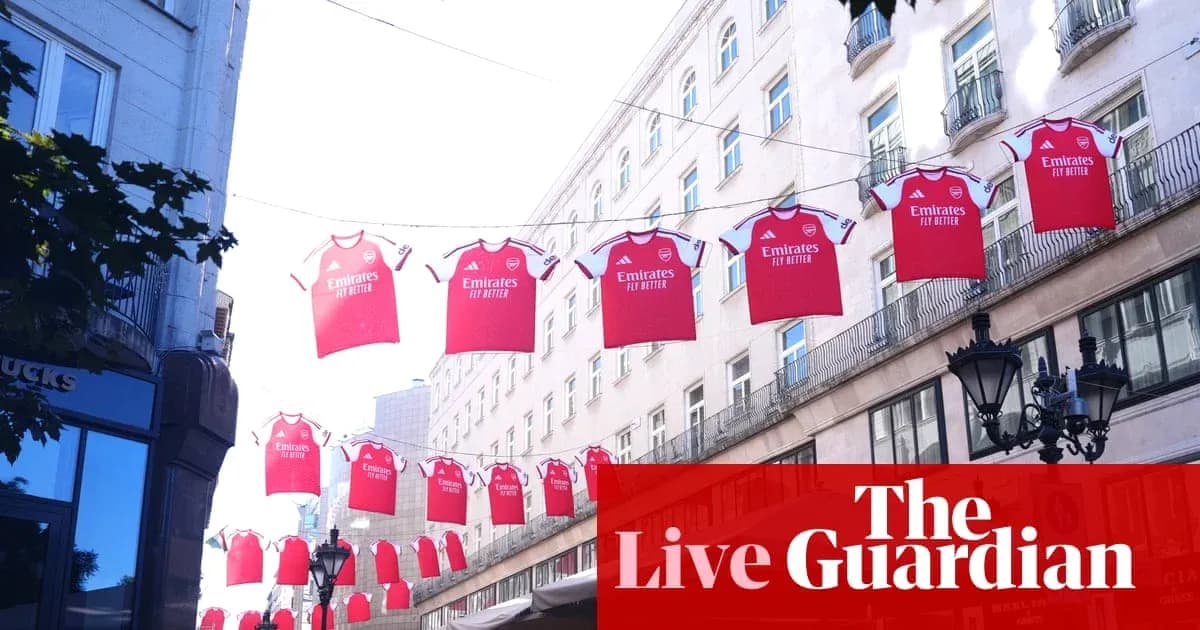
Football's Political Storms and Dramatic Shifts
The tennis balls came first.
They rained down from the stands in Dublin, bright green protests against a game that has not yet been played. Ireland’s 1-0 win over Qatar on the pitch at times felt like a sideshow to the argument raging around their next Nations League date: Israel, here in the same city, on 4 October.
Each stoppage told its own story. Tennis balls, scrawled with “stop the game”, skidded across the turf during the first half, forcing breaks in play and turning a low-key friendly into a live demonstration. The message was clear: the anger is not going away.
Ireland caught in the crossfire
Veteran defender Seamus Coleman had already voiced what many in the squad clearly feel – that Heimir Hallgrimsson and his players have been pushed to the front line of a political storm not of their making. They are the ones who must walk out at the Aviva, while decisions are taken far above their heads.
Hallgrimsson did not try to hide behind the usual clichés.
“Seamus spoke really well about it the other day,” the Ireland coach said. “We all don’t agree with what’s going on. Ideally it’s not in our hands. It’s not a nice situation to be put into. Like I said, personally, none of us agree with what’s going on.”
That is as blunt as international managers tend to get on matters this charged. The message: the team will play, because that is their job. But they will not pretend to be comfortable with the wider picture.
On the night, Qatar were beaten by a single goal. The result will be forgotten quickly. The protests will not. The October fixture now looms over every Ireland camp, every media appearance, every training session where players know they may again be asked to speak for decisions they did not make.
Volpato’s late turn towards Australia
Off the field, another national-team story is twisting in a very different direction. Cristian Volpato, the Sassuolo playmaker long earmarked as one of Italy’s next big hopes, is set to change course on the eve of a World Cup.
At 22, and four years after turning down the chance to represent Australia at the tournament in Qatar, he is now poised to switch allegiance from Italy to the country of his birth. A late turn, and a dramatic one.
Football Australia is waiting on Fifa to sign off the paperwork for Volpato’s change of association. The clock is ticking: Socceroos coach Tony Popovic must name his 26-man World Cup squad by 1 June. If the clearance lands in time, Popovic gains a creative midfielder who has already been groomed in Serie A. If it doesn’t, Volpato’s change of heart will have to wait for another cycle.
An “actual Italian at the World Cup”, as some had framed him, may yet line up in green and gold.
Pochettino, Pulisic and a stalled ascent
Christian Pulisic’s international story has always carried a sense of promise, of what he might become. At 27, that label of “coming man” clings to him more awkwardly with each season.
Mauricio Pochettino did not dance around his feelings over the American’s recent choices. The coach admitted he was “disappointed” that Pulisic missed the Gold Cup and said the player, in turn, was unhappy at being left out of friendlies against Switzerland and Turkey.
“I am transparent about that,” Pochettino said. The implication was stark: the bar is higher than one goal, higher than sporadic flashes. For a player expected to be the face of his national team and a leader at club level, the time for half-steps is over.
One goal as a target? That is not the standard Pochettino wants attached to Pulisic’s name.
Havertz and Arsenal’s Budapest belief
While the international calendar crackles with tension, the club game is building towards its own crescendo. Kai Havertz knows exactly what it is to walk into a Champions League final as an afterthought, then walk out as its defining figure.
He did it with Chelsea against Manchester City, scoring the winner in Porto when Pep Guardiola’s Premier League juggernaut was expected to roll right over Thomas Tuchel’s fourth-placed side.
Now, as Havertz looks ahead to Arsenal’s final against Paris Saint-Germain in Budapest, the echoes are obvious. “We were the underdogs on that day, for sure,” he recalls of the City upset. “We hadn’t had the best season. But now it is completely different.”
Different, but familiar. Once again, he stands between a heavily favoured opponent and history. Once again, his team must find a way to disrupt a side built to dominate.
A World Cup under a shadow
The World Cup, now less than a fortnight away, carries its own set of complications. One fixture in Los Angeles, between the US and Iran, has been wrapped in geopolitical tension since the US and Israel attacked Iran on 28 February.
For months, there were doubts: would the Islamic Republic allow its national team to travel to the home of one of its attackers? Would the US even welcome Team Melli? With kick-off now only weeks away, the match is set to go ahead.
That does not mean a quiet night in “Tehrangeles”. The city’s large Iranian diaspora, many of whom left after the 1979 revolution, is expected to use the stage to protest. Players, too, may choose acts of defiance. This is a World Cup fixture, but it is also a mirror held up to decades of history.
Arsenal’s tightrope against PSG
Back in Europe, the tactical battle in Budapest has already been mapped out in forensic detail. Jonathan Wilson has pointed to set pieces as Arsenal’s best route to a goal, even though PSG have actually scored more from non-penalty dead balls in this Champions League campaign – eight to Arsenal’s five.
The real threat to Mikel Arteta’s side, though, lurks in transition. Most Ligue 1 opponents sit deep against PSG and still get picked off. The evidence from their wins over Chelsea, Liverpool and Bayern Munich is brutal: lose the ball in the wrong area, and they are gone.
Arsenal cannot allow Desiré Doué or Khvicha Kvaratskhelia to spin and run at their full-backs. Both are lightning-quick, fearless dribblers, and they drive straight at the heart of a defence. That would be a concern at the best of times. It is a major issue when your right side is patched together.
Ben White is out with a knee injury. Jurriën Timber is a doubt after a groin problem picked up against Everton in mid-March. Whoever starts on that flank will know exactly what is coming – and how little margin for error they have.
Fresh legs, heavy weight
PSG, under Luis Enrique, arrive in Budapest with legs that should be fresh and minds that should be sharp. The coach has treated Ligue 1 as a laboratory, resting and rotating his core players so aggressively that many have barely scratched half the available domestic minutes.
Ballon d’Or winner Ousmane Dembélé has started just 11 of 34 league matches. Neves, Mendes and Fabián Ruiz have 13 starts apiece. Kvaratskhelia has 18, Doué and Achraf Hakimi 16, Marquinhos only 11. They have not just been benched for the odd weekend; they have been kept in reserve for nights like this.
Arsenal, by contrast, have had to lean heavily on their main men in a Premier League title chase. Arteta has juggled, rotated where he can, but the core has carried a long, intense season. The question in Budapest is simple: can rhythm beat rest, or will PSG’s carefully preserved energy tell in the final half-hour?
All roads to Budapest
From Dublin’s tennis balls to Los Angeles’s political theatre, from Volpato’s late switch to Pulisic’s stalled ascent, the game keeps folding the world’s anxieties and ambitions into 90-minute dramas.
On Saturday, two capitals – London and Paris – empty into Budapest for the biggest club match of the year. Arsenal, once underdogs, now insist they belong on this stage. PSG, built for this very moment, have no excuse left.
Fresh legs, frayed nerves, one trophy. Who walks away from Budapest with their story finally complete?