Fiorentina vs Genoa: Tactical Draw in Serie A
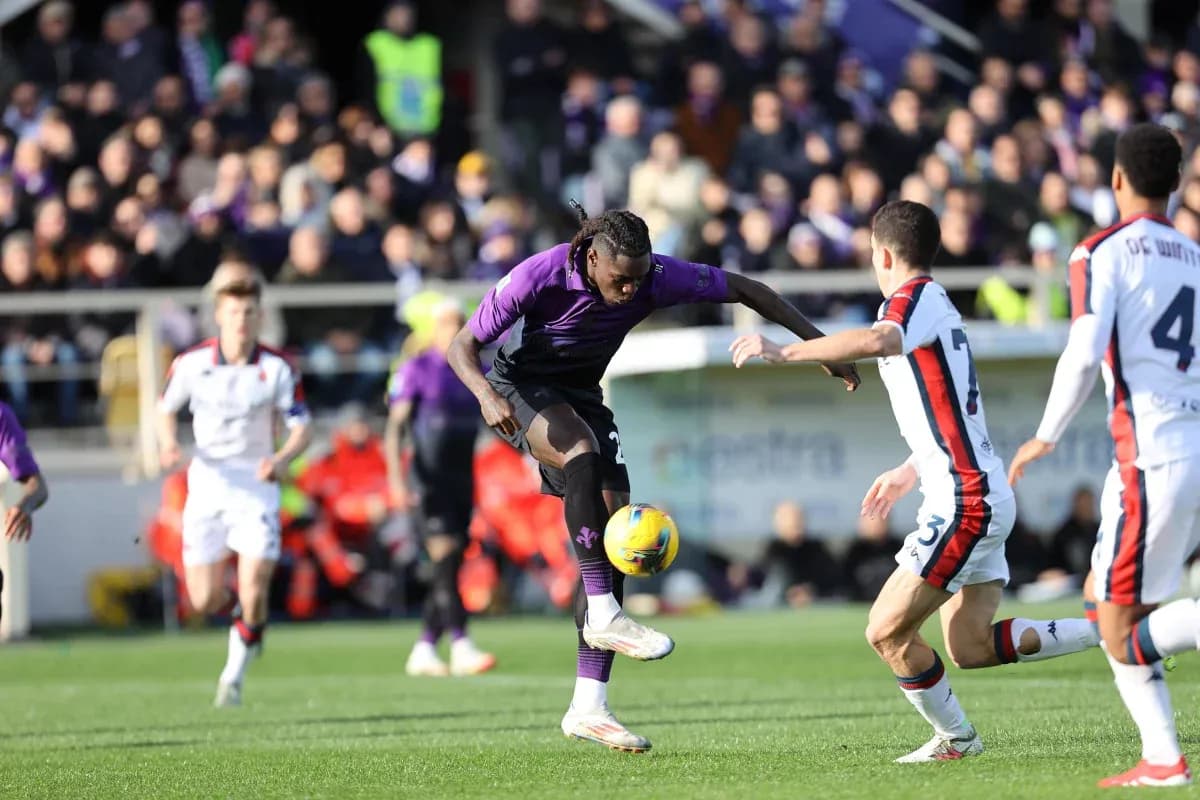
Fiorentina and Genoa played out a goalless but tactically nuanced draw at Stadio Artemio Franchi in Serie A’s Regular Season - 36. Fiorentina, under Paolo Vanoli, controlled more of the ball and volume of shots, while Daniele De Rossi’s Genoa prioritised compactness and vertical threat. The 0-0 scoreline reflected two well-organised defensive structures and goalkeepers largely protected by their blocks rather than exposed to sustained high-quality chances.
With no bookings or dismissals recorded and no VAR interventions, the match’s narrative was shaped entirely by positional battles, shot quality, and the timing of substitutions rather than disciplinary swings or set-piece chaos. The halftime score of 0-0 accurately captured a first half where Fiorentina’s 4-3-3 sought to pin Genoa back, but the visitors’ 3-4-2-1 resisted effectively and preserved access to counter-attacking lanes.
The scoring sequence is simple: there were no goals across 90 minutes.
Fiorentina generated 13 total shots to Genoa’s 9, but only 1 shot on target for the hosts against 3 for the visitors underlines how well Genoa forced Fiorentina into low-probability attempts, especially from outside or from pressured positions inside the box. Expected goals data confirms this: Fiorentina’s xG of 0.97 versus Genoa’s 0.58 indicates a slight attacking edge for the home side, but not a dominance that would make the 0-0 feel unjust.
Disciplinary events were absent. Both “Yellow Cards” and “Red Cards” values are null for Fiorentina and Genoa, and the events array contains only substitutions. There were 13 fouls committed by Fiorentina and 14 by Genoa, but none escalated to cautions or dismissals. With no card events, the disciplinary log is effectively clean for both teams, and there are no reasons or additionalInfo descriptors to report.
Substitutions
Substitutions, however, materially influenced the tactical shape in the final half-hour. Chronologically:
- 58' — L. Colombo (Genoa) (OUT); C. Ekuban (IN) came on for him. This shifted Genoa’s reference point up front, introducing a more mobile, channel-oriented forward in place of the more traditional central presence of L. Colombo.
- 61' — R. Braschi (Fiorentina) (OUT); R. Piccoli (IN) came on for him. Vanoli refreshed his front line, seeking more penalty-box presence and aerial threat.
- 71' — J. Ekhator (Genoa) (OUT); R. Malinovskyi (IN) came on for him. Genoa added a technically stronger link player between the lines, hinting at a more possession-capable phase.
- 71' — A. Martin (Genoa) (OUT); W. L. Ouedraogo (IN) came on for him. This maintained the wing structure but with fresh legs to continue covering wide spaces.
- 72' — R. Mandragora (Fiorentina) (OUT); M. Brescianini (IN) came on for him, slightly altering the profile of the midfield’s left half-space with more forward-running potential.
- 73' — C. Ndour (Fiorentina) (OUT); G. Fabbian (IN) came on for him. Another central tweak, injecting energy and late-arrival threat from midfield.
- 82' — A. Marcandalli (Genoa) (OUT); M. Doucoure (IN) came on for him, refreshing one of the three centre-back slots.
- 82' — Amorim (Genoa) (OUT); P. Masini (IN) came on for him, rebalancing central midfield with fresh defensive coverage.
- 86' — F. Parisi (Fiorentina) (OUT); A. Gudmundsson (IN) came on for him, a clearly attacking shift, effectively turning the left side into a more aggressive lane with an extra forward profile.
Tactically, Fiorentina’s 4-3-3 was possession-oriented and structure-first. With 57% ball possession and 417 total passes, 353 accurate (85%), they controlled the rhythm and territory. The back four of Dodo, M. Pongracic, L. Ranieri, and R. Gosens underpinned a high base of circulation, with full-backs especially important in pinning Genoa’s wing-backs deep. The midfield trio of R. Mandragora, N. Fagioli, and C. Ndour provided a stable three-lane platform: Mandragora as the left-sided organiser, Fagioli as the main connector, and Ndour offering vertical carries and third-man runs.
Despite this structural superiority, Fiorentina’s final-third execution was blunt. Nine of their 13 shots came inside the box, but only one tested J. Bijlow directly. That combination — many box shots, minimal on-target — suggests Genoa’s central block successfully pressured shooters at the moment of release, forcing rushed or blocked efforts (Fiorentina recorded 5 blocked shots). The late introduction of R. Piccoli and A. Gudmundsson was a clear attempt to increase penalty-area density and 1v1 threat, but Genoa’s back three, aided by midfield support, held firm.
Genoa’s 3-4-2-1 under Daniele De Rossi was compact and transition-oriented. With 43% possession and 316 total passes, 255 accurate (81%), they were comfortable without the ball, prioritising verticality when they recovered. The back three of A. Marcandalli, L. Ostigard, and N. Zatterstrom initially focused on narrowing the central corridor, allowing Fiorentina to have the ball wide but not through the middle. Wing-backs M. E. Ellertsson and A. Martin (later W. L. Ouedraogo) had dual roles: track Fiorentina’s wide forwards and provide the first outlet in transition.
In attack, the trio of J. Ekhator, Vitinha, and L. Colombo (later C. Ekuban and R. Malinovskyi) was configured to exploit spaces behind Fiorentina’s advancing full-backs. Genoa’s 3 shots on target from 9 total, with only 1 blocked, indicate that while they produced fewer attempts, the ones they took were often clearer, more settled chances. Their xG of 0.58 reflects a modest but real threat, especially given their lower volume of possession.
Goalkeeper dynamics were revealing. D. de Gea for Fiorentina registered 3 saves, aligning with Genoa’s 3 shots on goal. His “goals prevented” metric is 0, which, combined with the low xG against, implies he was largely dealing with manageable efforts rather than high-danger one-on-ones. J. Bijlow for Genoa, by contrast, recorded 0 saves, because Fiorentina managed only 1 shot on target that did not require an intervention beyond routine handling or was otherwise not classified as a save event. Genoa’s defensive structure, rather than Bijlow’s shot-stopping, was the primary reason for the clean sheet.
From a statistical verdict, Fiorentina’s Overall Form in this match is that of a possession-dominant side lacking incision: more shots, higher xG (0.97), better passing volume and accuracy, yet only 1 shot on goal. Their Defensive Index is solid: conceding just 9 shots and an xG of 0.58, with D. de Gea needing to make only 3 saves. Genoa’s Overall Form reflects efficiency and discipline — fewer passes, fewer shots, but a similar level of chance quality relative to their possession share. Defensively, their compact 3-4-2-1 and 14 fouls without cards show controlled aggression and good game management.
The 0-0 final score, Fiorentina 0-0 Genoa, is therefore less a story of missed sitters and more a case of two coherent game plans cancelling each other: Fiorentina’s structured possession against Genoa’s layered block and measured transitions, with neither side able to tilt the underlying numbers decisively enough to force a breakthrough.