Fiorentina and Genoa Share the Spoils in Tactical Stalemate
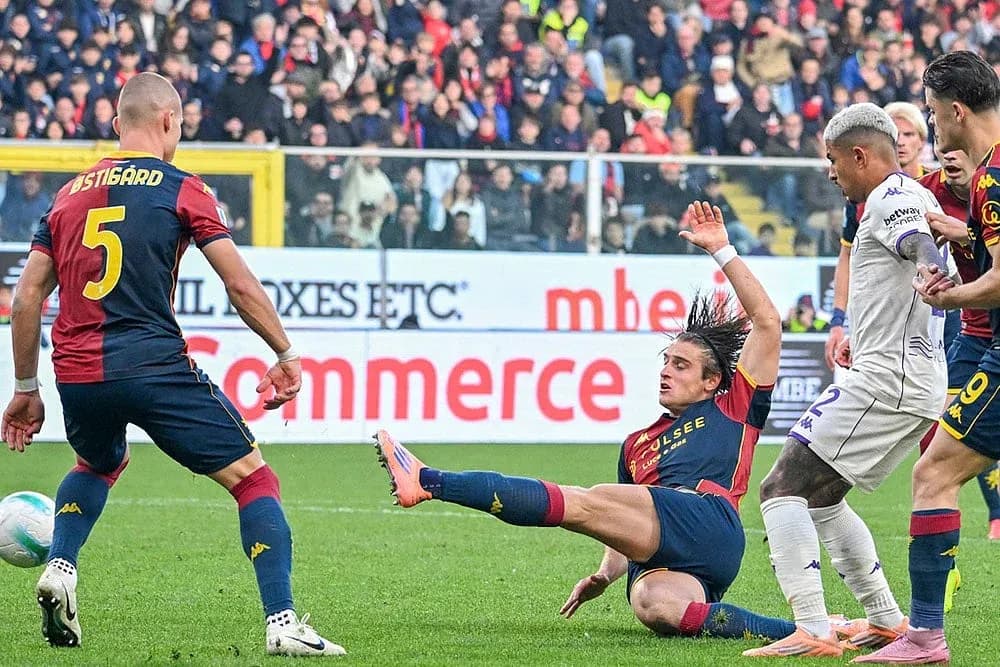
The afternoon at Stadio Artemio Franchi closed with a scoreline that told one story and a league table that whispered another. Fiorentina 0–0 Genoa, a stalemate in Florence, but one that slots neatly into the seasonal DNA of both sides: low-scoring, attritional, and defined more by structure than by sparks.
Following this result, the picture is clear. Fiorentina, 15th in Serie A with 38 points and a goal difference of -11 (38 goals for, 49 against), continue to live on the knife-edge between mid-table anonymity and a genuine relegation scare. Genoa, 14th with 41 points and a goal difference of -8 (40 for, 48 against), remain just one small step ahead, their campaign built on marginal gains and tight margins.
At home this season, Fiorentina have been the embodiment of balance and frustration. Across 18 matches at the Franchi, they have scored 20 and conceded 20, averaging 1.1 goals for and 1.1 against. It is a profile that explains afternoons like this: controlled, relatively secure, but short on the kind of attacking punch that turns draws into wins. On their travels, Genoa mirror that pragmatism. Away from home they have scored 19 and conceded 24 in 18 games, an average of 1.1 goals for and 1.3 against, underlining why a 0–0 here feels less like an anomaly and more like the natural meeting point of two cautious systems.
Tactical Setup
The tactical story began with the whiteboard. Paolo Vanoli’s Fiorentina lined up in a 4-3-3, a shape that has been their most-used structure this season, deployed 13 times. D. de Gea anchored the back line behind a defence of Dodo, M. Pongracic, L. Ranieri and R. Gosens. In front of them, a midfield trio of R. Mandragora, N. Fagioli and C. Ndour promised control more than chaos. The front line of F. Parisi, R. Braschi and M. Solomon suggested mobility and interchange rather than a classic penalty-box finisher.
That last detail matters, because the player who usually gives Fiorentina their cutting edge was watching from the stands. M. Kean, the club’s top Serie A scorer this season with 8 goals and 2 penalties converted from 2 attempts, was ruled out with a calf injury. His 75 shots and 27 on target speak to a striker who constantly tests defences, and his absence forced Vanoli into a front three without a true reference point. The result was a lot of possession between the lines, but little in the way of decisive penalty-area presence.
On Genoa’s side, Daniele De Rossi stayed true to the club’s season-long identity with a 3-4-2-1. J. Bijlow stood behind a back three of A. Marcandalli, L. Ostigard and N. Zatterstrom, with a midfield band of four: M. E. Ellertsson, Amorim, M. Frendrup and A. Martin. Ahead of them, J. Ekhator and Vitinha floated behind L. Colombo as the nominal striker.
Here too, absences shaped the narrative. T. Baldanzi’s thigh injury and the loss of Junior Messias removed two of Genoa’s more creative options between the lines. M. Cornet and B. Norton-Cuffy were also unavailable, thinning De Rossi’s options for stretching the pitch wide and attacking space. In response, Genoa leaned into structure, trusting their back three and the work rate of Frendrup and Amorim to keep the game within controllable margins.
Disciplinary Context
The disciplinary subtext of this fixture was always going to be significant. Fiorentina’s season-long yellow card distribution shows a pronounced late-game edge: 25.00% of their cautions arrive between 76-90 minutes, and both of their red cards this season have also come in that window. Genoa, by contrast, spike between 61-75 minutes, where 24.59% of their yellows are shown, and they have seen red early (0-15), just after the break (46-60), and in added time (91-105), each range accounting for 33.33% of their dismissals.
Overlay that with the personnel and the risk zones sharpen. M. Pongracic, Serie A’s leading yellow-card magnet with 11 bookings, and L. Ranieri with 8 yellows, formed Fiorentina’s central defensive axis. Pongracic has blocked 23 shots this season, a testament to his front-foot defending, but his 67 fouls committed underline why the final quarter of matches often becomes a disciplinary tightrope for him. For Genoa, R. Malinovskyi brings 10 yellows of his own, combining creative responsibility with combative edge.
This is where the “Hunter vs Shield” matchup becomes intriguing even in a 0–0. Without Kean, Fiorentina’s “hunter” threat was more diffuse, but the season context still matters: heading into this game, they averaged 1.1 goals per match overall and had failed to score in 11 of 36 fixtures. Genoa’s “shield” – a defence conceding 1.3 goals per game both at home and away – is not elite, but it is disciplined enough that if you lack a focal point, breaking them down becomes a grind.
On the other side, Genoa’s attacking output of 40 goals in 36 games (1.1 per match overall) ran into a Fiorentina back line that, at home, concedes just 1.1 per game and has kept 6 clean sheets at the Franchi. De Gea’s presence behind a centre-back pairing that wins its duels – Pongracic has won 113 of 233, Ranieri 113 of 188 – gave Fiorentina a solid base, and this match added another clean sheet to a tally that already stood at 9 overall.
Engine Room Duel
In the “Engine Room”, the duel between Genoa’s ball-players and Fiorentina’s screeners was subtle but decisive in maintaining the deadlock. A. Martin, one of the league’s most productive full-back/wing-back creators with 5 assists and 60 key passes, was tasked with prising open a Fiorentina side that, at home, has failed to score 4 times but also kept opponents relatively quiet. His season profile – 714 passes at 78% accuracy, 41 tackles and 11 blocked shots – shows a player who both builds and breaks, but here he found a midfield that prioritised denying space over chasing glory.
Behind him in the creative hierarchy sits Malinovskyi, with 6 goals, 3 assists, and 37 key passes. His presence on the bench to start, then as a potential impact substitute, offered De Rossi a late-game battering ram of technique and shooting from range. Yet Fiorentina’s structure, plus the discipline of Mandragora and Fagioli in front of the back four, blunted that threat whenever it appeared.
From a disciplinary and psychological standpoint, both coaches will quietly accept the outcome. Fiorentina, whose late-game card surge often drags them into chaos, navigated another 90 minutes without tipping into the red zone. Genoa, a side that has seen red in three distinct time bands, managed their aggression effectively enough to preserve the clean sheet and the point.
Statistically, the draw sits right on the season’s expected curve. Fiorentina’s overall goal average of 1.1 for and 1.4 against, and Genoa’s 1.1 for and 1.3 against, both hint at matches where xG edges are small and single moments decide outcomes. Here, those moments never quite came. Penalties, which could have tilted the balance – Fiorentina have scored all 6 of their spot-kicks this season, Genoa all 5 – never entered the equation.
The tactical prognosis, viewed through the lens of the campaign’s numbers, is that this was less a missed opportunity and more a crystallisation of who these teams are. Fiorentina remain a side searching for a sharper cutting edge without their primary finisher, but one whose defensive platform at home is quietly solid. Genoa continue to be a well-drilled, three-at-the-back unit that leans on organisation, set structures, and the sporadic inspiration of players like A. Martin and Malinovskyi.
Following this result, both clubs stay locked in the same mini-league, neighbours in the table and mirrors in style: cautious, combative, and living in the narrow space where a single goal, on another day, would have rewritten the story entirely.