Fifa Bans Reusable Water Bottles Ahead of World Cup
Seven days before the World Cup kicks off on 11 June, Fifa has torn up one of its key promises to match-going supporters: fans will no longer be allowed to take reusable water bottles into stadiums.
The late change rips out a line that had been sitting clearly in the official stadium code of conduct. Until now, it read: “For the avoidance of doubt, empty, transparent, reusable plastic bottles, up to (1 litre in) capacity, may be brought into the stadium.”
That clarity has gone. Bottles – along with cups, jars and cans – are now on the banned list.
Fifa says the decision is about safety, not profit. The governing body argues that removing hard containers will cut the risk of serious injury from objects thrown from the stands.
“Fifa is committed to protecting the health and safety of all players, referees, fans, volunteers, and staff,” world football’s ruling body said in a statement, stressing that water will still be available to buy inside venues and that prices will not be pushed above those usually charged at each stadium.
The timing, though, could hardly be more sensitive.
Scientists have already warned that Fifa’s heat safety measures for this World Cup are “inadequate”, with temperatures at 14 of the 16 host venues expected to climb beyond what experts class as dangerous levels. Hydration is not a side issue at this tournament; it is central to how safe it will be to sit in the stands for two hours.
Under pressure on that front, Fifa pointed to a package of heat-mitigation measures around the grounds, saying it works with each host city committee and local authorities on ways to protect travelling fans. The tools on the table include misting stations, fans, hydration stations and cooling tents around the stadium footprint.
Inside that footprint, Fifa insists, the cost of water bottles “will remain consistent with other events held at each stadium”.
The words have not soothed everyone. This World Cup has already stirred anger over what supporters’ groups describe as “extortionate” ticket prices and spiralling train fares. Against that backdrop, taking away the right to bring in an empty bottle – something many fans saw as a basic safeguard in hot conditions – feels like another blow.
It is not entirely new territory. Fans were also blocked from taking bottles into stadiums at the last World Cup in Qatar. That decision drew criticism at the time, but the issue has sharpened with this tournament’s spread of hot-weather venues and the expectation of oppressive conditions in and around matches.
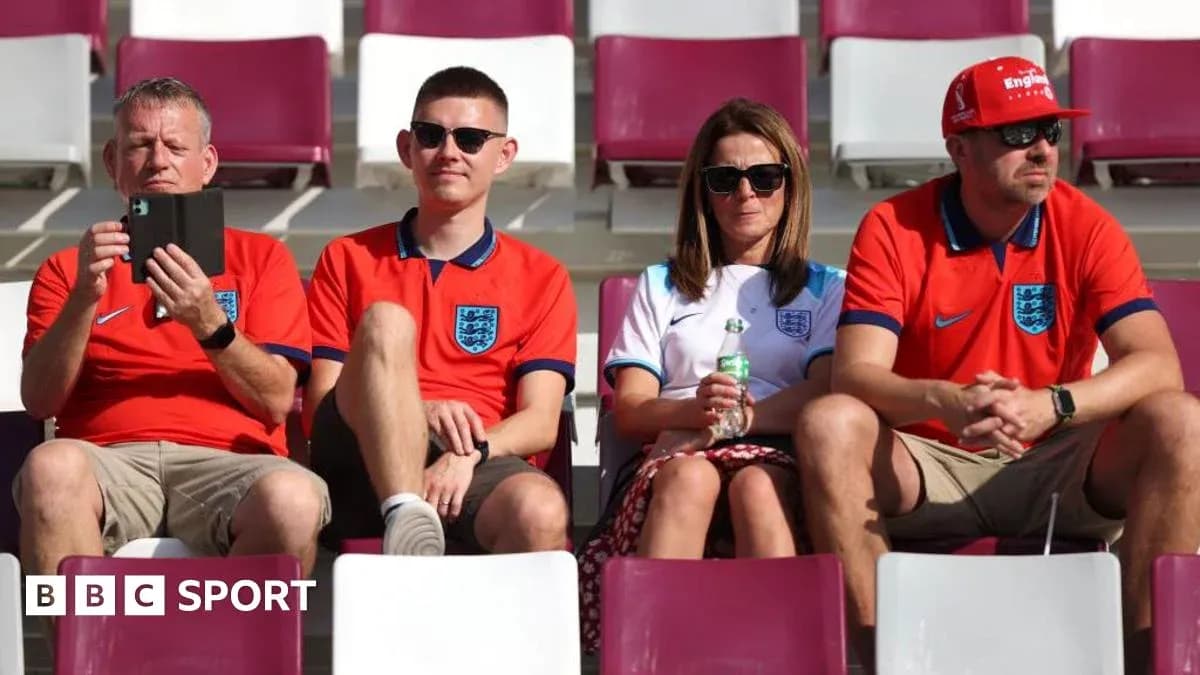
The Free Lions England fans’ group did not hide its frustration, branding the move a “strange, late change”. In a statement on X, it underlined that free water in stadiums had been a central theme of its talks with organisers.
“In all of our discussions, free water availability in stadiums was a key one and we were assured by Fifa that this would be the case and that fans will have the ability to bring their own water bottle,” the group said, capturing a sense of trust fraying at the edges.
From there, the tone hardened. “Naturally, the immediate thought from supporters is this is just the latest money-grab. For how hot the stadiums will be, many in open air, just let fans bring a bottle if they want to.”
The plea now is simple: if bottles are banned, the taps must at least stay open. “We hope the water fountains in stadiums will still be free, hopefully you aren't charged in the queue!” Free Lions added.
With the first ball yet to be kicked, the World Cup has already delivered its first flashpoint. Safety, cost, and the basic act of taking a drink in the stands are colliding – and the way Fifa handles that collision will echo every time the temperature climbs and the queues at the water stations begin to snake.