
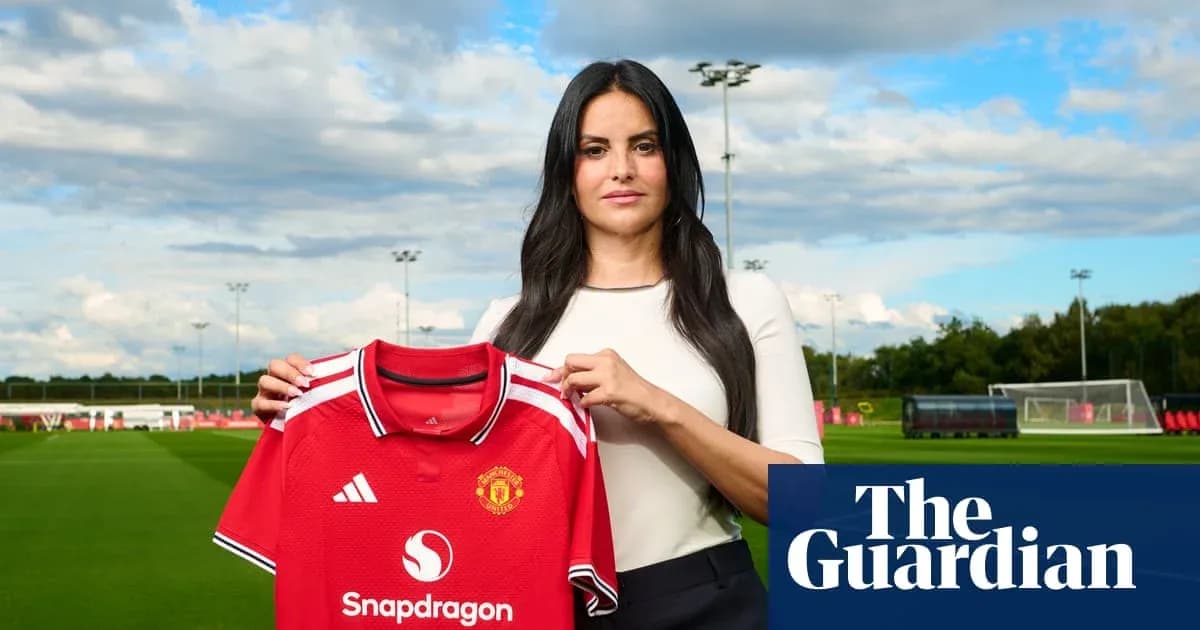
Eva Olid Joins Manchester United Women as Head Coach
Eva Olid walked into Manchester United with a word that rarely survives the grind of elite football: dream.
The 40-year-old Spaniard has signed a two-year deal as head coach of Manchester United Women, taking her through to 2028 with an option for a further year, and replacing Marc Skinner after his abrupt exit earlier in the week. For a club still trying to define its modern identity in the women’s game, this is more than a change of name on the office door. It is a statement about what – and who – United want to be.
A builder, not just a winner
Olid arrives with her reputation forged in Edinburgh. At Hearts, she didn’t just win. She built.
Across five years, she turned a club that had long lived in the shadows into champions of Scotland, guiding Hearts to their first Scottish Women’s Premier League title last season before leaving by mutual agreement. That title was the headline, but the story underneath was about development, structure, and squeezing every drop of potential out of players who were not supposed to be the ones lifting trophies.
United have been watching that work closely. Her appointment lands at a time when the club is understood to be pivoting away from expensive transfer-market fixes and towards something more traditional, more Manchester United: youth, continuity, and a clear identity.
The club did not hide that intent. In announcing Olid, United described the move as the start of “an exciting new era” built on “long-term, sustainable growth and success.” The language was deliberate. So was the emphasis.
They pointed to “important foundations” already in place for homegrown talent, young players and senior internationals, and underlined the “significant investment” in academy infrastructure and facilities. The goal is blunt: to build the leading youth development system in the country, and to have a first team that actually reflects it.
Olid, on paper, fits that brief perfectly.
United’s new direction
This is not a reset from a position of crisis. United finished fourth in the Women’s Super League last season, reached the quarter-finals of the Women’s Champions League and made the League Cup final. Skinner leaves behind a competitive side, one that has tasted the sharp end of big competitions but not yet learned how to live there.
Olid inherits that squad, and a club hierarchy that wants more than just incremental gains. They want a recognisable style and a pathway that runs cleanly from academy to first team.
“The opportunity to become head coach of Manchester United Women is a dream come true,” Olid told the club’s website. She spoke of “outstanding infrastructure,” of “everything we need to achieve our ambitions,” and of an academy already producing players capable of competing for first-team minutes.
The words will resonate with supporters who have long demanded that the women’s side mirror the values they grew up with on the men’s side: youth promoted, not blocked; a clear footballing idea, not a patchwork of short-term solutions.
“There is already so much talent within our squad,” she said, and that line matters. This is not a coach arriving with a shopping list. It is a coach arriving with a plan for what is already in front of her.
A coach who maximises, not just manages
Inside the club, there is little doubt about why Olid has been chosen.
Matt Johnson, United’s director of women’s football, called her “an outstanding coach with an incredible determination to succeed.” The key phrase came next: her work at Heart of Midlothian “showcased her ability to maximise the potential of individual players, whilst also implementing an exciting style of football.”
That blend is exactly what United have been searching for. Player development without a clear on-pitch identity can drift. A bold style without the ability to grow players can quickly hit a ceiling. Olid’s track record suggests she can do both.
Johnson was unequivocal: “Eva is the perfect coach to lead us into an exciting new era.” He stressed her commitment to “developing exciting homegrown and young players,” calling that tradition “deeply embedded” in the club’s history and culture. Crucially, he also pointed to her capacity to improve established senior internationals – a reminder that this is not a youth project at the expense of winning now, but an attempt to align both.
A squad on the brink
For all the talk of vision and infrastructure, the reality will be measured on the pitch. United sit at an intriguing crossroads: good enough to push, not yet good enough to dominate.
Olid steps into a dressing room that has already tasted big European nights and domestic finals. The foundations are not theoretical. They are real, and they carry expectation.
“I am joining Manchester United at a really exciting time,” she said. “There is a clear alignment in our shared vision for long-term success. I cannot wait to begin preparing a team that will make our incredible supporters proud.”
That alignment is what United are banking on. A club with money choosing, deliberately, to talk about patience, pathways and sustainable growth. A coach with a title-winning pedigree choosing a project that demands as much teaching as it does tactics.
The dream, for Olid, is now reality. The question that will define her time in Manchester is simple: can she turn the club’s proud words about youth, identity and ambition into a team that not only reflects its history, but starts writing a new one at the top of the women’s game?




