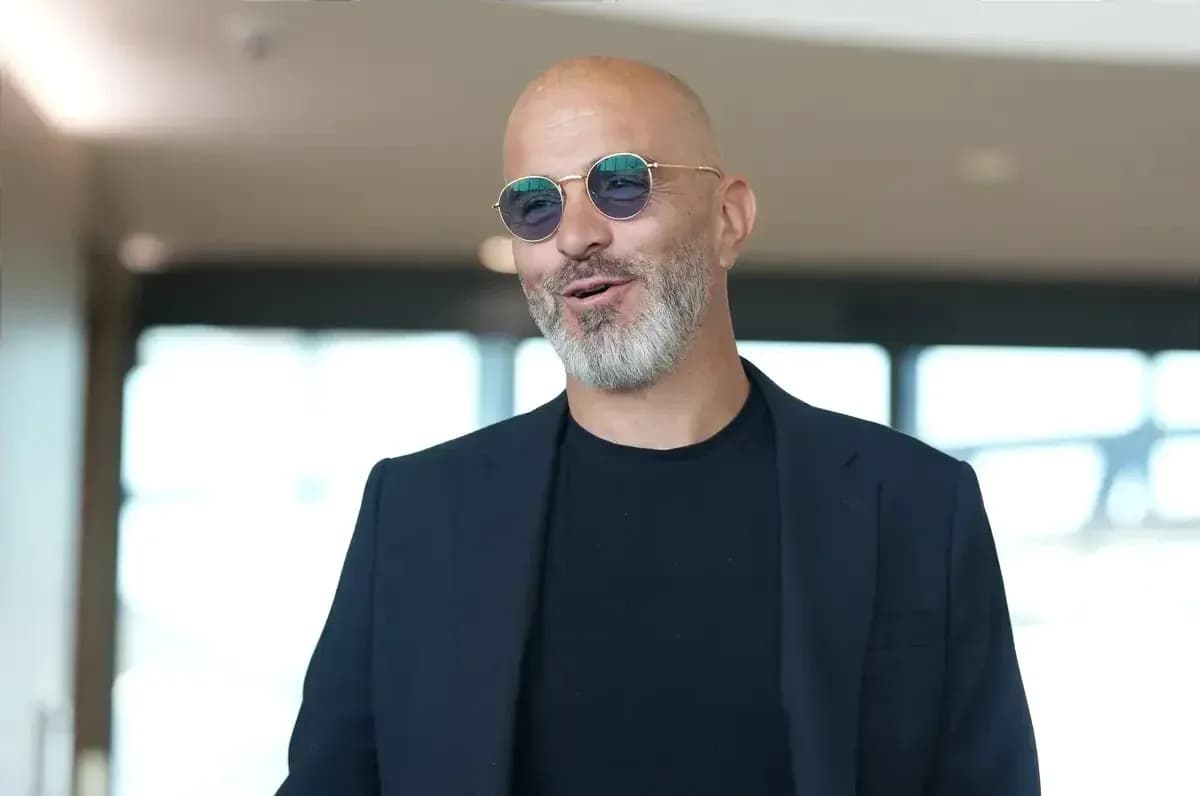
Enzo Maresca Returns to Manchester City as Head Coach
Enzo Maresca walked into his first press conference as Manchester City head coach and barely needed the first question. The theme of the day was written all over his face.
“I feel back home,” he said. Simple, direct. For him, the Etihad is not a new frontier. It is a return.
This is the man chosen to step into the space vacated by Pep Guardiola, the architect of a decade-defining dynasty and, in Maresca’s own words, “the best coach in the world in the last 20, 25 years”. The scale of the job is obvious. He does not pretend otherwise. He calls it what it is: a privilege, and a challenge.
From assistant and EDS coach to the main seat
Maresca arrives in the top job by a route City know well and trust. He has already lived inside this machine.
The Italian previously managed City’s Elite Development Squad and served on Guardiola’s staff during the 2022-23 season, a campaign that ended with the treble and cemented the Catalan’s era among the greatest in English football history. Those months gave Maresca a front-row view of the standards he is now expected to maintain.
He returns to Manchester after managerial spells at Leicester City and Chelsea, coming back only once a compensation wrangle with Chelsea was settled. Now, at 46, he stands where so few have stood in the Abu Dhabi era – as City’s third permanent manager in 17 years.
On day one of pre-season, the reality was more modest than the grand narrative. A reduced group at the training ground, a mix of first-team players, loan returnees and academy prospects, many senior stars still away or resting after the FIFA World Cup in North America. The new era starts with rondos and running drills, not fireworks.
“It’s a privilege” – and a warning from history
Maresca did not duck the obvious comparison. You do not replace Guardiola by pretending he never existed.
“First of all, I’d like to say it’s a privilege – the reason why, the club decided to go for me, that means for me it’s a privilege,” he said, leaning into the responsibility rather than shrinking from it.
Then came the line that framed his entire outlook: “I consider Pep the best coach in the world in the last 20, 25 years.”
That admission could weigh heavy. Maresca chose to use it as fuel. He knows the history of long-reigning giants and the turbulence that often follows.
“The history of managers with many years in the same club, after always you struggle a little – Sir Alex (Ferguson), Arsene (Wenger),” he pointed out. The warning is clear. Manchester United and Arsenal both discovered that life after a legend can be brutal.
For Maresca, that knowledge sharpens the task rather than softens it. “It’s a challenge to try and do the right things immediately for this organisation, the fans, everyone,” he said. No talk of transition seasons. No expectation of sympathy.
Three managers in 17 years – City’s quiet superpower
If Guardiola is the headline, City’s structure is the subtext. Maresca understands that as well as anyone.
“This club, this organisation, has had three managers in 17 years. This is not normal. It doesn’t happen often,” he said. He is right. In a league where rivals cycle through coaches at dizzying speed, City have built an empire on stability.
Maresca sees that as his safety net, not a trap.
“This probably is one of the things that I’m confident we can do a great job,” he continued, linking his optimism directly to the club’s long-term planning. The line of succession is clear in his mind: “Continue to do the job that has been done in the last 14 or 15 years, since Roberto Mancini, Manuel (Pellegrini) and for 10 years with Pep.”
He is not promising revolution. He is pledging continuation, with his own imprint layered onto a model he already knows from the inside.
A coach shaped by City, now shaping City
Those around the club talk about why Maresca emerged as the chosen heir. It was not just tactics or a shared Guardiola vocabulary. It was mindset.
City’s hierarchy, led by director of football Hugo Viana and the executive team, wanted someone who understood the organisation, respected its culture and believed he could add to it rather than rip it up. Maresca’s words on that first day echoed exactly that brief.
He spoke like a man emotionally tied to the place that helped form him as a coach. That connection is not a throwaway line for the cameras. It will surface in the small details: the intensity of training sessions, the tone of his press conferences, the risk or caution in his tactical calls when the season tightens.
For now, the banners still carry Guardiola’s glow and the trophy cabinets still reflect his shadow. Maresca walks in fully aware of both. He calls City “home”, embraces the burden, and leans on a structure that rarely blinks.
The question now is not whether he understands what he is walking into. It is whether a coach forged in this environment can now bend it to his own will without breaking the spell that made it so powerful in the first place.