
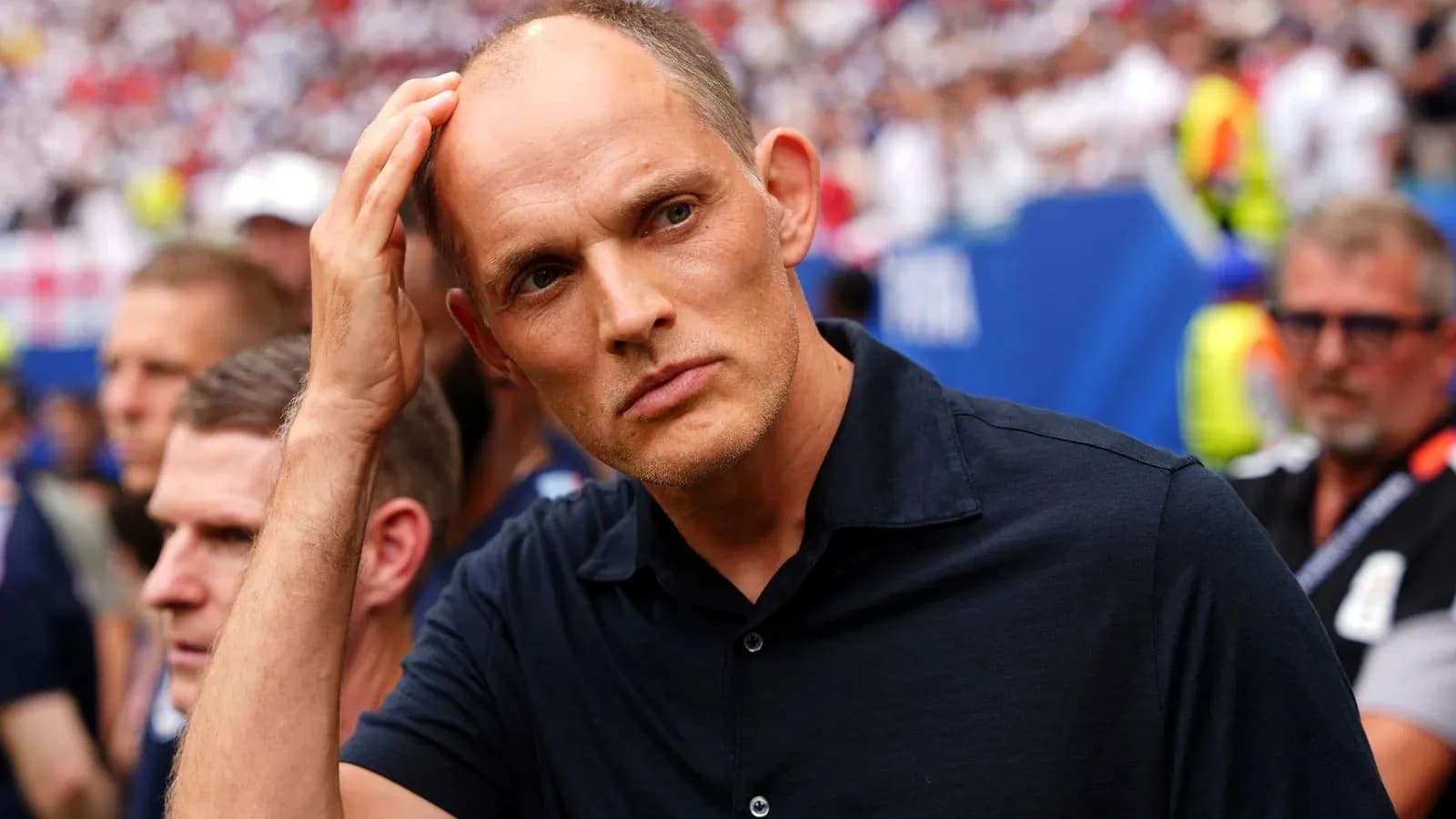
England's World Cup Exit: Tactical Controversies and Future Questions
England’s World Cup exit is still raw. The inquest has already begun inside the camp.
And a clear theme is emerging.
Several England players – including more than one senior figure – were left baffled by Thomas Tuchel’s late defensive shift in the semi-final defeat to Argentina, with some believing the changes damaged, rather than protected, their chances of reaching the final.
From control to retreat
For 55 minutes, England had their moment. Morgan Rogers, bright on the right, swung the ball across to Anthony Gordon on the left. One touch, one finish, and England led.
The plan throughout the tournament had been obvious: stretch teams with pace out wide, attack vulnerable full-backs, run at defenders who do not enjoy being turned. Argentina’s full-backs had been circled in red on the pre-match board. It was working.
Then the mood of the night flipped.
Seventeen minutes after Gordon’s opener, with Argentina building pressure and England sinking ever deeper, Tuchel made his first big call. He removed the goalscorer and sent on Ezri Konsa, switching to a back five with more than half an hour still to navigate.
Inside the dressing room, some players could not understand it. They felt the change invited Argentina on, rather than shutting them out.
Ten minutes later, with England clinging on and barely stringing passes together, Tuchel went again. Declan Rice, who had battled through illness and fitness issues all tournament, was replaced by Nico O’Reilly. On paper, it added legs. In reality, England now had six defenders on the pitch, four of them natural centre-backs.
Harry Kane dropped deeper and deeper, almost as an auxiliary midfielder, trying to help stem the blue-and-white tide led relentlessly by Lionel Messi.
The effect was stark. Between Gordon’s goal and Lautaro Martínez’s stoppage-time winner, England had just 12 per cent possession. For long spells, they could not get out.
No out-ball, no relief
Those inside the camp who doubted the approach saw the same picture repeat: clearance, second ball to Argentina, another attack. No one to hold it up. No one to run the channels. No one to carry the ball into wide areas and ease the strain on a defence under siege.
The bench told its own story. Noni Madueke stayed seated. Bukayo Saka never stripped off. Eberechi Eze watched on. All three offer precisely the profile England had built their tournament around: pace, dribbling, the ability to turn defence into attack in a single movement.
They did not see the pitch.
Marcus Rashford did, but only in the 96th minute, when the damage was done and England trailed 2-1 after Enzo Fernández and Martínez completed a ruthless Argentine comeback. Rashford arrived into chaos, not opportunity.
For some players, that was the heart of the frustration. England had spent weeks leaning on wingers and wide threats, then, in the biggest moment of all, they went away from it.
Tuchel stands firm
Tuchel, speaking after the game, did not accept that his tactical calls were to blame. He had not yet re-watched the match, but his diagnosis was blunt and pointed far beyond one night in one stadium.
He argued the problem lay in English football’s DNA. Under pressure, he suggested, English players struggle to keep the ball as calmly and consistently as their Spanish, Argentinian or Brazilian counterparts. The issue, in his view, was not the switch to a back five, but England’s inability to maintain possession when the temperature rose.
His intention, he explained, had been to cut out the stream of crosses aimed at England’s box and to close down the spaces Argentina were starting to exploit. With Nico González introduced on the left and Messi drifting to the right in a bold 4-2-4, Tuchel wanted extra bodies in the back line to block lanes and win aerial duels.
Inside the squad, some see it differently. They felt the substitutions were negative, that by loading the pitch with defenders England simply sank lower, surrendered the ball, and allowed Argentina to attack in waves without ever being forced to turn.
The debate over Tuchel’s “DNA” comments has only just started. It is not yet clear how the players feel about the suggestion that something fundamental in English football leaves them technically short in the most demanding moments. The question cuts deep; it goes beyond one manager and one tournament.
United, but unconvinced
What there is not, at this stage, is open revolt.
There is no indication of a rift in the England camp. No suggestion of animosity towards Tuchel, who is still viewed by many in the squad as a strong, authoritative figure and an engaging leader. Disagreement over tactics is not the same as division over the manager.
The Football Association remains firmly behind him. Despite the criticism of his game management and his public remarks, Tuchel retains full backing from his bosses. He has already stated he is “100 per cent” committed to staying on and leading England into Euro 2028.
By then, England will be co-hosts alongside Scotland, Wales and the Republic of Ireland. Home advantage. Familiar pitches. A new cycle.
The question that lingers now is not whether Tuchel will be there. It is whether, when the next storm hits and the pressure cranks up again, England will choose to lean into their attacking identity – or retreat once more into their shell.




