
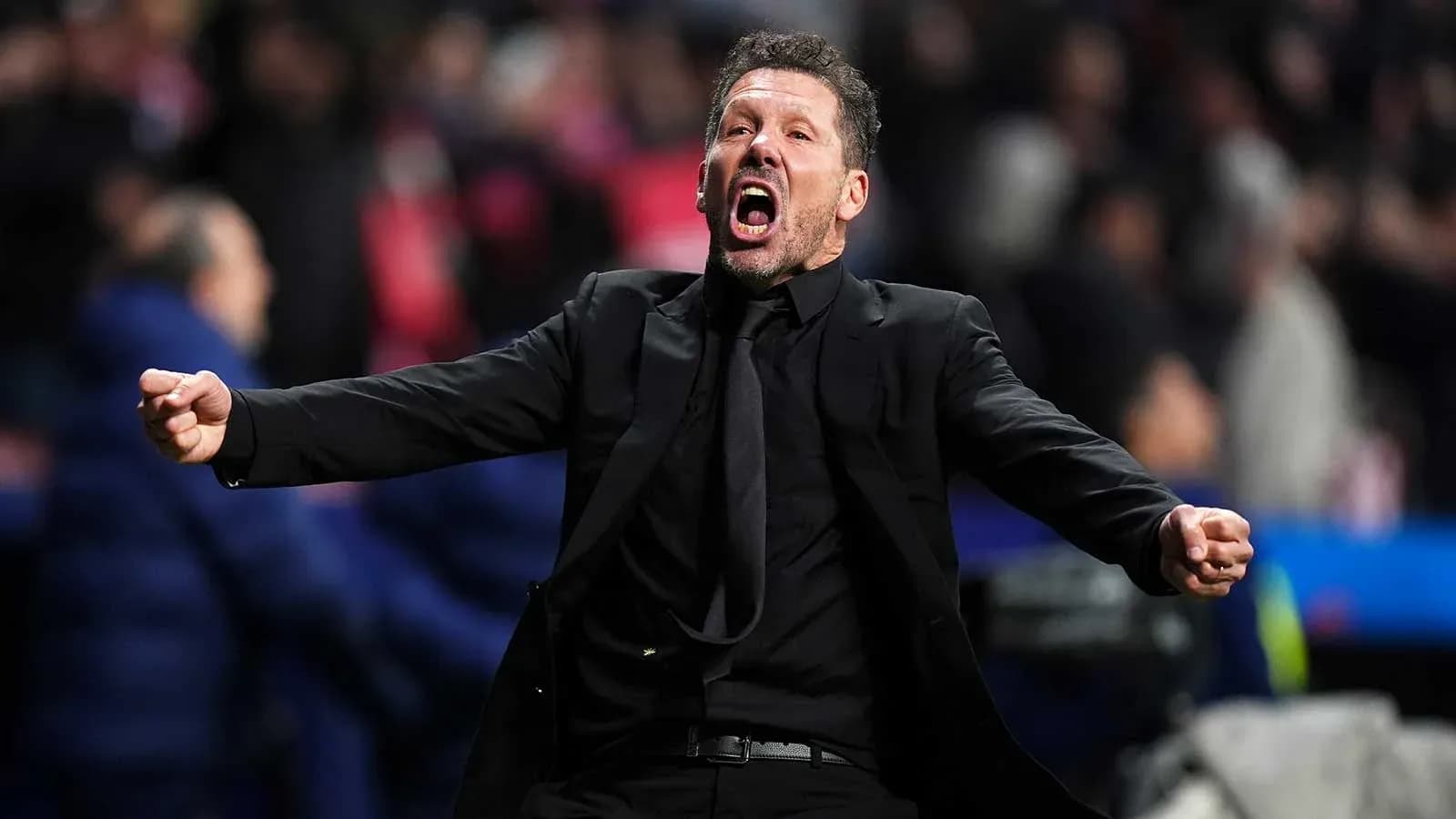
Diego Simeone Reflects on Atlético Madrid's Challenges
Diego Simeone feels the weight now. He admits it. He even lingers on it.
Fifteen years into his Atlético Madrid reign, the man who built a snarling, relentless contender out of a club living in the shadow of Real Madrid and Barcelona sounds less like a revolutionary and more like a survivor.
“In the first three or four seasons, I was free and at ease, winning was a pleasure,” he reflected. “Today it is merely a relief. We are suffering because we have taken the club to a place where we have become more exposed and under enormous pressure.”
That single line cuts through the endless arguments about his style of play. Simeone has heard it all: too defensive, too pragmatic, too obsessed with suffering. He pushed back with a familiar edge. Every coach, he argued, chases the same thing: winning. Then came the sting. Could the attacking purists keep their gospel intact at other clubs without conceding a flood of goals?
The question hung in the air like a challenge, not a complaint.
The burden of competing with giants
Simeone did not sugar-coat the reality of life in Spain. Competing with Real Madrid and Barcelona, he stressed, is not a fair fight. It never has been.
Atlético, he said, must live at their absolute limit. There is no margin for an off day, no room for a flat performance. For their rivals, one moment of genius can erase 80 minutes of mediocrity.
“One goal is enough for them to win, because Mbappé or Lamine Yamal might appear suddenly and score,” he said. “For us, giving our maximum effort is not enough to win, because Barcelona and Real Madrid are rarely below their level at the same time.”
That is the reality Simeone works in: two superclubs with superstars who can decide games in a heartbeat, and Atlético forced to grind, to squeeze, to claw for every inch. The romance of “Cholismo” has always lived next to that cold calculation.
Silence on Julián Álvarez, noise about everything else
On one subject, though, Simeone shut the door.
Julián Álvarez, now one of the most prominent figures in the Atlético squad, sits at the centre of speculation: his adaptation to Simeone’s demands, his role next season, even whispers of a possible move to Barcelona. Asked about his compatriot’s situation and the negotiations swirling around him, Simeone refused to bite.
He brushed aside any talk of Álvarez, offering nothing on his stance, nothing on the rumours. The silence felt deliberate, a clear move to distance himself from the noise around his young forward and any hint of a tug-of-war with a direct rival.
Instead, he steered the conversation back to his obsessions: defensive solidity, responsibility, the constant fight to stay on the heels of Real Madrid and Barcelona. The message was unmistakable. Players come and go, storms pass, but the structure and demands remain.
Rebuilding the wall
If there was one technical demand he wanted to underline, it was simple and very Simeone: fix the defence.
“I would like us to regain the defensive solidity we lost, because last season, especially in the Champions League, we produced a very poor defensive performance,” he said.
He did not hide behind the achievement. Atlético still reached the semi-final. That, in his eyes, only sharpened the point.
“We reached the semi-final, so imagine how we had to attack, something no one appreciates because we are Atlético Madrid,” he added.
They attacked more, they opened up more, they paid for it at the back. Simeone wants the balance restored. He also sent a clear demand to his midfielders: they must score more. Atlético cannot rely on the forwards alone if they are to live with the goal machines in white and blaugrana.
Trust in the board, time on the clock
For all the weight he feels, Simeone did not sound like a man losing faith in the club around him. On the contrary, he leaned on it.
“The club is making relentless efforts, and there is still plenty of time until the first of September,” he said, pointing to the transfer window and the work still to be done.
“I trust that the management of the Madrid club will provide me with the tools needed to compete, as it has always done.”
It was both reassurance for the fans and a reminder to the board. Atlético have climbed to a place where expectations are brutal. To stay there, they need more than grit and slogans; they need a squad built to withstand a season-long duel with two of the richest institutions in world football.
Griezmann, genius and gratitude
The most revealing moment came when Simeone spoke about Antoine Griezmann. The tactical demands, the defensive concerns, the pressure of the league table all faded for a second. Something softer appeared.
“I'm very fortunate,” he said. “We built a wonderful relationship, my daughters are friends with his children, I've had the chance to work with a genius, I feel deeply moved when I talk about him.”
For a coach often portrayed as pure intensity, it was a glimpse of the human core that has helped keep a notoriously demanding dressing room aligned for so long. Griezmann is not just a star to be managed; he is a partner in this long, gruelling project.
Not chasing statues, chasing time
Simeone knows what people say now: that he is building a legacy to stand alongside Arsène Wenger and Sir Alex Ferguson, that he is chasing their records for longevity. He rejected that idea outright.
His motivation, he insisted, is not about eclipsing anyone’s numbers or planting a statue in stone. It is about energy and humility, about whether he still has the drive to carry on in a job that has doubled in emotional weight since he walked through the door in 2011.
His target is more specific, and it cuts straight to Atlético’s historic inferiority complex. Before he arrived, the club waited 18 years between league titles. Under him, that gap shrank to seven years, between the 2014 and 2021 crowns.
Now he wants to squeeze it again.
The question is no longer whether Diego Simeone can keep Atlético at this level. It is whether he can push them high enough, often enough, that the next title does not feel like another miracle, but the natural rhythm of a club that refused to accept its old place in Spanish football’s food chain.




