
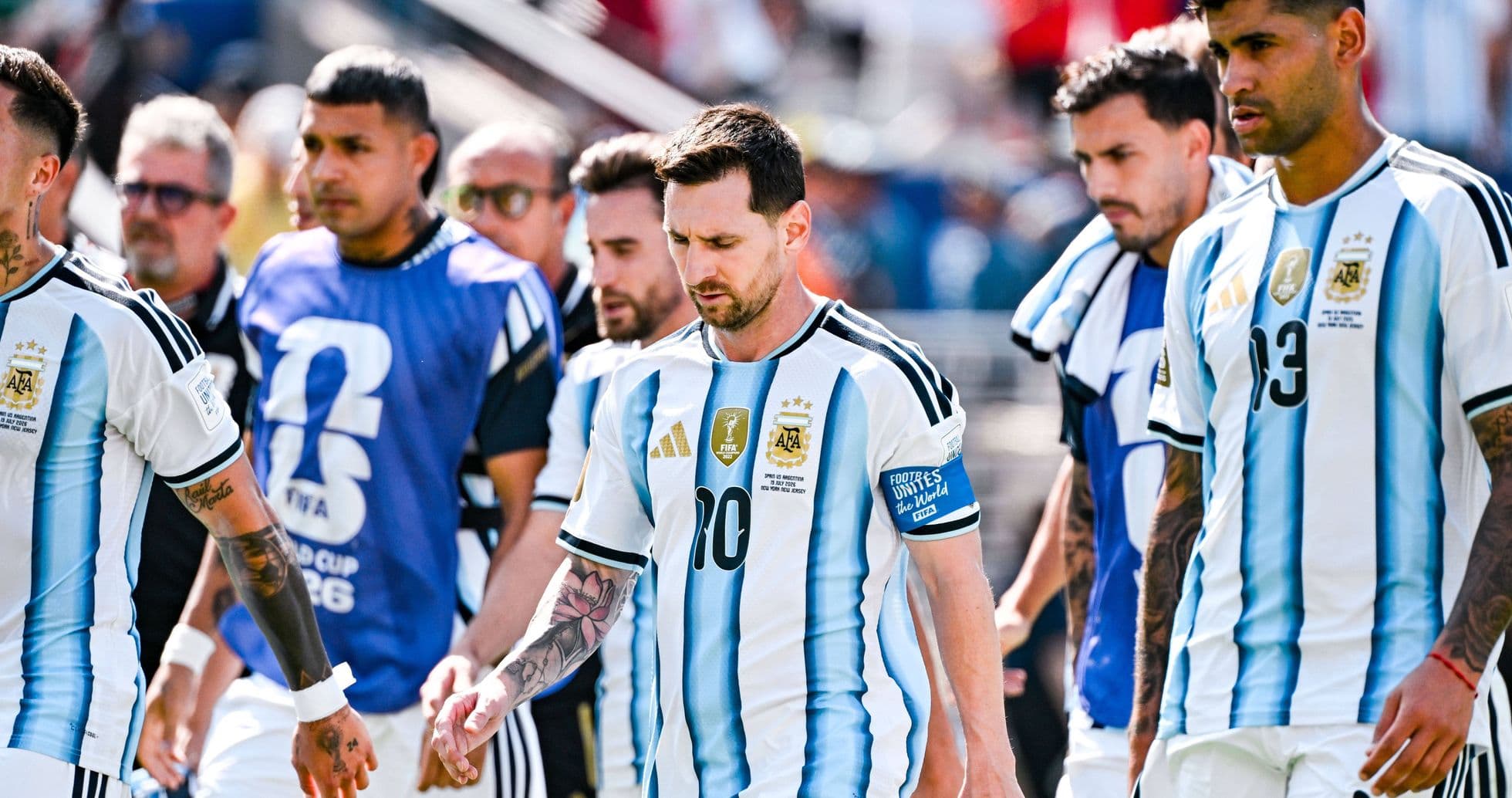
Ángel Di María's Message After Argentina's Defeat
Ángel Di María was nowhere near the pitch when the final whistle sounded, but his voice cut straight through the silence that followed Argentina’s defeat.
Within minutes, the veteran winger reached for his phone and for the heart of a wounded nation, posting an emotional message on his Instagram story that read less like a consolation and more like a declaration.
“A country is proud of you. A country was united once again thanks to the love and the b*lls you put into this World Cup,” he wrote, refusing to let one night stain a decade of dominance. “You are history, you are legends, and no one can ever take that away from you. The best national team in the history of our country. Five consecutive finals, no one will ever be able to take that away from you. THANK YOU SO MUCH FOR EVERYTHING.”
In a few lines, Di María did what he has so often done with the ball at his feet: he changed the mood.
A Final That Never Caught Fire
On the pitch, the story had been far less romantic.
For the defending champions, the decisive match never truly ignited. Argentina, usually so bold and inventive on the biggest stages, were pinned back and strangely blunt. The numbers underlined the impression: they became the first team ever to reach a World Cup final and fail to register a single shot during normal time.
No spark. No rhythm. Just strain.
The game quickly turned into a grind, all muscle and nerves. Challenges flew in, tempers frayed, and every duel seemed to carry the weight of an era. The tension peaked in the first half when Lisandro Martínez, one of the symbols of Argentina’s steel, went down with a severe injury and was forced off, leaving a gaping hole in the back line and in the team’s emotional core.
The pressure only tightened.
As the clock ticked towards extra time, the situation worsened. Enzo, already walking a disciplinary tightrope, saw red just before the additional 30 minutes. With ten men, Argentina’s task shifted from chasing glory to clinging on, hoping for one more twist that never came.
Spain did not blink.
Spain’s Rise, Argentina’s Reckoning
When it was over, Spain stood at the centre of the football world, celebrating a piece of history of their own: the first nation to hold both the men’s and women’s world titles at the same time. A new benchmark. A new power statement.
On the other side, Argentina were left to absorb something far more complex than a simple defeat. This felt like the closing chapter of a golden age, a team that had carried a country through five consecutive finals now staring at the end of its run at the summit.
The pain in the Argentine camp was unmistakable. Legs were heavy, faces hollow, the silence of players and staff saying more than any post-match interview could.
Di María, watching from afar, refused to let that be the final word.
By calling them “history” and “legends,” by hammering home the unprecedented achievement of five straight finals, he drew a line between one result and an entire generation’s body of work. One night in a hostile final, he insisted, cannot erase years of unity, trophies, and transformation.
Spain left with the trophies and the headlines.
Argentina left with a scar, a record they never wanted, and a message from one of their icons that this era should be remembered not for how it ended, but for how defiantly it raised the standard of what their national team can be.




