
Cristiano Ronaldo's Last World Cup Chapter: A Legend's Farewell
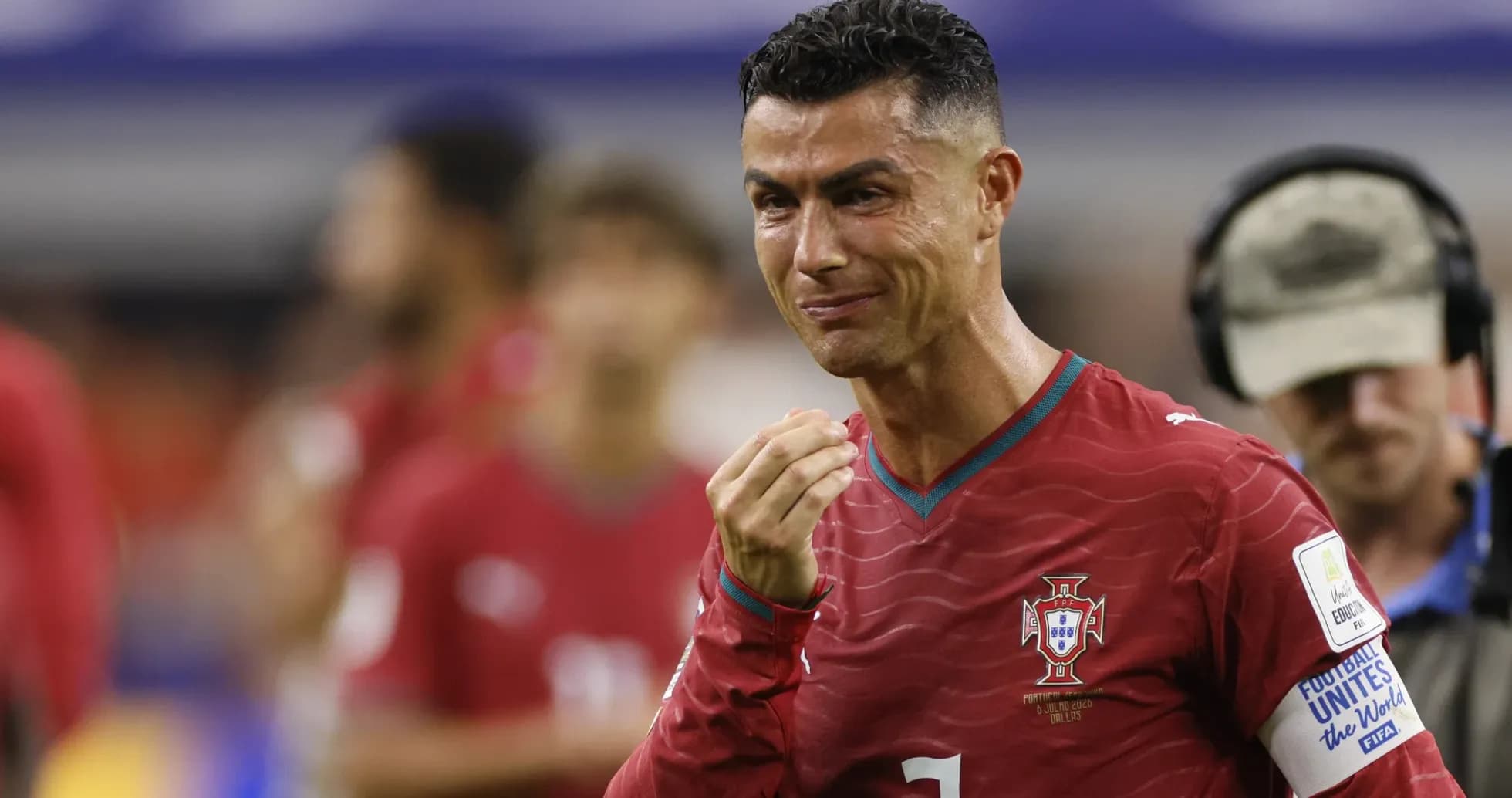
Cristiano Ronaldo walked off alone, head bowed, into the Texas night. No wave to the crowd, no last defiant roar. Just a 41-year-old legend fighting back tears as the World Cup dream he had chased for two decades finally slipped away.
Spain’s 1-0 win in the last 16 ended not only Portugal’s tournament, but almost certainly Ronaldo’s long pursuit of the one trophy missing from his vast collection. On the biggest stage of all, in a stadium built for American spectacle, there was no grand finale. Just the quiet, heavy truth of a career closing its World Cup chapter without the medal he craved most.
He called it “football” and “the life of a footballer”, his voice thin under the weight of disappointment. Sometimes you win, sometimes you lose, and you move on. Simple words, delivered by a man who has spent a lifetime refusing to accept limits.
This time, there was no escaping them.
A giant on the fringes
Ronaldo’s final World Cup appearance was a mirror held up to his present reality. The body that once made him unstoppable now asked questions he could not fully answer. He huffed, he puffed, he chased. The old intensity was there. The old impact was not.
He had three efforts at goal, none of them truly threatening, as Spain controlled the rhythm and Portugal’s attack misfired. Stationed through the middle, he was more bystander than spearhead, a peripheral figure in a forward line that never really found its timing.
At one point, as a teammate’s pass went astray, he flung his arms into the air in frustration. It was a familiar image, but this time it felt different. Less the perfectionist demanding standards, more the veteran sensing that chances – for the team and for himself – were running out.
When the final whistle blew at the home of the Dallas Cowboys, he did not seek out the spotlight. He left the pitch alone.
A farewell without the crown
Ronaldo will depart the World Cup stage as the leading scorer in the history of men’s international football, a record that underlines just how long and how brightly he has burned. He scored three times at this tournament in North America: twice in the 5-0 demolition of Uzbekistan, once from the penalty spot against Croatia in the last 32. No assists, no defining knockout moment. Not this time.
His best World Cup run will forever remain that charge to the semifinals 20 years ago in 2026, when he was the fearless young phenomenon rather than the grizzled talisman. The arc from that tournament to this one tells the story of a career that scaled almost everything the game has to offer – except this.
Ronaldo, though, insisted he leaves “with a clear conscience”. For him, the Euro 2016 title, when Portugal conquered Europe and he finally lifted a major trophy with his country, stands on equal footing with the World Cup. “Just as significant,” he said. For a player who has spent his life rewriting records, that is his own way of closing the debate.
From Madeira to the world
The numbers and the medals only hint at the journey. Ronaldo grew up in a poor family on the island of Madeira, with an alcoholic father and a childhood far removed from the glittering world he would eventually dominate. Football was his escape, then his profession, then his empire.
His obsession with improvement became folklore. Extra sessions, extra gym work, extra sacrifices. A career built on talent, yes, but also on a relentlessness that carried him into his 40s still competing at the highest level.
Off the pitch, he became something else entirely: a global brand, the first billionaire footballer, the most followed athlete on Instagram with 671 million people watching his every move. Children in every corner of the world copied his “Siuuu!” celebration, leaping, twisting, landing in playgrounds and parks as if they too were under the lights of a Champions League night.
He played for Sporting Lisbon, then became a phenomenon at Manchester United, where he won his first Champions League. At Real Madrid, he turned into a machine, conquering Europe four more times and turning the Bernabeu into his personal stage. Juventus followed, then a return to United, and now Al Nassr, where he stands as the figurehead of Saudi Arabia’s push for footballing credibility.
Five Ballon d’Ors, countless records, a trophy cabinet that barely seems to have room for more silver. Yet the World Cup, the one trophy that would have completed the set, will never sit there.
The weight of time
In recent years, the conversation around Ronaldo has shifted. The devastating acceleration, the elastic dribbles, the ability to explode past defenders at will – those gifts faded as time caught up with him. He adapted, moving from the wings into a more traditional No 9 role, relying on movement, timing and penalty-box instincts.
Not everyone has been convinced. Ronaldo and Portugal coach Roberto Martinez have both been accused of stretching his international career beyond its natural end point, of building around a name rather than a force of nature.
Against Spain, Martinez turned to his bench twice in quick succession, making two double substitutions as Portugal chased the game. Ronaldo stayed on. The armband, the aura, the history – all still there. The cutting edge, less so.
On the eve of the match, he had tried to strip away the noise. “I am not going to be more Cristiano Ronaldo or less because I win the World Cup,” he said. It was an attempt to detach his legacy from a single trophy.
He is right, of course. The game will not remember him less for this night in Texas. But it will remember that even one of the greatest could not bend every tournament, every narrative, to his will.
The World Cup moves on without him now. The question is no longer whether Ronaldo can complete his story, but how football will tell it from here.




