Cremonese's Tactical Domination Over Pisa in Serie A
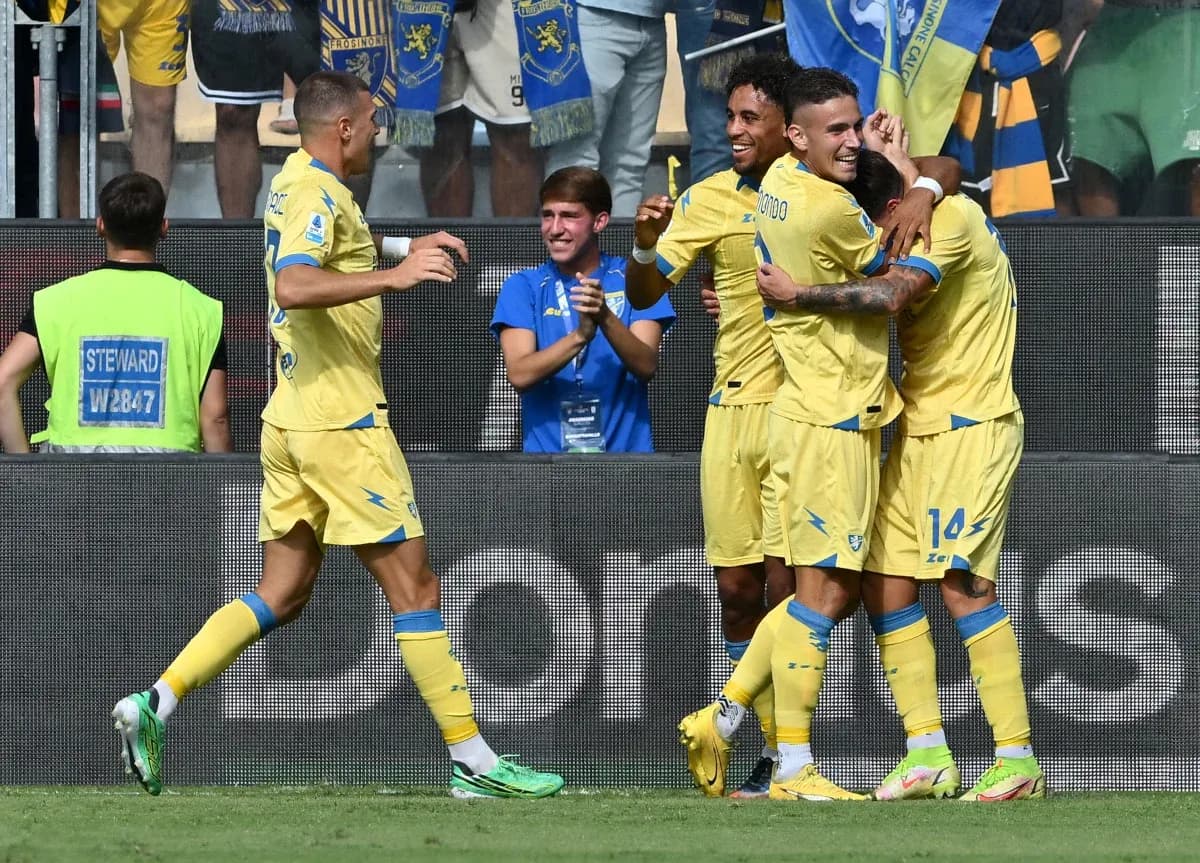
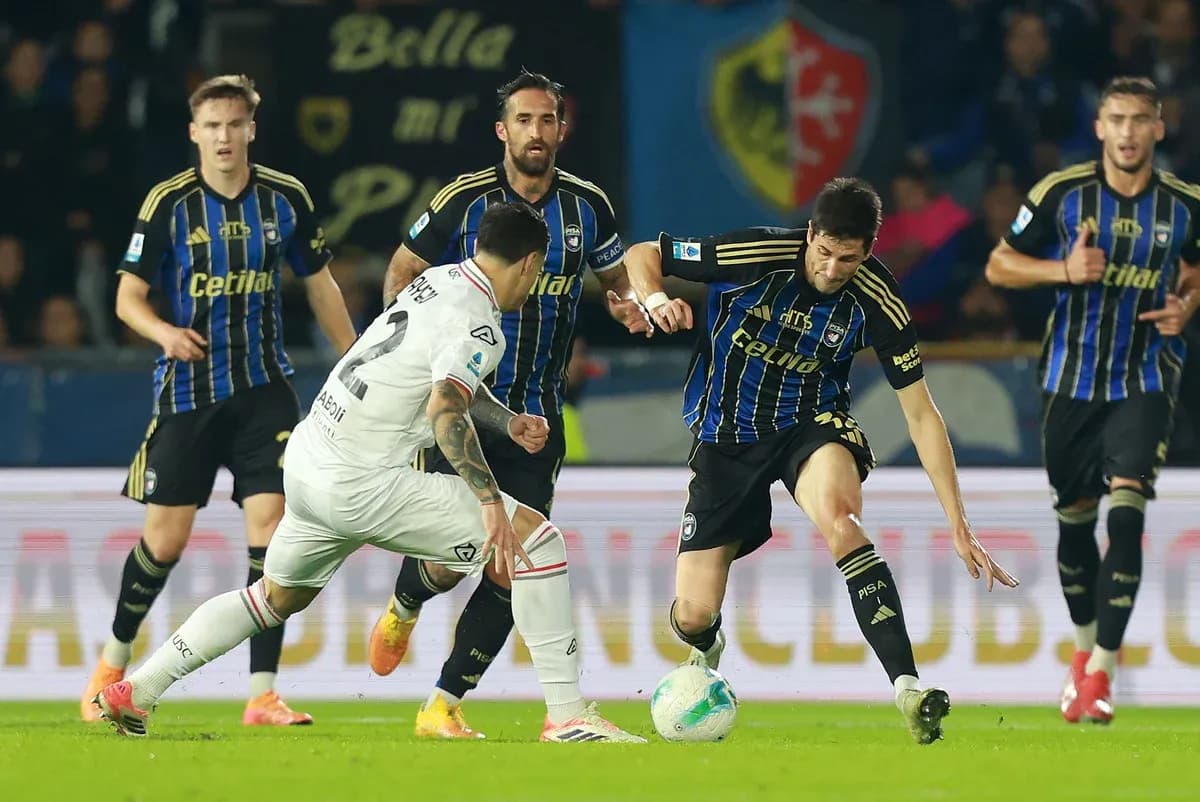
Cremonese’s 3-0 home win over Pisa at Stadio Giovanni Zini in Serie A’s Regular Season - 36 was a tactical domination built on structural superiority and ruthless exploitation of Pisa’s numerical collapses. Marco Giampaolo’s 4-4-2 controlled territory and tempo from the opening minutes, while Oscar Hiljemark’s 3-5-2 never established a pressing or counter-attacking platform. The halftime score of 1-0 flattered Pisa; by full time, Cremonese’s 77% possession and 10-0 shot count underlined how completely the hosts strangled the contest, turning a modest 1.15 xG profile into a comfortable three-goal margin against a Pisa side reduced to nine men.
Disciplinary Log
Chronological, all cards:
- 16' Rosen Bozhinov (Pisa) — Foul
- 23' Rosen Bozhinov (Pisa) — Foul
- 23' Rosen Bozhinov (Pisa) — Foul (Red Card)
- 49' Arturo Calabresi (Pisa) — Foul
- 57' Felipe Loyola (Pisa) — Foul (Red Card)
- 89' Malthe Højholt (Pisa) — Foul
Card totals: Cremonese: 0, Pisa: 6 (4 yellow, 2 red), Total: 6.
The first key tactical hinge arrived through Pisa’s right-sided defender Rosen Bozhinov. Booked at 16' for a Foul as Cremonese targeted wide areas, he never adjusted his aggression. At 23', a second yellow for another Foul immediately became a red card, leaving Pisa down to ten and forcing Hiljemark to abandon any proactive high press. From that point, Pisa’s 3-5-2 flattened into a 5-3-1 low block, with wing-backs pinned and forwards isolated.
Cremonese capitalized on the overloads created by the extra man. In the 31st minute, J. Vardy struck the opener for 1-0, a goal consistent with Cremonese’s pattern of patiently circulating possession (735 total passes, 684 accurate, 93%) until a vertical lane opened. Pisa tried to restore defensive balance at 37' with a double substitution: S. Moreo (OUT) and A. Calabresi (IN), and M. Leris (OUT) with S. Angori (IN). Both changes were reactive, adding fresh legs and defensive security rather than altering the structure.
Second Half
The second half discipline further undermined Pisa’s tactical viability. Arturo Calabresi, introduced to stabilize the back line, was booked at 49' — Foul — a signal of a unit defending too deep and too late. Two minutes later, Cremonese doubled their lead: at 51', F. Bonazzoli finished for 2-0, assisted by J. Vandeputte. The goal reflected Cremonese’s wide-midfield superiority in the 4-4-2, with Vandeputte finding space between Pisa’s wing-back and outside centre-back, then delivering into a striker pairing that constantly occupied the three central defenders.
The decisive structural break came at 57', when Felipe Loyola received a straight red card for Foul. Pisa dropped to nine men, effectively converting their 3-5-2 into a 5-2-1 with no realistic counter threat. From there, Giampaolo managed the game as a controlled siege: maintaining width, recycling possession, and using the fullbacks and wide midfielders to stretch a shrinking Pisa block.
Substitutions were used by Cremonese not to chase the game but to sustain intensity and protect key players. At 59', Y. Maleh (OUT) made way for M. Thorsby (IN), and G. Pezzella (OUT) for A. Zerbin (IN), adding energy and a more aggressive wide presence in Zerbin to attack Pisa’s tiring flanks. Pisa’s response at 65' — I. Vural (OUT) for M. Hojholt (IN), and F. Stojilkovic (OUT) for H. Meister (IN) — was essentially damage limitation, with fresh midfield legs but no change in their inability to progress the ball; they would finish with 0 Total Shots and just 218 passes (161 accurate, 74%).
Cremonese’s forward rotation at 72' was another tactical layer rather than necessity: J. Vardy (OUT) for A. Sanabria (IN) and J. Vandeputte (OUT) for D. Okereke (IN). With Pisa at nine men, Giampaolo introduced a more direct runner in Okereke and a fresh focal point in Sanabria to exploit transitions against a demoralized back line. Pisa’s last substitution at 72' — E. Akinsanmiro (OUT) for G. Piccinini (IN) — again aimed at shoring up midfield lanes but could not alter the possession imbalance.
At 85', S. Luperto (OUT) for F. Folino (IN) allowed Cremonese to maintain defensive focus and ball circulation from the back even in a one-sided game. A minute later, the third goal arrived: at 86', D. Okereke scored for 3-0, assisted by A. Zerbin. That combination encapsulated Cremonese’s second-half plan: use substitutes with pace and directness against a numerically and physically exhausted Pisa, attacking especially down the flanks where Angori and a reconfigured back line were overloaded.
Pisa’s frustration culminated in Malthe Højholt’s yellow card at 89' — Foul — a late emblem of a side defending in survival mode. Across the 90 minutes, Cremonese’s goalkeeper E. Audero did not register a single save, a stark reflection of Pisa’s attacking impotence. Conversely, A. Semper for Pisa made 2 saves but conceded 3, with team data showing goals prevented at -1.18, indicating underperformance relative to the quality of chances faced.
Statistically, Cremonese’s 1.15 expected goals turning into 3 actual goals points to clinical finishing and the compounding effect of numerical superiority, especially after the second red. Pisa’s xG of 0, coupled with 0 Total Shots, 0 Shots on Goal, and 0 Shots inside or outside the box, underlines how thoroughly their build-up and transition game was dismantled once reduced to ten and then nine men. Overall form for Cremonese is reinforced by the dominance in possession (77%), territorial control, and passing efficiency, while Pisa’s defensive index is damaged not only by the three goals conceded but by six cards (four yellow, two red) all explicitly for Foul, revealing a defensive unit constantly late into challenges and structurally overwhelmed.