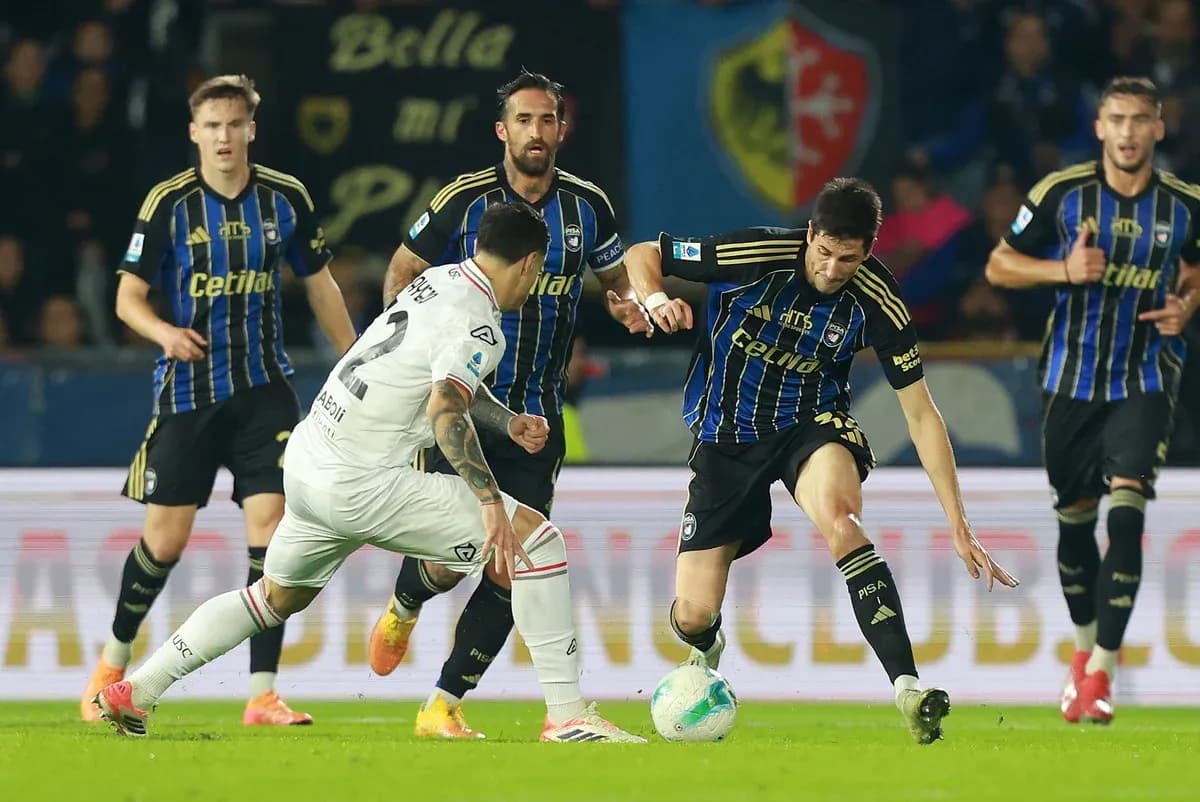
Cremonese vs Pisa: A Clash of Relegated Sides
On a warm afternoon at Stadio Giovanni Zini, two relegated sides met with little left to save but pride and identity. Cremonese, 18th in Serie A on 31 points with a goal difference of -23 (30 scored, 53 conceded in total this campaign), faced bottom‑placed Pisa, stranded on 18 points and an even more brutal goal difference of -41 (25 for, 66 against overall). The league table framed this as a meeting of damaged teams; the 3–0 full‑time scoreline suggested only one of them still remembered how to fight.
I. The Big Picture – a crisis game disguised as a dead rubber
Heading into this game, Cremonese’s season had been defined by fragility and narrow margins. At home they had played 18 times, winning 3, drawing 7 and losing 8, with 17 goals for and 25 against. An average of 0.9 goals for and 1.4 conceded at home painted a side that rarely blew opponents away, but also one that had learned to grind: 6 clean sheets at Giovanni Zini hinted at a team that, when compact, could survive.
Pisa arrived in even deeper trouble. In total this campaign they had won just 2 of 36 matches, drawing 12 and losing 22. On their travels they had not won once: 0 away victories, 8 draws, 10 defeats, with 16 goals scored and 43 conceded. Their away averages – 0.9 goals for and a punishing 2.4 against – told the story of a side that could occasionally threaten but almost never resist.
The formations reflected those identities. Marco Giampaolo set Cremonese up in a 4‑4‑2, a throwback shape that suited the direct, penalty‑box instincts of Federico Bonazzoli and the tireless channel running of J. Vardy. Oscar Hiljemark, by contrast, leaned into caution with Pisa’s 3‑4‑2‑1, hoping an extra centre‑back could mask a defence that had been leaking goals all season.
II. Tactical Voids – absences and discipline shaping the contest
Both squads came into the fixture carrying scars. Cremonese were without F. Baschirotto (thigh injury), R. Floriani and F. Moumbagna (both muscle injuries), plus M. Payero (knock). For a coach who had often preferred a back three this season – their most used formation overall was 3‑5‑2 in 24 matches – the loss of Baschirotto in particular nudged Giampaolo toward the back‑four solution we saw here, leaning on the experience of S. Luperto and M. Bianchetti in central defence and the aggressive two‑way work of G. Pezzella at left‑back.
Pisa’s absentees bit just as hard. F. Coppola (muscle injury), D. Denoon (ankle), C. Stengs (inactive) and M. Tramoni (muscle injury) all missed out, depriving Hiljemark of rotation options and attacking variety. With the season-long pattern of defensive strain – only 5 clean sheets in total, and just 1 away – Pisa were forced to lean on their veterans: A. Caracciolo, the league’s 8th‑ranked yellow‑card magnet with 9 bookings, anchored the back line, while the combative I. Touré patrolled midfield with a red card already on his 2025 ledger.
Disciplinary trends for both teams hinted that this match would live on a knife edge. Cremonese’s yellow cards peaked late, with 27.27% of their cautions arriving between 76–90 minutes, and their red‑card profile showed a dangerous flashpoint in added time: 66.67% of their reds came between 91–105 minutes. Pisa mirrored that volatility, with 25.33% of their yellows in the 76–90 range and a spread of reds across 16–60 and 91–105 minutes. It was a game primed for late chaos; instead, Cremonese’s control on the scoreboard kept the temperature just below boiling.
III. Key Matchups – Hunter vs Shield, and the battle for the engine room
The headline duel was always going to be “Hunter vs Shield”: Bonazzoli against a Pisa defence that had conceded 43 away goals heading into this game. Bonazzoli’s season numbers were the profile of a complete Serie A forward: 9 total goals and 1 assist, 54 shots with 30 on target, plus 803 passes at 84% accuracy. He had also drawn 75 fouls, a magnet for contact who could pin centre‑backs deep and win territory.
Against him stood Caracciolo, the rugged heart of Pisa’s back three. Across the season he had made 71 tackles, 24 successful blocks and 45 interceptions, with 260 duels contested and 139 won. Those 24 blocked shots underline his instinct to throw himself into danger; on paper, this was the perfect foil for Bonazzoli’s penalty‑box presence. In practice, Cremonese’s 3‑0 full‑time win suggests the striker and his supporting cast found ways to unpick the veteran’s timing and drag him into uncomfortable spaces.
Out wide and between the lines, the “Engine Room” battle tilted the match decisively. For Cremonese, J. Vandeputte – the league’s 18th‑ranked assist provider – started on the left of midfield in the 4‑4‑2. His season had been built on creation: 5 total assists, 53 key passes and 887 passes overall at 77% accuracy. Against Pisa’s wing‑backs and outside centre‑backs, his delivery and movement were designed to stretch the 3‑4‑2‑1 shape horizontally, opening corridors for Vardy’s diagonal runs and Bonazzoli’s near‑post darts.
Pisa’s response came through the double axis of Touré and E. Akinsanmiro in central areas. Touré’s numbers show a combative, high‑volume duelist: 402 total duels with 219 won, 42 tackles, 8 blocks and 24 interceptions, plus 43 dribble attempts with 20 successful. His red card earlier in the season underlines how thin the line can be between aggression and excess. Alongside him, Akinsanmiro’s role was to recycle possession and connect to the front three of M. Leris, S. Moreo and F. Stojilkovic.
Yet Pisa’s season‑long attacking malaise – 0.7 goals per game in total, failing to score in 20 matches – resurfaced. The front line, led by Stojilkovic in the nominal striker role, again lacked the cutting edge to convert territory into threat. Against a Cremonese side that had kept 10 clean sheets overall, the away team’s structural caution quickly turned into sterile control.
IV. Statistical Prognosis – why 3–0 felt inevitable
Strip away the emotion, and the numbers always leaned toward a decisive home win. Cremonese, for all their struggles, had a defensive platform: 1.5 goals conceded on average in total, but with clear evidence they could shut games down when ahead. Pisa, by contrast, were structurally porous: 1.8 goals conceded per match overall, with that brutal 2.4 average against on their travels.
Heading into this game, Pisa’s form line read “LLLLL”, while Cremonese’s season‑long pattern showed patches of resilience – including a biggest home win of 3–0, exactly the margin they reproduced here. Both teams were perfect from the penalty spot this campaign (Cremonese 3 scored from 3, Pisa 6 from 6, no penalties missed for either), so any spot‑kick would likely have favoured the attacking side. In open play, though, the gap in organisation was stark.
In narrative terms, this 3–0 full‑time score felt less like an upset and more like regression to the mean. A Cremonese team with a genuine top‑flight striker in Bonazzoli and a creative fulcrum in Vandeputte finally imposed their structure on one of Serie A’s weakest defences. Pisa, whose away record read 0 wins from 18 and a goal difference of -27 on their travels (16 for, 43 against), simply played to type.
Following this result, the table may not change their fate – both sides are still pointed toward Serie B – but the tactical story is clear. Cremonese leave the top flight with a blueprint: a flexible back line, a reliable goalscorer and a creator between the lines. Pisa depart with only questions, their 3‑4‑2‑1 once again exposed as a system that protects neither penalty area and leaves their season defined by damage limitation rather than genuine resistance.