Chelsea's Future: Alonso's Blueprint for Success
Chelsea stand on the brink of a season that could end with silverware and still be remembered as another turbulent misfire.
They head to Wembley on Saturday with caretaker Callum McFarlane in charge for an FA Cup final against Manchester City, a showpiece occasion masking a ninth-place league campaign that has lurched from one false dawn to the next. Two permanent managers have already come and gone. A third is being lined up. The mood around Stamford Bridge is not so much transitional as permanently in flux.
The Premier League table tells its own story. Ninth, after a disastrous run of form, with the club’s only route back to the Champions League a convoluted, precarious path: scramble up to sixth in their final two games, then hope Aston Villa finish fifth and beat Freiburg in the Europa League final. It is a plan built on ifs, buts and someone else’s big night.
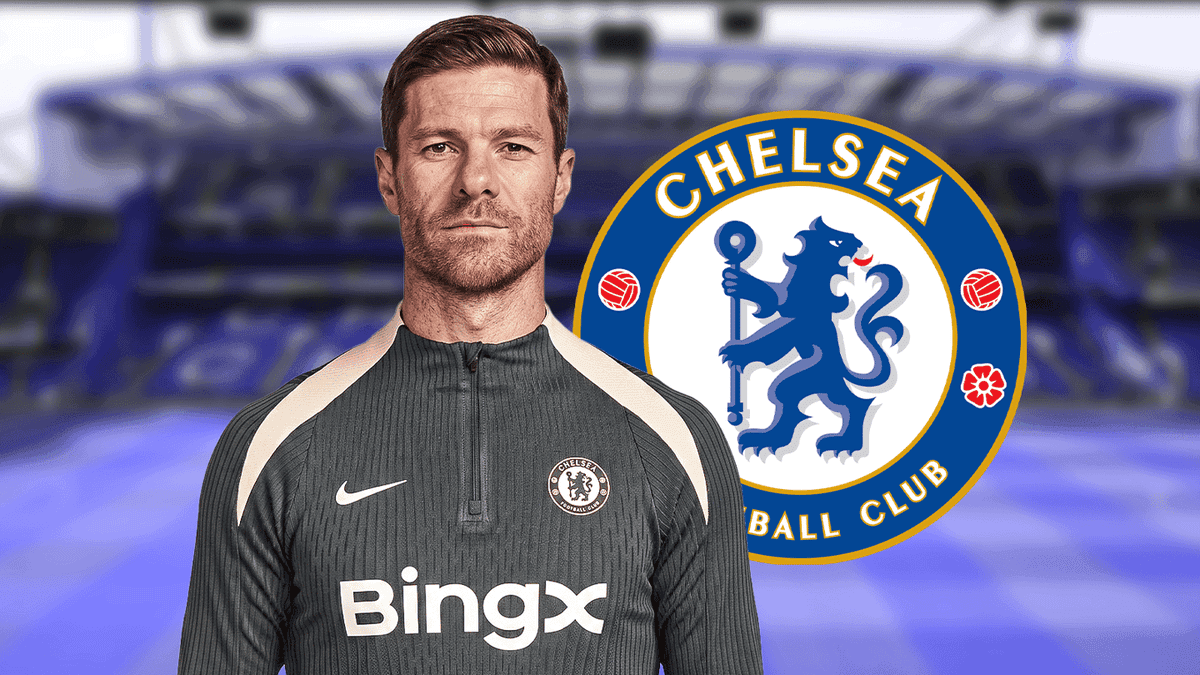
Amid the chaos, the owners have reached a critical point. The gamble on shifting Liam Rosenior across from Strasbourg has not paid off, and this next appointment cannot be another experiment. Xabi Alonso, the former Bayer Leverkusen and Real Madrid coach, is understood to be among the leading candidates, a name that at least brings a sense of tactical clarity to a club drowning in moving parts.
Alonso’s Blueprint: A New Shape for a Restless Squad
Alonso’s calling card is flexibility within structure. His greatest success has come with variations of a fluid 3-4-2-1, a system that morphs with and without the ball, stretching opponents while protecting its own back line. Apply that template to Chelsea’s bloated, unbalanced squad and you get something else entirely: a tantalising, hypothetical XI that hints at what this club could be if the recruitment finally aligned with the manager.
It starts in goal, where Chelsea’s long-running issues refuse to go away. Robert Sanchez arrived from Brighton & Hove Albion for a sizeable fee, but the position remains one of the most glaring weaknesses in the squad. A new number one will sit right at the top of the summer shopping list.
Gregor Kobel is the name that keeps resurfacing. Borussia Dortmund’s 28-year-old keeper has grown into one of the Bundesliga’s most reliable stoppers, and he is no stranger to Alonso after spending his entire playing career in Germany. For a coach who values control and composure from the back, Kobel would tick a lot of boxes.
A Back Three with Teeth
In front of him, the shape would change and so would the hierarchy. A switch to a back three would alter the futures of several familiar faces.
Marc Cucurella, for all the doubts over his fee and fit, looks unlikely to lose his place entirely, but he and Malo Gusto risk becoming tactical orphans if Alonso leans fully into a three-man defence. Reece James, when fit, offers too much quality higher up the pitch to be chained to the touchline as a conventional full-back. Cucurella as an out-and-out winger, though, solves little for a side already short of incision.
The spine needs a leader. If Trevoh Chalobah really is ready to step up and command the back line, and if Levi Colwill can finally put together a sustained run without injury, Chelsea would still be one marquee centre-back away from a formidable unit.
Marcos Senesi fits that bill. The Bournemouth defender has been one of the Premier League’s standout centre-backs this season and has already been linked with a move to Stamford Bridge. Convincing him to leave the south coast would not be straightforward if the Cherries gatecrash the Champions League, but in pure football terms, there are not many better options for the role.
Midfield Steel and Subtlety
Midfield is where Chelsea’s identity has blurred most under this ownership. Big names, big fees, little cohesion.
Enzo Fernandez, once the standard-bearer for a new era, now divides opinion. His recent remarks about where he might like to live in the future were probably innocuous in his mind, but they landed badly. Naive, and not what you want from a captain in a dressing room already on edge. It was not the first time his words and status felt misaligned.
Moises Caicedo, by contrast, looks like the fixed point. Whatever Alonso might build in the middle of the pitch, it revolves around the Ecuadorian. His range, aggression and stamina make him the natural anchor in a two-man base.
With James pushed on to the right flank in a wing-back role, the picture changes again. His presence there would likely squeeze out Pedro Neto, whose Chelsea career has veered between flashes of brilliance and long spells of inconsistency. James offers reliability, leadership and a clear upgrade in both directions.
Chelsea have been linked with two further pieces to complete that four-man midfield: a partner for Caicedo and a left-sided prospect to balance the shape. Pablo Barrios of Atletico Madrid is the archetype of the modern pivot – technically sharp, tactically astute, with serious upside. His release clause is sky-high, and even a negotiated deal would demand a huge outlay, but that is the going rate for a midfielder who can dictate games in his early twenties.
On the left, Said El Mala has forced his way into the spotlight at Cologne. The German teenager’s breakthrough season has reportedly drawn Chelsea’s attention, his profile neatly matching the club’s obsession with emerging talent. Anthony Gordon’s name has also surfaced on the radar, a move that would feel entirely in keeping with the current regime: expensive, ambitious, and guaranteed to split opinion.
Palmer, Pedro and the Future of the Front Line
Up front, the picture becomes more intriguing. Estevao is widely seen as Chelsea’s attacking future, a Brazilian prodigy around whom the club would love to build. He is also young and injured, which means the short term demands something more pragmatic. They cannot simply wait for him to heal and hope.
That is where Joao Pedro comes in. The striker has been one of the few bright spots in a gloomy season, hitting 15 Premier League goals and providing a focal point when everything else has felt disjointed. Chelsea may still move for another centre-forward this summer – this ownership rarely stops at one option – but it would take a special talent to knock the current top scorer out of the team.
Cole Palmer, meanwhile, sits at the heart of any realistic dream XI. Linked with a move away, his form has inevitably drawn admiring glances, yet Chelsea’s stance is obvious: he is too important to lose. Keep him, and he starts. Every week. In a 3-4-2-1, Palmer would thrive in one of the two advanced roles behind the striker, free to drift, combine and finish.
Build around Palmer and Pedro, protect Estevao, add Kobel, Senesi, Barrios and El Mala to a spine already featuring Caicedo, James, Chalobah and Colwill, and the outlines of a coherent Chelsea begin to emerge. Not a fantasy, but a plan.
The question is whether this club, in its current restless state, can finally commit to one.